
When it comes to Albany’s wastewater pipes flowing, grease is not the word
Staff Photo: Alan Mauldin
By Alan Mauldin
[email protected]
ALBANY — Grease and oil may keep the gears lubed and prevent moving metal parts from sticking in an engine, but when it comes to pouring or flushing it into your pipes, it can really gum up the works.
Toys, pillows, blankets, tree limbs, motor oil and even plates are also among the objects that have been tossed into the city of Albany’s wastewater system over the years, either through household pipes or even tossed into a manhole.
The bottom line is that these practices can be expensive, either in costs to call a plumber to unclog a pipe, or for the municipality that has to spend time clearing lines clogged by petroleum products, cooking greases and oils, and other objects.
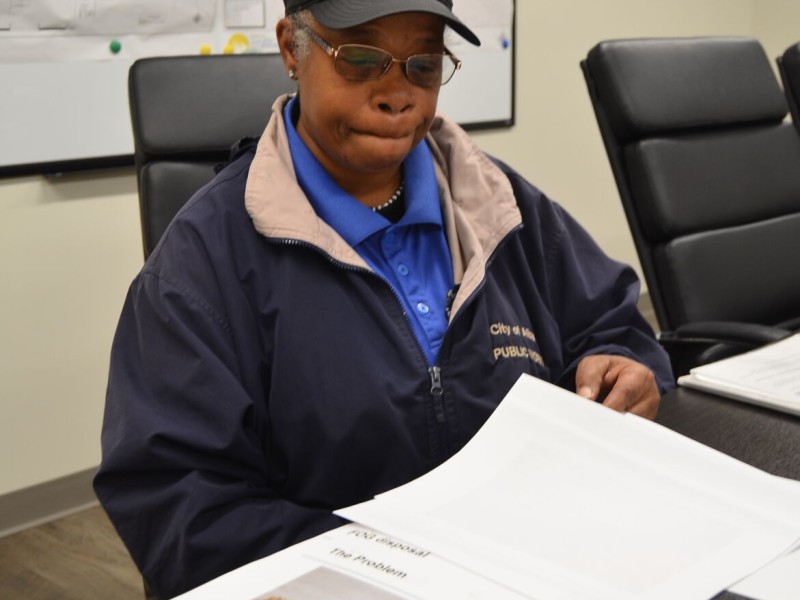
“Kds will flush anything, from toys, paper, remotes, anything that will go down there,” Tyria Boston, Fats, Oil & Grease coordinator for the city’s Public Works Department Sewer Division, said. “You wouldn’t believe the things that you find in the lines.”
And the cooking oils and grease that may look like they’re broken down by dish detergent when they’re in the sink congeal again once they’re flushed out, and those cleaning agents get diluted in water.
Some do-it-yourself mechanics even pour used motor oil into storm drains, Boston said.
When all of that fat, grease and oil combines in the system underground, it can affect the lift and pump stations that move wastewater from residences and businesses to the city’s treatment plant.
“The oil and grease will clog them and cause the station to constantly run, which increases costs to run it,” Boston said. “Sometimes you run those pumps until they need to be replaced.”
In other cases the materials narrow the flow of water in pipes.
“Once a pump starts backing up, it can cause problems with slow drainage (for residents),” Boston said. “When that happens, we want people to call to let us know the lines are backing up so we can send employees out to fix it.”
Ultimately, the costs of replacing pump stations, which can run tens of thousands of dollars, and unclogging grease-choked pipes is borne by the customers.
Even when the materials don’t cause an obstruction it affects the wastewater system.
“Basically, grease starts breaking down the pipe walls,” Boston said. “Some could be clay, some could be concrete, some of them are iron. But it causes deterioration.”
Weakened pipes also are more susceptible to the intrusion of roots that cause more flow issues over time as they snag other materials flowing through the system.
Prevention is the best way to help keep problems underground, where the wastewater disappears after it has been flushed or sent down the kitchen sink drain, according to Boston.
Some ways to reduce the flow of fats, oil and grease is to scrape cooking pans and utensils and wipe excess grease from plates, pans and silverware before putting them in the sink or dishwasher for cleaning.
Grease should be poured into containers after it cools and placed in garbage cans, and sink strainers should be used to prevent food from going into the drain.
Beyond the obvious sources, other items that contain oils include dairy products, baking products, butter and margarine, food scraps and sauces.
Another financial incentive to keep the grease out is that the clogs don’t always occur in the city’s pipes. Sometimes home drains that hook into the sewer system back up, and that can result in raw sewage backing up into homes, expensive costs for cleaning, bad odors and higher sewer bills.
And calling a plumber to deal with the clog can run as much as $70 or more for a plumber to show up and $300 for an hour of work, Boston said.
Author

Related Articles
Candidates debate health care, development, rural investment at Albany forum
Candidates seeking to represent Southwest Georgia called for greater investment in health care, education and infrastructure during an Oct. 1 forum, but differed over data centers, economic development and how to work across party lines.

Former Dougherty Commissioner Harry James challenges ‘dean of legislature,’ Gerald Greene
Georgia voters go to the polls on Nov. 3.Among the state House races on the ballot in southwest Georgia is District 154, where incumbent Republican Gerald Greene will face Democratic nominee Harry James.
County approves 198-foot Gillionville Road cell tower; no speakers at public hearing
Dougherty County commissioners unanimously approved a 198-foot cell tower behind a church on Gillionville Road, with no one speaking for or against it at the public hearing.
