
With most of CDC working remotely, change could be difficult
By Sam Whitehead
Georgia Recorder
ATLANTA — Earlier this year, top leadership at the Centers for Disease Control and Prevention began a monumental task: turning the sprawling, labyrinthine organization known for its highly specialized, academically focused scientific research into a sleek, flexible public health response agency primed to serve the American public. It’s an attempt to keep the CDC from repeating the mistakes it made while responding to COVID-19.
But agency veterans, outside public health officials, and workplace organization experts said the current workplace structure could be a major barrier to that goal. Like directors before her, agency head Dr. Rochelle Walensky spends a considerable amount of time away from the CDC’s headquarters in Atlanta. The agency also has embraced a workplace flexibility program that has allowed most of its scientists to stay remote.
As of October, 10,020 of the CDC’s 12,892 full-time employees — 78% of the full-time work force — were allowed to work remotely all or part of the time, according to data that KHN obtained via a Freedom of Information Act request.
Experts said the lack of face-to-face work will likely be a substantial obstacle to the top leadership’s effort to overhaul the agency after its failures during the pandemic — a botched testing rollout, confusing safety guidance, the slow release of scientific research, and a loss of public trust.
They also wondered whether Walensky, who frequently works remotely while traveling, can bring about that change from afar and whether a virtual work force might experience more challenges battling infectious diseases than one working together in person.
“One of the things that a really strong new leader would do is they’d be visible, they’d be walking the halls, they’d have the open door,” Pamela Hinds, a professor of management science and engineering at Stanford University, said. “That’s much harder to accomplish when nobody’s there.”
Key to the effort to reform the CDC is changing its institutional culture, which the agency says is at the core of all its work — from how it interacts with other agencies to how it shares its research. Walensky has said the CDC needs to be faster and nimbler in the face of emergencies and more communicative, both internally and with the public.
A flexible, responsive, and collaborative culture thrived not too long ago — during the Obama administration, when the agency handled crises such as the H1N1 flu pandemic and the Zika virus outbreak, said Dr. Stephen Cochi, who worked at the CDC for four decades before retiring this year.
“I would like to see every effort made to try to restore that culture to the extent possible, because CDC will potentially lose some of its excellence if it can’t,” he said.
Changes, such as the transition to a largely remote work force and a ballooning bureaucracy, he said, made it “almost impossible to get anything done” in his later years at the agency.
A document that outlines the CDC’s policy and that was last updated in April says remote work can help recruit and retain staffers, keep workers happy, and reduce the cost of leased office space. It followed updated guidance from the U.S. Office of Personnel Management encouraging agencies across the federal government to consider remote work options for staff, considering their utility during the COVID-19 pandemic.
As of early 2020, much of the work force of the FDA and the National Institutes of Health was working remotely. Today, the NIH is mostly back in the office, but the FDA said many of its employees continue to work remotely when possible. And while the White House COVID-19 Task Force huddled in the early days of the pandemic and held in-person news conferences, its briefings became largely remote events.
Still, Walensky has recently faced pointed skepticism about the work force flexibility policy from lawmakers, who questioned her ability to remake the CDC with a dispersed staff.
“People at the CDC are working well, they’re working hard, and they don’t necessarily need to be on-site in Atlanta,” Walensky responded. “In fact, oftentimes, they’re more productive off-site.”
Walensky added that agency staff deployments are common and that many lab staffers, who can’t work from home, are reporting to CDC offices.
Leading the agency also isn’t a traditional office job.
“The role of CDC director has historically involved a significant amount of official travel around the globe; requiring the director to be mobile and able to work from anywhere,” Jason McDonald, a CDC spokesperson, said in a statement. “Dr. Walensky splits her time between CDC domestic sites around the country, Washington, D.C., state health departments, and internationally where CDC has a presence in 60 countries.”
A remote work environment also makes it harder for an incoming leader who has no experience inside an organization to truly understand its quirks, Hinds said. Walensky was an external hire and worked at Massachusetts General Hospital before her appointment as CDC director. And booking time for a video or phone call with a new boss to help them learn about an institution is “a big hurdle,” Hinds said, compared with bumping into them in the hallway or at the coffee cart.
In her early days working at the CDC, Dr. Anne Schuchat said, she relished informal interactions with co-workers and called such unscheduled time creative and productive.
“I think you lose some things when you don’t have the informal mentoring and the visibility, perhaps the greater sensitivity to who’s struggling, who needs help,” Schuchat said.
She spent more than three decades at the agency, including two stints as acting director, before retiring in summer of 2021. Her departure came on the heels of another high-level CDC official, Dr. Nancy Messonnier.
Schuchat said that working remotely part-time was encouraged at the CDC before the pandemic because of a lack of office space. She said she imagined that many staffers were indeed more productive while working remotely, despite the possible costs to the agency’s culture.
Many people have fled the U.S. public health work force in recent years, burned out from the COVID-19 response. Public health experts said that keeping talent requires offering benefits such as remote work — especially when it’s hard to offer competitive salaries — and getting staffers to believe in an agency’s mission.
But, the experts said, in-person interactions can lead to strong allegiances and investment in an organization, which can translate to better retention.
“They generally want to feel like their work is important and that they’re valued,” Dr. Manisha Juthani, who has led the Connecticut Department of Public Health since July 2021, said. “And the workplace allows for that a little bit more so than just sitting in front of the computer.”
Walensky has said that transforming the CDC’s culture from one that’s methodical and academic to one that’s focused on quick action won’t be easy. Other experts agree on the need for the pivot.
“They tend to be an agency that studies things and then, in their own sweet time, responds, versus being an emergency response agency,” Dr. Georges Benjamin, executive director of the American Public Health Association, said.
Overhauling that culture will be a big challenge, with high stakes, for the agency tasked with protecting the public health of all Americans. Benjamin said the CDC would likely have made its pandemic stumbles even if staffers hadn’t been working remotely. But coming to terms with those mistakes — and rebuilding the agency to keep them from happening in the future — could be easier and more sustainable if more people were working together in person, he said.
“How do you become part of a culture, how do you become part of a holistic organization, if you’re not together?” he said. “While I’m not disturbed that they’re not back, my advice is to get there as quickly as they can.”
Author

Related Articles
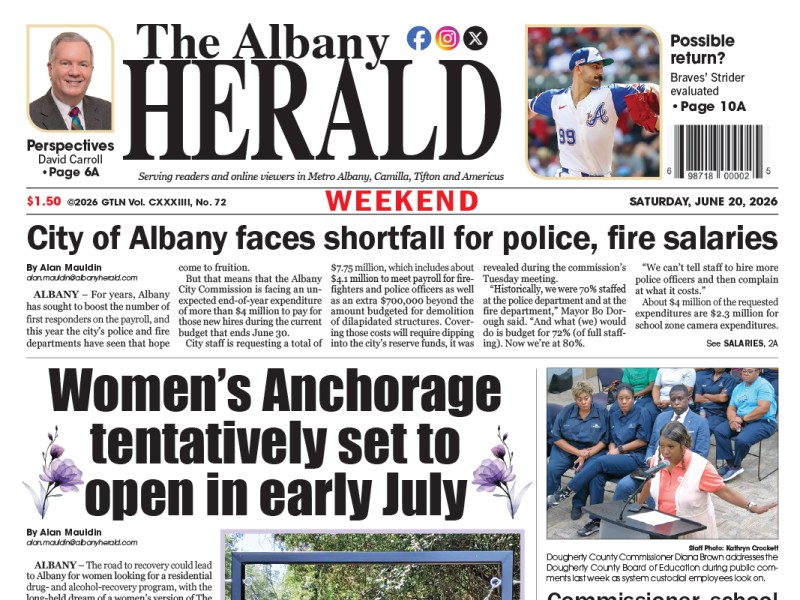
Albany Herald – June 20, 2026
City Albany faces shortfall for police… Women’s Anchorage tentatively set to… Commissioner, school leaders clash over…

Classifieds – June 20, 2026
ALBANY HERALD CLASSIFIEDS JUNE 20, 2026
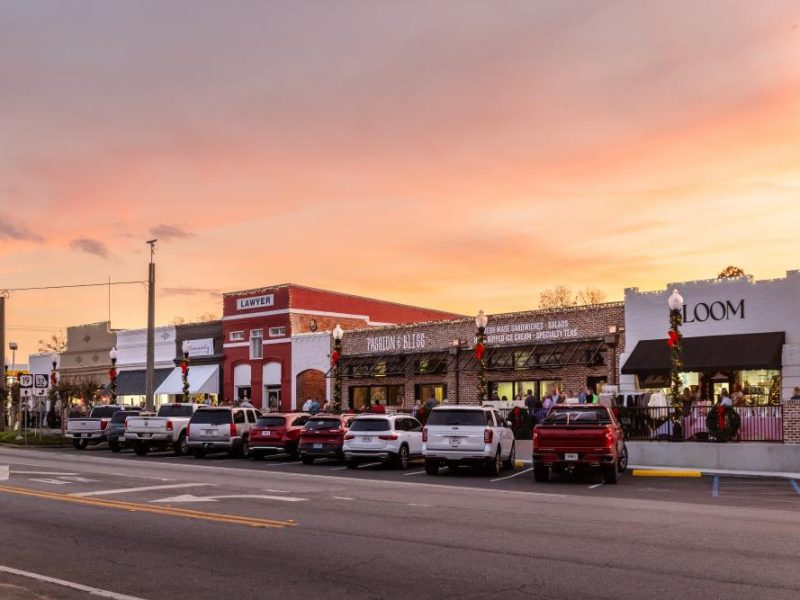
Public safety drives Leesburg’s $4.2 million Fiscal Year ’27 budget
The adopted spending plan reflects modest growth in city revenues and continued emphasis on maintaining core municipal services, particularly public safety and sanitation, which together account for a significant share of general fund expenditures.
