
CARLTON FLETCHER: The value of sports stretches beyond the fields of play

By Carlton Fletcher
[email protected]
How many times can a man turn his head, And pretend that he just doesn’t see? The answer, my friend, is blowin’ in the wind. — Bob Dylan
I overheard a conversation recently among a group of educators, and one of the things that was said struck me. One in the group of five or six said, with an air of superiority that was unmistakable, that “When it comes to education, sports do not matter.”
It was all I could do to keep from interrupting … and telling this self-righteous person how wrong she was.
And, sure, such arguments are subjective, but I speak from personal experience. I’ve written in this space before — and offer myself up again — as a source of proof that refutes such sentiment.
Neither of my parents attended high school, and my long-held ambition when I was a young teenager was to quit school and find a job. I didn’t need school to get along in life. (And, no, contrary to what so-called anti-sports “experts” say, I did not have difficulties in the arena of education. I made pretty much all A’s and was told by one of my favorite teachers — I loved Linda Roberts! — that I could have accomplished so much more if I’d only applied myself. I didn’t … just didn’t care.)
When I told my dad that I wanted to quit school, he hit me with a shot for which I had no answer. He said, “OK, but you’ll have to get a job … and you won’t get to play anymore football or baseball.”
And I promise, to this day, that that was the only reason I stayed in school.
Sports are not the life-and-death, good-vs.-evil, win-at-all-costs struggles that the men and women who coach them often tell their charges. But they do go a long way in teaching young athletes some of the values that will impact them favorably when they leave the fields of play behind: camaraderie, the concept of team over the individual, learning to give maximum effort, loyalty and just taking part in physical activity for fun and health.
And there’s another element of sport that I think is often overlooked.
I have a narrower, more focused viewpoint because I came of age in the early ’70s, at a time when south Georgia was only starting to understand the ramifications of court rulings that outlawed racist and exclusionary practices that had, sadly, become ingrained in our region’s psyche. It was a time of unforced segregation, separate school- and community-sponsored proms and social events, parental and community condemnation of any sort of “mingling” among young people of different ethnicities.
Yet, when it came to what happened on the football field, on the baseball diamond, on the basketball courts, on the various fields of competition, athletes — by force of their shared goals — slowly but gradually learned that, yes, we all did bleed the same color, and yes, if there was any way our team was going to win, we had to put aside differences and work together.
It was as part of the Irwin County High School football and baseball teams (very successful teams, I might add) that I learned that not only were the racist points of view of people like my parents and most of their friends wrong, they were hurtful, mean and ignorant. And it was at shared gatherings like football camp and baseball road trips that I learned that most of the other players on those teams — black and white — had similar backgrounds and experiences. And by talking about these shared experiences, I learned to appreciate that King ideal of content of character over skin color.
And those people who sweated, worked, ran, endured the inhumanity that can only be inflicted by high school coaches alongside me became much more than teammates. They became my friends. And we were able to put aside the old ways we’d been taught — much to the anger and chagrin of many in the community and many of our relatives — and become better people for it.
And that is why high school sports will never be irrelevant and will always matter … no matter what the Latin teachers say.
Related Articles
Dawson police arrest wanted suspect after Flock Safety camera alert
According to police, May drove into the yard of a nearby residence instead of complying with officers’ commands. He then exited the vehicle and ran into the home on foot.
Lee County stands alone without E-SPLOST. Here’s what that means for schools, taxpayers and the county’s future
Following the defeat of its referendum, Lee County became just the second of Georgia’s 159 counties without voter approval for an active ESPLOST, leaving the school system without the state’s primary local funding source for major construction, renovations, school buses and other capital improvements.
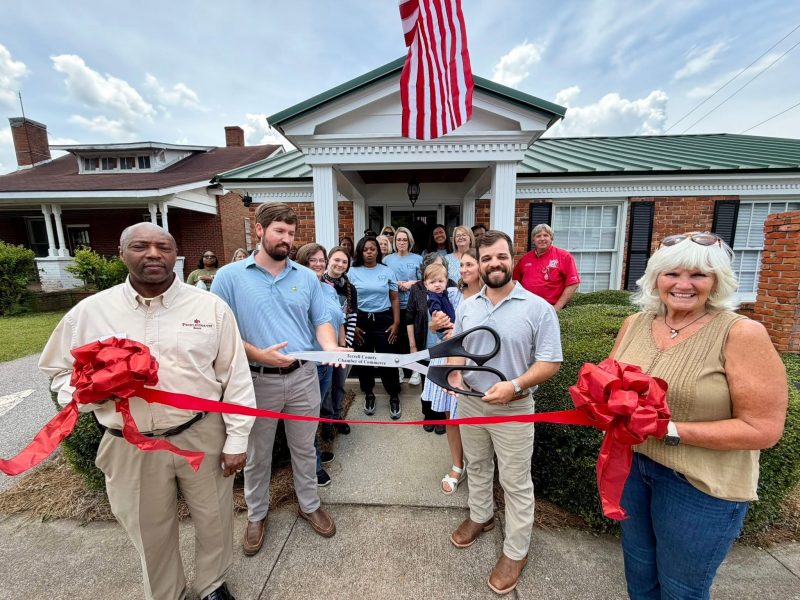
Chamber celebrates new businesses, invites community to Coffee and Connections event
The Terrell County Chamber of Commerce is continuing its efforts to strengthen local business relationships through community celebrations and networking opportunities, recently recognizing two new businesses with ribbon-cutting ceremonies and announcing its next “Coffee & Connections” event in Sasser.
