
CARLTON FLETCHER: University System, governor shamefully wasted committee’s time

By Carlton Fletcher
[email protected]
“Same as it ever was, same as it ever was …”
— Talking Heads
The University System of Georgia and state of Georgia officials apparently agree with that old Shakespearean admonition about a rose not being sweeter if given a new name.
The system and Gov. Brian Kemp patted themselves on the back in June of 2020 when they named a committee to look into the possibility of changing the names of buildings and colleges on University System campuses that honor individuals who supported slavery and segregation. The move, broadly trumpeted by Kemp and the University System as a fitting response to the sometimes violent backlash that erupted following the killing of George Floyd by a white police officer, was supposed to be part of a “healing” process in the state.
Albany State University President Marion Fedrick was named chairwoman of the statewide committee, and retired Georgia Court of Appeals Judge Herbert Phipps, a highly respected southwest Georgia jurist, was a member of the committee that met regularly for five months or so.
After completing their work, which involved the tedious process of considering the names of 878 buildings and colleges at the 26 institutions in the University System, the committee recommended 75 name changes at 13 of the state’s colleges and universities. They included honors bestowed upon some of the most outspoken segregationists in the state’s history, men who owned slaves or endorsed slavery and even purported members of the Ku Klux Klan.
Provided such illuminating background to support the recommendation of removing these men’s names from state-funded buildings, the University System made the bold decision … to do nothing. “We acknowledge, understand and respect there are many viewpoints on this matter,” the University System proclaimed in a statement announcing it would take no action on the committee’s recommendations. “Going forward, the board is committed to naming actions that reflect the strength and energy of Georgia’s diversity.”
Fedrick, who after all is employed by the University System, chose not to speak about the system’s response to her committee’s recommendations. Phipps, though, made his feelings known.
“I am very disappointed in the statement that they put out that they were not going to take any action, because we did a lot of work in good faith after they had indicated that they wanted a report and some recommendations as far as the naming of buildings and colleges in the university system,” the retired judge said. “And here we are 60 years (after the University of Georgia was first integrated) with colleges and buildings that are named for slaveholders and segregationists and people who dedicated their lives and careers to suppressing and abusing black people.”
Here are some of the findings of the committee:
♦ Gordon State College in Barnesville, was named for John Brown Gordon, a Confederate general in the Civil War who later became a powerful politician in a state Democratic Party devoted to white rule. He was thought to be the head of the post-Civil War Ku Klux Klan in Georgia.
♦ That bastion of journalistic excellence at the University of Georgia, the Grady College of Journalism and Mass Communications, is named for newspaper editor Henry W. Grady, who wrote frequently in support of white supremacy.
♦ The Langdale College of Business Administration at Valdosta State University was named for a man, Harley Langdale Jr., whose fortune was based on camps where African American workers made turpentine from pine resin. They were largely held in place by debt, legal threats and violence.
♦ The Stafford School of Business at Abraham Baldwin Agricultural College was named for a leader in the fight to maintain segregation in Georgia in the 1950s.
At least one building or college was included at 13 of the system’s 26 institutions, including a call to rename the Huntington Administration Building at historically black Fort Valley State University, citing railroad magnate Collis Huntington’s mistreatment of Chinese laborers.
Of the buildings/colleges suggested for changes, 31 are at UGA. Among them are Aderhold, Lipscomb and Candler halls, buildings named for men who were avowed segregationists.
If anyone is surprised that the lip service by state politicians and University System officials given to this meaningless gesture rings awfully hollow now that they figure things have “calmed down” enough to just hold on to the status quo, they just haven’t been paying attention. But these “leaders” should at least have the decency to apologize to Fedrick, Phipps and other committee members who took on a task in good faith, only to find the state had wasted their time.
Author

Related Articles
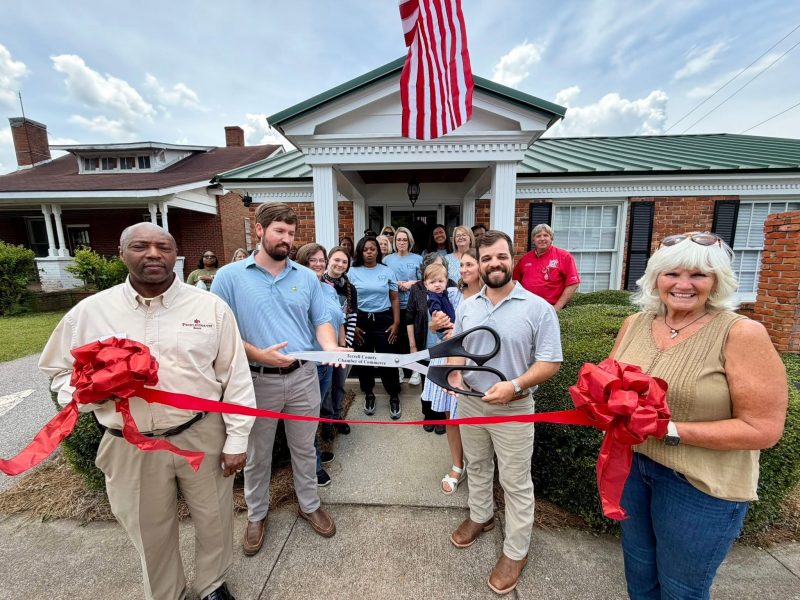
Chamber celebrates new businesses, invites community to Coffee and Connections event
The Terrell County Chamber of Commerce is continuing its efforts to strengthen local business relationships through community celebrations and networking opportunities, recently recognizing two new businesses with ribbon-cutting ceremonies and announcing its next “Coffee & Connections” event in Sasser.

Regional catering business finds new home at Warrior Creek Mercantile
For months, Marchbanks said she had been asking God for an opportunity to serve others. “I just kept praying, ‘God, use me as a servant,'” she recalled. “I didn’t care what it was. I just wanted to be used to help people.”
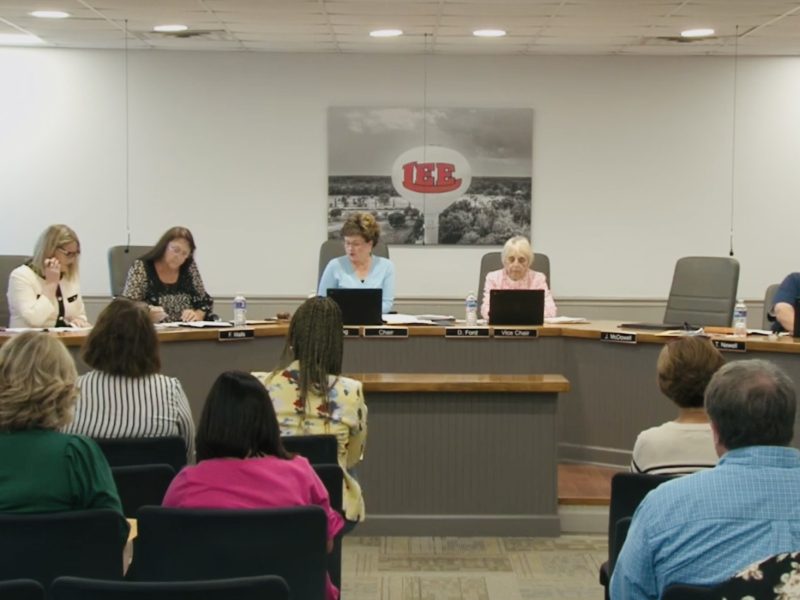
Houston, Ford advance in contentious Lee County school board race
According to unofficial election results, challenger George Parrish Houston led the three-candidate field with 534 votes, or 42%, followed by incumbent Donna Ford with 478 votes, or 37.6%. Candidate Lavendra Shootes received 261 votes, or 20.5%.
