
FREDDIE POWELL SIMS: Georgia’s most critical legislative issue is literacy
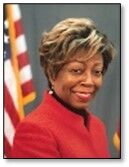
By Freddie Powell Sims
[email protected].
The most critical legislative issue facing the state of Georgia today is literacy, the ability to read, write and think critically. Low literacy rates threaten economic growth, especially in southwest Georgia. Without a literate work force, our communities will continue to experience a significant decline in economic expansion and population.
In order to adequately function in society, literacy is a skill set needed by all capable individuals. Literacy is connected to every discipline and every academic success. Therefore, for students to absorb academic materials, they must have a happy, secure environment and a sustainable healthy food supply, which is another focus of the legislature. Access to mental health care, if appropriately diagnosed, also factors into academic success. Millions of dollars recently appropriated by the legislature should help increase literacy rates across Georgia and provide better school counseling services.
Eliminating food deserts is yet another huge focus of the Georgia State Legislature. Food deserts are mostly located in urban areas where it is challenging to buy quality, fresh, healthy food products. However, they are also found in poor rural communities, where residents do not earn enough money to purchase fresh, quality foods. A lack of healthy food directly correlates with academic success and academic failure.
Summer and after-school feeding programs are sponsored by the State Department of Early Care and Learning (DECAL) through the United States Department of Agriculture. Currently, there are approximately 59 counties in the state of Georgia without a summer or after-school feeding program. Most of them are located in the poorest legislative districts in the state. Rep. Gerald Greene and I are working on this issue and consider it a top priority throughout Georgia, not just our districts. Constant monitoring and investigation of literacy scores from the poorest underserved districts show that students are not performing academically on grade level. Healthy meals make a difference in a child’s cognitive ability to perform academically.
COVID continues to impact literacy rates as well. School budgets are not as large as when COVID monies were plentiful from state and federal governments. Therefore, we suggest that academic communities consider academic priorities, especially reading and mathematics, when planning and budgeting. Make smart budgetary adjustments. Some literacy materials, through the Department of Education and other agencies, are available without cost to districts. Therefore, do a thorough investigation before making annual instructional purchases.
Southwest Georgia has also noted a couple of school boards voting to decrease their school year by 20 days, from 180 to 160. Decreasing school days is a dangerous strategy devised to save money and provide longer holidays. Some theorists believe that this very destructive action will entice more educators to seek employment in these districts. Surely there are other ways of conserving school revenue without shortening the school year, thus interrupting several weeks of face-to-face academic engagement for students.
COVID has had a significant negative impact on the educational progress of children. Over half of Georgia’s students are still one to two years behind. Learning loss is here for an extended period of time. Students need more face-to-face instructional time to decrease learning loss, not less. Eliminating school time is a catastrophe for academic success. It affects work force readiness, work force mechanization and social stability, especially in rural Georgia.
In rural Georgia, we sometimes fail to connect literacy and academic progression with economic success. Then, how should we go about making realistic sustainable connections that are beneficial to students, families and ultimately, communities? First, seek out educational leaders who share the same academic tenets and economic beliefs of the communities that they are chosen to serve.
Strong leadership can’t be overstated. In searching for strong academic leaders, be creative in enticing leaders to join your communities. Find individuals who are already committed to improving literacy in your area or region and give them an opportunity to lead, rather than those that commute in and out of your communities from hundreds of miles away. Most times, rural communities are convinced that nobody “good” wants to come to small towns. But it takes effort to search and research for willing individuals. Small towns must also learn to “grow your own” leaders through creative personnel investments.
Again, there is an urgency to increase literacy rates throughout the state of Georgia. SB (Senate Bill) 211, signed into law on April 13, 2023 by Gov. Brian Kemp, created a 30-member Georgia Council on Literacy. Currently, one in 10 adults in the state struggles with low literacy skills. Specifically, 800,000 Georgians face work force challenges. While economists project the creation of more than 250,000 new jobs in the state, many Georgians will not be ready for this expansion because of inadequate preparation in reading, mathematics and comprehension.
For many students, time is of the essence, and each school day presents a crucial struggle toward preparation for student success in future work spaces. Through invested team efforts across Georgia, literacy and job expansion will continue to be top priorities in the state.
Author

Related Articles

CHARLES OCHIE: Let’s finally make Albany the college town it deserves to be
Albany has strengths, the legacy, and the potential to be a true college city.
KING RANDALL: Never giving up on a ‘new day’ in Albany
No matter the challenges, the people of Albany have the strength and perseverance to turn the city around.
JASON ESTEVES: Georgia farmers deserve disaster relief they were promised
Georgia farmers, reeling still from the effects of Hurricane Helene, have not received emergency funds promised them.
