
PATRICK GARNER: Trump, Emory, millennials and me
GUEST COLUMNIST: Emory studentsfelt threatened by ‘Trump 2016’ graffiti
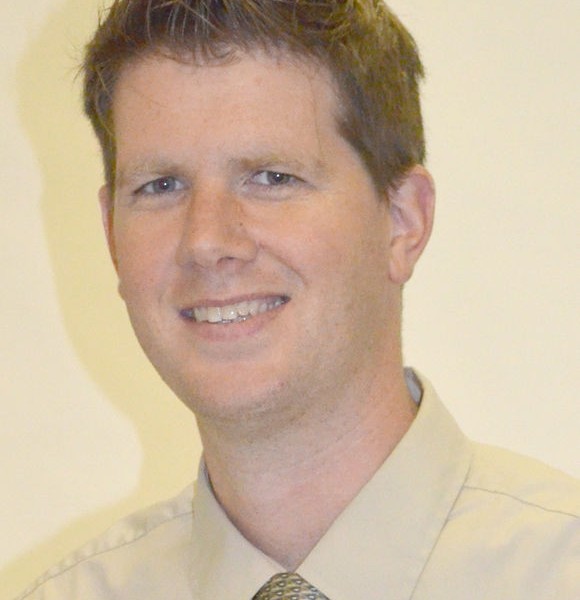
By Patrick Garner
Members of older generations frequently denigrate those of younger generations whom they frequently perceive to be weaker and softer. My strongest memory from an intermediate swimming class that I took for fun at a local college a couple years ago was grown men, ages nineteen and twenty, expressing fear to the professor of swimming in the deep end of the pool. My knee-jerk reaction was thinking that back in my day, the 90s, if students expressed such fears they would have been at the very least teased if not afforded a physical beat down after class.
Upon reflection, I pondered that perhaps a generation with less shaming might be better than the previous. When I was 18, my overeating led to obesity that prompted teasing from my friends and family, which in turn resulted in me losing weight. Research, however, suggests that fat-shaming does not work for most people the way that it worked with me and actually leads to further obesity. In the last couple of years, I have made extra effort not to engage in fat-shaming in person or in social media.
Much ado has been made in recent years about millennial students on college campuses needing “safe spaces” and “trigger warnings,” with some critics suggesting that they can’t handle material with which previous generations could cope. As an undergraduate and graduate student I worked part time as a nude model for art classes on campuses that saw the human body as something perfectly normal that shouldn’t require trigger warnings and safe spaces.
Imagine my shock when two years ago, for the first and only time, one of my students complained to my supervisor that I showed a movie in class that revealed, gasp, exposed buttocks and breasts. I was further appalled when my supervisor suggested that in the future I should give trigger warnings before showing such films, and I was aghast when Human Resources suggested that I should receive permission slips from parents before showing such films, despite this being a higher, not secondary, educational environment.
On March 21, some students at Emory University said that they no longer felt safe upon discovering “TRUMP 2016” chalk graffiti all over campus, which led to accusations by conservatives that the students were a bunch of pansies. But instead of whining, some of the students organized a rally and, echoing the words of Karl Marx and his predecessor Jean-Jacques Rousseau, chanted, “It is our duty to fight for our freedom. It is our duty to win. We must love each other and support each other. We have nothing to lose but our chains.” The students then met with university president Jim Wagner, who admitted that the students felt “genuine concern and pain.”
For the students at Emory, “TRUMP 2016” was no mere political slogan, but was hate speech similar to the swastika and the n-word, something which as a white male I can’t experience and react to in the same way were I minority or a woman. According to Alexius Marcano, president of Young Democrats of Emory, “Trump represents something different, that’s threatening.” Because of his incendiary campaign rhetoric that focuses on divisiveness and fear, Trump’s name has become synonymous with racism and misogyny.
Before criticizing millennials for being soft and weak, people should consider the context and their own privilege. I don’t have to live in fear that some right-wing ideologue will try to prevent me from getting married, revoke my passport, and try to commandeer my reproductive system, but for many millennials that fear remains genuine.
Patrick Garner is an educator and critical theorist who studied under philosopher Slavoj Zizek at the European Graduate School in Switzerland. He was a recipient of the Southwest Georgia Top 40 under 40 in 2013, and is an active ultra-marathon runner.
Related Articles

Taking the opportunity to join the lost sheep in prayer
God is due thanks for looking after his lost sheep.
Today’s cellphone generations lack common sense
The kids today don’t get how important it is to get outside and play; they’re too wrapped up in their cellphones.
A second-best Bob Dylan moment
A couple of fans take in the Bob Dylan biopic “A Complete Unknown.”
