
CREEDE HINSHAW: Competition a reality among Southern Baptist, Methodist churches
Rural Southern Baptist and Methodist churches have long had a way of competing against each other.
Last week I reflected on what it was once like in rural south Georgia where Methodists and Baptists largely controlled the religious playing field between them. The dynamics between these two Protestant denominations were fascinating.
People being what they are, there was always latent competition between the Methodists and the Baptists. Who had the most children at Bible School? Whose steeple was taller? Did only one church own a 15-passenger van? Whose choir had the better voices?
As much as we Protestants professed to be on the same playing field, Satan being our only enemy, we couldn’t help but compare ourselves. An asphalt parking lot was more desirable than a grass lot. A bigger asphalt parking lot was superior to a small asphalt parking lot, and everyone in town knew whose parking lot had more cars or more potholes.
I wish I could say that this pettiness was relegated to the lay people, but preachers would get caught up in the ecclesiastical competition, too. I can’t speak for every pastor, but the competitor in me couldn’t stand to be in second place. It galled me to no end that the Baptist church in Ellerslie had running water; my church didn’t even have an outhouse.
It pleased me in Waverly Hall that my parsonage sat atop a hill where I could gaze down on the Baptist preacher’s home. In Metter, I was relieved that there were three Baptist churches in town, because none of them individually was larger than my single Methodist church. Plus, I noted, every doctor and dentist in Candler County was a Methodist. These were foolish, prideful attitudes that I will have to answer for to St. Peter.
Methodist frustration (or resignation) came because Baptists were the stronger church in almost every setting: urban, rural, or open country. I haven’t seen recent statistics, but a few decades ago Baptists claimed more than 50% of the religious population of every single county in Georgia, enabling even some smaller Baptist churches to hire a second staff person, a luxury Methodists could rarely afford. We Methodists just sighed deeply and kept our heads down against the religious wind.
Despite the competition, Methodists and Baptists were largely cooperative in those days. When one congregation held a revival, the other church supported the revival preacher. Methodists and Baptists met together for Thanksgiving services, Sunrise Services or sometimes Vacation Bible School.
Some places were so sparsely populated that cooperation was a necessity when neither Methodists or Baptists could afford a full-time preacher. These smaller congregations were uniquely ecumenical. Two Sundays a month, those rural Christians would worship in the Methodist Church, the other two Sundays they would worship in the Baptist Church, none being the worse off.
When it came to heaven, most Methodists and Baptists figured they were probably both bound for the promised land, although some Baptists clearly doubted whether sprinkled Methodists would gain admittance.
Related Articles

CARLTON FLETCHER: Lousy customer service leaves a fowl taste
Before I get into this, let me say from the get-go that I understand that we all have bad days, that the aggravations of life can put a damper on everything that gets in our way on a given day.

Squawkbox – June 27, 2026
Albany’s “leadership” is involved in criminal activity and will be… Franklin Graham and the other pastors of “super churches”…
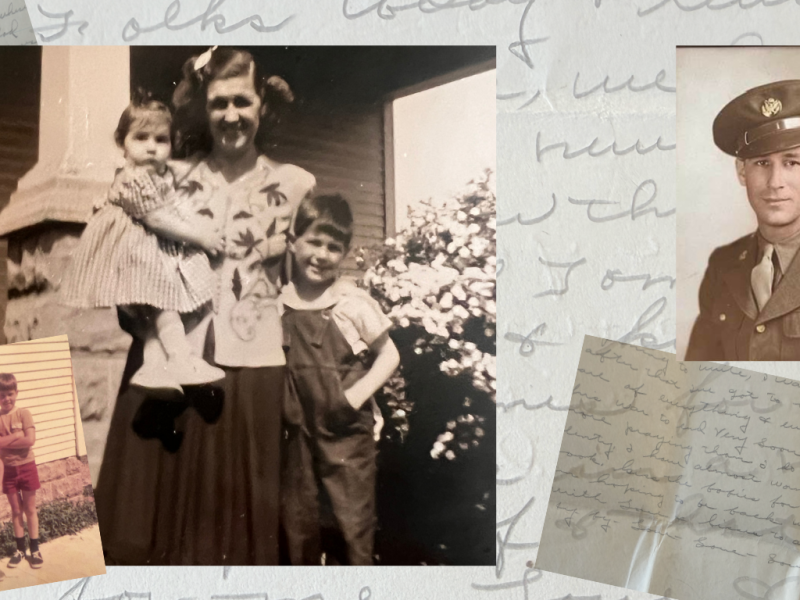
My Grandpa Was Killed in World War II. I Met Him Through His Letters Home
Gina Wolf’s grandfather died before she was born. His letters sent to her grandmother from Europe during World War II made it possible to know what kind of man he was.
