
ROGER-CLAUDE LIWANGA: Is ‘dialogue-within-a-dialogue’ dynamic delaying Trump-brokered peace in Eastern Congo?
In June 2025, President Trump played a central role in facilitating the Washington Peace Accords between the Democratic Republic of the Congo (DRC) and Rwanda.
In June 2025, President Trump played a central role in facilitating the Washington Peace Accords between the Democratic Republic of the Congo (DRC) and Rwanda, marking one of the United States’s most significant diplomatic engagements in Africa’s Great Lakes region in recent years.
The agreement sought to advance regional stability in a country that has endured decades of armed conflict, cross-border tensions, and one of the world’s most severe humanitarian crises, with millions of lives lost and millions more displaced since the Congo wars began in the 1990s.
Beyond its humanitarian and security implications, peace in the DRC carries broader strategic significance for the United States and the global economy. The country possesses some of the world’s largest reserves of critical minerals, including cobalt, copper, lithium, and other strategic resources essential for the production of electronic
devices, electric vehicles, and rechargeable batteries that power the modern digital economy.
Yet, both before and after the signing of the Washington Peace Accords, diplomatic efforts continued along multiple fronts. Nairobi, Luanda, Washington, Doha and Montreux have all hosted negotiations aimed at addressing different dimensions of the eastern Congo crisis. This unprecedented level of international engagement reflects the seriousness with which the conflict is viewed.
But despite sustained diplomatic attention from Africa, the Middle East, Europe and the United States, lasting peace remains elusive. The persistence of conflict is first and foremost a consequence of insufficient political will by the parties to implement
the commitments they have undertaken. But another factor deserves greater attention: the growing fragmentation of the peace architecture itself, a phenomenon that can be described as a “dialogue within a dialogue.”
This dynamic occurs when a new negotiation process is launched before the previous one has produced tangible results. Each dialogue generates another dialogue; each mediation gives rise to a new mediation effort, until the diplomatic process itself risks becoming a substitute for conflict resolution.
The best metaphor for understanding this dynamic is that of Russian nesting dolls. When one doll is opened, another immediately appears inside, followed by a third, then a fourth. Eventually, one loses sight of the original objective.
Diplomacy is intended to shorten wars. In eastern DRC, however, the multiplication of negotiations risks creating the opposite effect: extending diplomatic processes without necessarily accelerating implementation.
Since the resurgence of the M23 rebellion in November 2021, peace initiatives have multiplied without producing durable stability. African, regional and international mediators have invested considerable diplomatic capital, while Congolese religious leaders and civil society actors have also promoted dialogue initiatives. Yet violence continues, civilians remain displaced, and armed groups retain the ability to destabilize large parts of eastern DRC.
The issue is not that every peace initiative is unnecessary. Eastern Congo’s crisis is multidimensional, involving hundreds of local armed groups, regional security concerns, governance failures, and political tensions within the DRC itself. Different processes therefore address different aspects of the conflict.
The challenge is that these initiatives have developed largely in parallel, without a common framework ensuring coordination, complementarity and accountability. The Nairobi Process, launched under the auspices of the East African Community, initially focused on Congolese armed groups. The Luanda Process, led under the African Union framework, addressed tensions between Kinshasa and Kigali.
Following attempts to harmonize these efforts, Washington became increasingly engaged. Facilitated by the United States, negotiations between the DRC and Rwanda culminated in the signing of the Washington Peace Agreement on June 27, 2025. The agreement established commitments concerning security, regional relations, and economic cooperation. However, several key security provisions remain only partially implemented.
The Doha Process between the Congolese government and AFC/M23 subsequently emerged as another major diplomatic track. Despite continued negotiations under Qatari mediation, several proposed protocols remain unfinished, and implementation of existing commitments has progressed slowly.
Meanwhile, African Union Mediator President Faure Essozimna Gnassingbé of Togo has supported consultations aimed at facilitating a broader inter-Congolese political dialogue, including through the involvement of Angolan President João Lourenço. Congolese religious organizations have also launched consultations aimed at promoting an inclusive national dialogue. Each initiative has its own mediators, timelines, priorities, and participants. The result is not necessarily too much diplomacy, but insufficiently coordinated diplomacy.
The proliferation of peace initiatives cannot be attributed to a single actor. It reflects incentives affecting multiple stakeholders. For governments, additional negotiation formats may provide opportunities to manage international pressure, seek
diplomatic advantage, or delay difficult compromises.
For armed actors, prolonged negotiations may create opportunities to strengthen positions on the ground, gain political visibility, or postpone decisions regarding disarmament and accountability.
For mediators, launching new initiatives may preserve diplomatic relevance when existing processes encounter obstacles.
International actors also can contribute to fragmentation when they establish separate mechanisms without ensuring that these efforts reinforce one another.
The result is a troubling paradox: Everyone supports dialogue, but no process has yet generated sufficient momentum toward implementation. New negotiations emerge while previous agreements remain incomplete.
Some observers argue that the fundamental problem is not the number of negotiations but the lack of political will among the parties. This argument is correct. No peace framework can succeed if signatories are unwilling to implement their commitments. However, fragmented diplomacy creates additional risks. Without effective coordination, monitoring, and integration, parties may move from one dialogue to another rather than fulfill obligations already undertaken.
The priority, therefore, should not be creating another peace process. It should be building coherence among existing ones.
Peace in eastern DRC will depend less on the number of diplomatic initiatives than on whether national, regional, and international actors can place them within a unified architecture based on:
— a shared political vision;
— coordinated timelines;
— complementary mediation roles; and
— credible monitoring and implementation mechanisms.
Such an architecture could take the form of a joint peace process coordination mechanism under African Union leadership, supported by international partners, to ensure that commitments emerging from Washington, Doha, and future Congolese dialogue efforts reinforce rather than compete with one another.
The United States, having invested significant diplomatic capital in the Washington Peace Agreement, has a particular interest in helping prevent fragmentation of the broader peace architecture. Diplomacy should not become an end in itself. It should remain what it was always intended to be: an instrument for achieving peace.
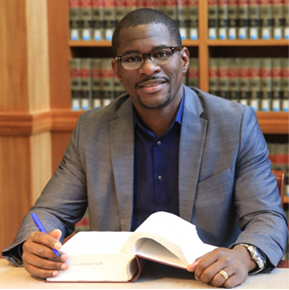
Roger-Claude Liwanga is an associate professor of Criminal Justice at Albany State University, an adjunct professor of Law at Emory University School of Law, and co-initiator of the Barometer Peace Agreements in Africa.
Related Articles

CARLTON FLETCHER: After tragedy, restaurateur’s future centers on her staff, customers
Restaurateur B.J. Fletcher ponders her future after a fire at her popular restaurant.
CARLTON FLETCHER: Imagine swatting a fly with a rolled-up TV
The love for newspapers stretches out over the decades.
CARLTON FLETCHER: Looking for truthful answers to some hard questions
And we wonder how so many people in Germany could devote themselves to an evil despot like Adolf Hitler.
