
RON SEIBEL: Sports books coming, but likely not here
SPORTS COLUMN: Supreme Court ruling won’t necessarily bring legal sports wagering to Georgia

By Ron Seibel
For those who believe states should be the ones determining laws of a local nature, Monday’s Supreme Court decision to overturn the Professional and Amateur Sports Protection Act of 1992 was one of the best to come down in some time.
The high court ruled that the federal government had no business telling certain states to ban sports betting while allowing others to continue with the practice. The law, written to prohibit sports betting in most states while allowing Nevada to retain a near-monopoly, was unfair on its face.
The Constitution narrowly defines what the federal government can and cannot do. And this law was deemed by the Supreme Court to be an overreach of power.
Just don’t expect to be able to place a legal sports bet in Georgia anytime soon.
Some might think that the ruling instantly permits sports betting nationwide by all parties. It does not. It simply allows states to legalize the practice and put in frameworks to make sure everything is done on the up-and-up.
In Georgia, the effort to legalize sports betting likely means the need to put the issue on a statewide ballot. And to get on the statewide ballot, the measure has to first be approved by the Georgia legislature.
House Speaker David Ralston proved that casino bills would have a tough time working through the Gold Dome. When a casino bill picked up steam a couple of years ago, he told legislators to go home over the weekend and talk to people in church about it. What happened the following Monday? Ralston trotted a series of pastors out in a news conference, all opposing the bill. The bill was stopped in its tracks.
A more likely option, should lawmakers choose that route, would be to set things up through the Georgia Lottery.
On the surface, going through the lottery sounds like a good option. Changes might need to be made to the statewide terminal system, and there might be limits to the types of games the lottery could handle, but the network is already in place.
The downside? Lottery games tend to have high house edges, much higher than casinos. A betting line edge, or vig, in Las Vegas is usually 10 percent. Would the lottery push it to 15, maybe 20 percent? That would be too tall for most knowledgeable sports bettors to call.
What about surrounding states?
Alabama has long frowned upon gambling, even maintaining a ban on the lottery. But politics in Alabama are quite unpredictable, so one never knows.
Florida is even more complicated. Disney and the Seminole Tribe are backing a state constitutional amendment that would essentially freeze the current state of gambling in that state, which essentially would limit games to Native American casinos, pari-mutuel facilities and the Florida Lottery. New laws could be passed should the amendment win voter approval, but only if 60 percent of voters agree.
It’s likely the closest one could legally place a sports wager will be Mississippi, where enabling legislation has already passed. Books there could open by the end of summer.
I don’t bet on sports, and I don’t encourage such bets. But states, if they choose to have casinos, should be allowed to offer these games.
Should Georgia legalize casinos? That’s another column for another time.
Contact sports editor Ron Seibel at [email protected]. Follow him on Twitter @ronseibel.
Related Articles

CARLTON FLETCHER: Lousy customer service leaves a fowl taste
Before I get into this, let me say from the get-go that I understand that we all have bad days, that the aggravations of life can put a damper on everything that gets in our way on a given day.
Squawkbox – June 27, 2026
Albany’s “leadership” is involved in criminal activity and will be… Franklin Graham and the other pastors of “super churches”…
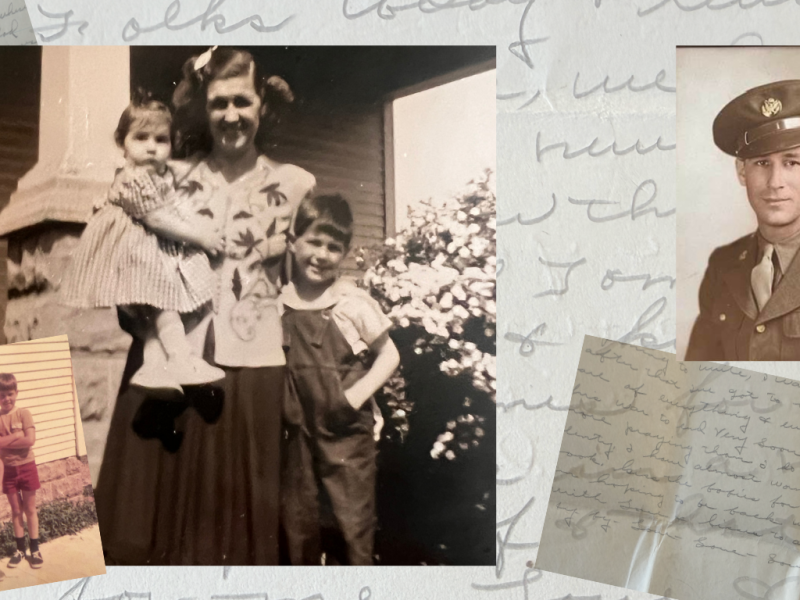
My Grandpa Was Killed in World War II. I Met Him Through His Letters Home
Gina Wolf’s grandfather died before she was born. His letters sent to her grandmother from Europe during World War II made it possible to know what kind of man he was.
