
A ‘clear’ view of bass fishing
Few anglers don’t find clear water-bass fishing vexing at times
By Bob Kornegay
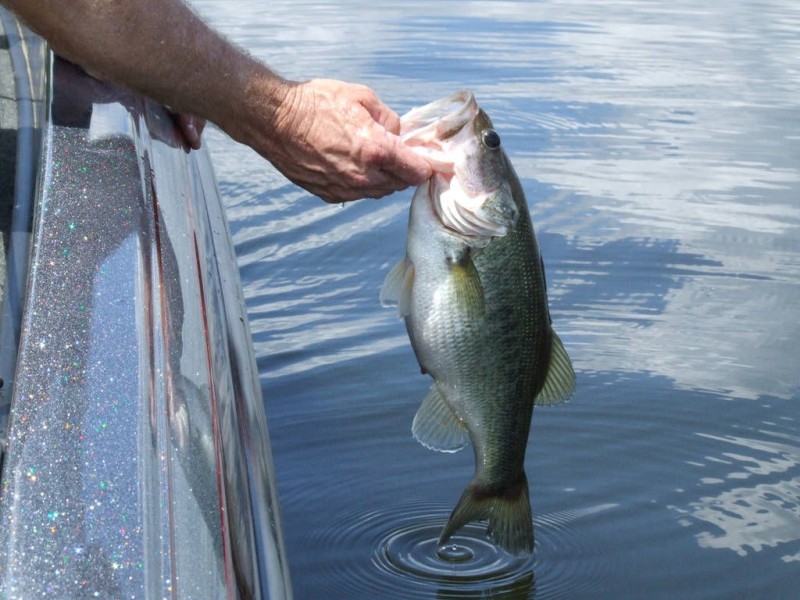
ALBANY — Fishing for largemouth bass in clear water can be a baffling challenge. A generic complaint from most any frustrated angler might be, “My buddies and I have fishing rights on some small ponds and lakes that stay clear most of the year. All the ponds contain good populations of bass as well as some really large fish, but they’re extremely hard to catch. We’d like to know how to change that.”
When the subject is clear-water bass angling, such laments are heard often. Very few anglers don’t find clear water-bass fishing vexing from time to time.
It so happens, though, there are ways around this common dilemma. There are a number of tried-and-true “secrets” that will improve your odds in those gin-clear waters where the fish grow large but conditions are tough.
Clear-water angling is considered by many sportsmen to be the most difficult of all bass fishing situations. When located in areas with a high degree of water clarity, bass are more finicky and can be very hard to stalk, pattern and catch. Unless, of course, one knows a few specific techniques to prompt these reluctant fish to bite and thus put the odds more in his favor.
Legendary bass fishing professional Guy Eaker, Sr. has fished waterways large and small for many years. The hall-of-fame angler logged more than 35 years on the B.A.S.S. tournament circuit and over the course of that tenure qualified ten times for the Bassmasters Classic. His prestigious tournament victories include the 1994 B.A.S.S. Texas Invitational championship. With untold hours of fishing to his credit and thousands of acres of water behind him, the time-tested veteran is an excellent source of information for practically any angling situation.
“In my line of work, the first goal a fisherman had to reach was catching a limit of bass,” said Eaker. “If I caught a limit of fish every time I got onto the water, I knew I’d make it to the Classic. When I’m targeting clear water, the line I choose is always the number-one key to catching fish.”
Years ago, well before he began his tournament fishing career, Eaker often noticed that bream and other bass-forage species would sometimes “peck” on fluorescent or heavy lines when he used them in clear water. He decided that line visible to bait fish must certainly also be visible to bass and would most likely spook them. He was right.
“When I switched to clear lines in high-clarity water conditions, I immediately became a more successful bass angler,” Eaker explained. “When I went a step further and started using thin-diameter lines in clear water as well, I again greatly increased my level of angling success. I also found out you don’t have to give up line strength to get a thin-diameter line that’s less visible to the fish. Most of the good thin-diameter lines are just as strong as thicker lines in the same pound-test category. The smaller diameter is the only noticeable difference. I’m able to focus on and land big fish without losing important advantages the lighter weight, thinner line provides. These advantages are necessary to effectively target clear water on a consistent basis.”
The advantages Eaker alludes to are line castability, proper lure presentation, and less commotion and vibration when working a lure through the water. Line castability is critical in clear water because anglers must down-size their lures to catch more fish. To successfully cast small lures you need thin line.
“Thin, light line also allows smaller lures to sink and travel into the strike zone quickly,” Eaker added. “Clear-water bass have a tendency to position themselves in deep waters. Most often, bass will be found on cover or structure in 10 to 15 feet of water. Getting the lure into the strike zone fast means you’re not wasting a lot of time fishing unproductive water at an unproductive depth.”
In addition, thin-diameter lines create less commotion and noise in the water as a lure is being worked on the retrieve. Noise and vibration, in contrast to stained-water situations, are not advantages where clear-water fishing is concerned. Bass in clear water are simply too spooky to tolerate much commotion.
“In clear water you need to rely on the visual temptation created by the lure rather than trying to tempt a bass to react to the sound of the bait,” Eaker explained. “The look of the lure becomes much more important than the noise or vibration it produces. In addition to down-sizing your lures, also consider using lures with a metal-flake finish. Whether it’s in the skirt of a spinnerbait, in the body of a plastic worm, on a jig head, or on a crankbait body, light reflection created by metal-flake finishes looks to a bass like the flash of light off a forage fish’s scales. This flash, I believe, is often what prompts a reaction strike from clear-water bass.”
So, it’s really not as hard as you might think. When the water’s clear, increase your productivity by remembering bigger isn’t always better. Down-size for a bigger catch. Use thin-diameter line, smaller lures and visual enhancements. You’ll attract more bass in those “glassy” lakes and ponds this season. Not to mention that marked decline in your frustration level.
Related Articles

Telvin Hodo named to lead Terrell County basketball
Telvin Hodo didn’t come to Terrell County hoping to build a respectable basketball team.

Falcons players visit U.S. service members in Japan
Atlanta Falcons safety Jessie Bates III, defensive lineman Zach Harrison, outside linebacker Jalon Walker and Falcons Legend defensive end John Abraham recently participated in an NFL-USO Tour, visiting U.S. service members stationed at military bases across Japan.

Braves designate Rowdy Tellez for assignment
The Atlanta Braves designated veteran first baseman Rowdy Tellez for assignment on Thursday.
