
BOB KORNEGAY: Duck floating trials and tribulations
Outdoors: I tried it briefly, but soon gave it up for more traditional duck-hunting methods
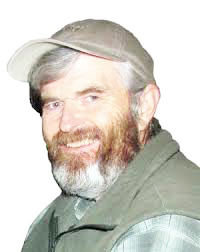
By Bob Kornegay
I don’t rightly remember when drifting down rivers in float tubes first became a popular method of duck pursuit, but in my part of the country it happened about 35 years ago. Down here, it was a fad that didn’t last very long. Like most of my Deep South waterfowling brethren, I tried it briefly, but soon gave it up for more traditional duck-hunting methods.
My short stint as a floating waterfowler was short for a couple of pretty good reasons. One, my river is a big old river. Big old rivers don’t combine well with little old float tubes, particularly those of the homemade variety. My float-tube manufacturing talent ranks right up there with my nonexistent carpentry skills and mechanical ability. Two, in the South big old rivers are apt to contain big old alligators and big old water moccasins, two more reasons little old homemade float tubes make extremely inappropriate duck boats.
Of course, none of this was thought out ahead of time. If “poor planning” was a dictionary entry, my picture would appear alongside the definition. I had to learn the hard way that self-defense shooting of big old alligators with #6 shotgun pellets only makes them angry and big old water moccasins are difficult to hit when one’s little old float tube is spinning in the current like a (no pun intended) duck feather in a storm drain.
Float-tubing for waterfowl also features an exhaustion factor. Murphy’s Law dictates that a flock of ducks will invariably alight downstream just out of range of the floating hunter. The birds, floating at roughly the same speed as the waterfowler, will remain so, downstream and just out of range. This dubious-but-proven rule of physics dawns on the average float-tuber only after he has kick-finned at least three miles in hot pursuit of his elusive quarry. Granted, there are in-range birds one might sneak up on along the way, but they quickly scatter at the sight of a terrified duck hunter screaming and flailing his arms trying to scare away big old alligators or big old water moccasins.
On a positive note, a float-tube waterfowler can become something of a local celebrity, drawing to the riverbank large crowds of sightseers who laugh uproariously and loudly applaud until the object of amusement floats out of sight.
The float-tube waterfowler, determined to succeed, spares no effort attempting to get the hang of it all and is slow to realize he is not going to jump-shoot a single duck and must reluctantly call it a day. That realization normally comes sometime just prior to nightfall, after a miles-long trip downriver. At the same time, it dawns on him that he is alone, with no predetermined take-out point (see “poor planning,” paragraph 3). There is no buddy with a second vehicle to get him back where he started. Of course, the bankside audience he has so recently entertained free of charge has long since disappeared.
If you’ve ever tried to hitch a ride in pitch darkness while wearing chest waders, lugging a shotgun, and carrying a canvas-covered truck inner tube over one shoulder you know how difficult it is. Couple that with the fact you have no flashlight and you’re not really sure down which little side road you parked your pickup. The best you can hope for is to blindly stumble upon the search party your wife sends out when you don’t show up at home by midnight.
In weeks to come, the intrepid float-tube adventurer spends his days trying to live down the humiliation and embarrassment. That can take awhile. At last, however, he realizes he is on the road to recovery when it dawns on him a homemade float tube makes a passable tire swing for the oak tree in the front yard.
Related Articles

Carl Willis named women’s tennis coach at Georgia Southwestern
Carl Willis, a veteran educator and coach with more than 45 years of experience in Georgia athletics and education, has been named the next head women’s tennis coach at Georgia Southwestern State University, Director of Athletics Mike Leeder announced today.

Andrew College joins NAIA
Andrew College officially enters a new era Wednesday, completing its transition to the National Association of Intercollegiate Athletics and becoming a full member of the Southern States Athletic Conference.

Braves may have found another gem in Fuentes
Didier Fuentes’ first taste of the major leagues looked like a lesson in patience.
