
Coexisting with wildlife can be a blessing and a curse
For some it’ s a dream while a nightmare for others
By Bob Kornegay
Wildlife viewing is a favorite pastime for many people, bringing pleasure to a large segment of the population and pumping millions of dollars annually into the nation’s economy. Even those who do not as a rule spend a lot of time in the outdoors often enjoy seeing the wild creatures nature puts on display. Many individuals spend vacation time traveling to zoos, aquariums, nature parks, and wilderness areas for the express purpose of seeing wild animals. Some people invite wildlife into their own backyards, spending much money and effort to provide suitable habitat and conditions. Still others unintentionally coexist with wildlife, viewing the relationship as either blessing or curse.
“An animal’s habitat is composed of several essential requirements,” said wildlife biologist Bruce Todd. “The major ones are food, water, shelter, concealment, and open space. Unfortunately for wild creatures, most wildlife habitats and their components are constantly decreasing in quantity and quality as man extends his own. Whenever man expands, he usually expects the wild species to find their essentials somewhere else. Depending on the requirements, this is a difficult thing to do. If an animal is reluctant or unable to find a new home, we often find ourselves trying to coexist in the same space with them.”
According to Todd, coexistence with wildlife is a dream for some people, but a nightmare for others.
“There are many species of animals that coexist well with man,” he explained. “Some examples are squirrels, songbirds, bats, and deer. However, conflicts can arise between man and many wildlife species. Wildlife and man often enjoy the same things and may compete with each other for what each considers a fair share. A neighborhood squirrel, for example, may enjoy the same pecans, blueberries, peaches, plums, or vegetables that you enjoy. A favorite ornamental shrub may be pleasing to your eyes, but even more pleasing to a deer’s palate. Man’s structures are fair game as well. A rustic, wood-sided house may be the perfect sounding board for a male woodpecker as it attempts to attract a mate. The loft area of your house may serve as a nice substitute for the grove of trees that once was home to a colony of bats. For many, conflict is inevitable.”
Just as cross-purposes between man and animal can occur in residential settings, they are also likely to take place “on the job.”
“Businesses, governmental entities, corporations, and those who make a living off the land must often conduct business and at the same time try to coexist with wildlife,” Todd continued. “The nice, lush grass planted on a city golf course may be a smorgasbord for a resident flock of geese. Fish ponds that an aquatic farmer depends on to make a living may become an all-you-can-eat catfish ‘restaurant’ for a flock of cormorants. A patch of ripe melons is often a veritable dessert bar for a pack of hungry coyotes.”
Despite the modern-day inevitability of man/animal conflict, Todd believes peaceful coexistence at times can be achieved through acts of human concession. A farmer, for example, might plant a larger crop than usual in order to provide supplemental food for deer, turkeys, quail, squirrels, and other wildlife. Some choose to do this despite having to accept some crop loss in the bargain. By the same token, a landowner might push up piles of debris or plant native shrubs and trees on the back portion of a property to provide cover for wildlife displaced by a newly constructed house or farm structure. Likewise, an electric utility company might build special structures to turn high-tension towers into nesting platforms for ospreys and other platform-nesting birds in an area that once had ample natural nest structures.
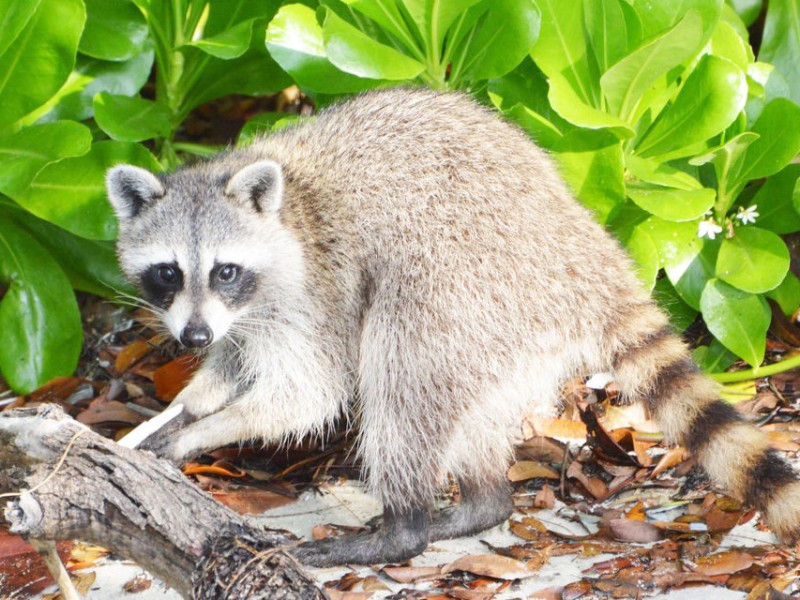
“Also,” said Todd, “the ability or inability to coexist with wildlife is many times based on subjective parameters, and often the perception of successful wildlife/human coexistence changes over time. Perhaps the alligator the landowner once enjoyed watching as it lay basking on the bank of his pond was suddenly sentenced to death when the family dog got too close and became the gator’s supper. Maybe the graceful doe and her fawn that a family used to enjoy seeing every night beneath the security light are now marked for removal because they’ve begun eating the beautiful shrubbery. And let’s not forget those once-cute, cuddly raccoons that came up onto the porch one night and peered through the living room window. Good chance they’re nothing more now than masked bandits since getting into practically everything and strewing trash all over the lawn.”
Sometimes people invite and welcome wild creatures into their lives and cherish the resulting coexistence, never regretting their choice. Others extend the same invitation, but after awhile decide the experience is not quite what they had hoped for. Still others consider coexistence with wildlife a necessary “evil” involved with a particular line of work or lifestyle and don’t necessarily relish or rue the experience. Some individuals are unaware they are inviting wild creatures into their human domain until both parties run afoul of each other. In those situations, coexistence is normally not accepted or tolerated, even reluctantly.
“No matter which category you fall into,” Todd concluded, “good quality wildlife habitat is steadily shrinking. As a result, the likelihood that you are going to one day find yourself interacting positively or negatively with Nature’s wild creatures is pretty much inevitable. How you conduct business, run your home, do your job, and your overall attitude toward human/wildlife relationships will likely determine whether you are coexisting with wildlife or merely trying to resolve conflicts.
“Like it or not, it’s a situation both facets must face and deal with. However we handle it, we must keep in mind that the wildlife side of the equation is ultimately at the mercy of the human side. Its future survival will depend totally on our decisions and actions.”
Related Articles

Braves open against Padres tonight in San Diego
Two National League contenders start a big series on Monday in San Diego.

Thunder trading Aaron Wiggins to Hawks
The Oklahoma City Thunder are trading reserve guard Aaron Wiggins to the Atlanta Hawks for two second-round draft picks, according to multiple reports on Sunday night.

Padres begin tough six-game homestand with clash against Braves
The good news for the San Diego Padres: They will start a six-game homestand on Monday night after finishing a 4-5 road trip Sunday with a 4-3 loss against the Texas Rangers.
