
Georgia wildlife officials urge patience with molting geese
Canada geese can be a nuisance for property owners in the summer
Staff Reports
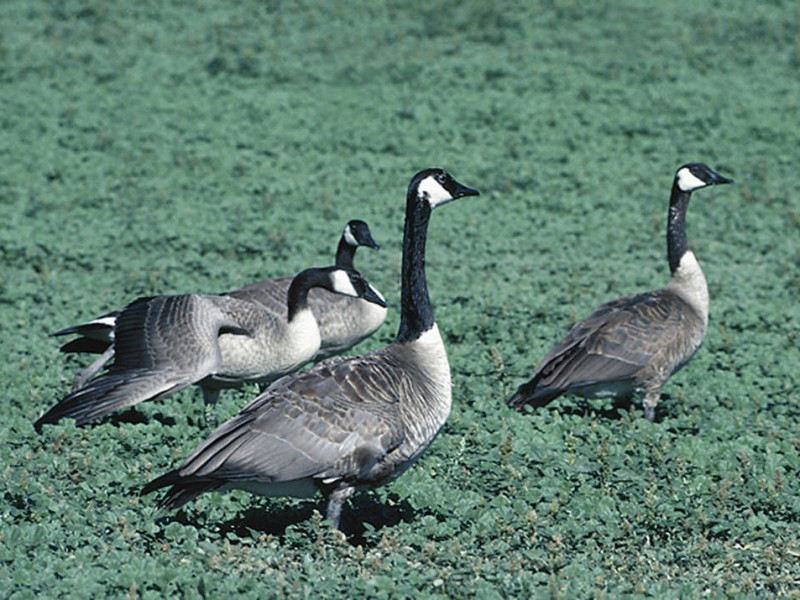
SOCIAL CIRCLE — This time of year, the Canada goose can be unpopular with property owners. Officials with the Wildlife Resources Division of the Georgia Department of Natural Resources, however, are urging those landowners to be patient with the fowl.
The problem is summer is the period when geese begin to molt. The characteristics that make the Canada goose adaptable — it can in a variety of habitats, with many of those locations in close proximity to people, such as open farmland, rural reservoirs, suburban neighborhood ponds, office complexes, parks and other developed areas — also makes it frustrating during molting season.
“Each summer, in late June and early July, geese go through a molting process during which they lose their flight feathers and are in the process of growing new ones,” WRD State Waterfowl Biologist Greg Balkcom said. “We find that it is typically this time of year that the most complaints about goose feces and feathers are reported.”
Harassment techniques are usually effective at driving unwanted geese of property, but during molting season, when they can’t fly, that may not work. State wildlife officials are encouraging landowners and homeowners to realize that and be patient, noting that once the birds’ feathers grow back in and they regain their ability to fly, they will likely move on.
If a property owner has a persistent goose problem, DNR officials said he or she can try a few methods of harassment including chemical repellents, mylar balloons, wire/string barriers, and noise makers. They are proven to help reduce goose problems, but require consistency from the property owner and are not 100 percent effective.
As a next step, homeowners can obtain a permit from their local WRD Game Management office (www.georgiawildlife.com/about/contact) that allows them to have geese captured and relocated to a suitable area, or allows them to legally and lethally remove the animals. The removal can be done by the homeowner or by a licensed nuisance wildlife trapper (list found at www.georgiawildlife.com/nuisancewildlife).
Wildlife officials caution, however, that Canada geese are a protected species under state and federal law. It is illegal to hunt, kill, sell, purchase or possess Canada geese, except according to Georgia’s migratory bird regulations.
For more information, visit www.georgiawildlife.com (Select “Hunting”, “Game Management” and “Nuisance Canada Geese”).
Related Articles

Hawks hire ex-NBA writer, podcaster in front-office role
Former NBA journalist Tim Bontemps is joining the front office of the Atlanta Hawks.

Tony’s Take | Parallels | Caitlin Effect | Edition 102
Football, well soccer, is the world’s most popular sport. According to Google, futbol boasts 3.5 billion fans worldwide. American Football fans may be shocked that their sport doesn’t make the Top 5.

Pirates’ Ryan O’Hearn, after 10-RBI effort, takes aim at Braves again
For the first time in their 145-year history, the Pittsburgh Pirates finally had a player drive in 10 runs in a game, with Ryan O’Hearn accomplishing the feat on Tuesday.
