
Squirrels can do a lot of damage
Squirrels can be found aall across the state of Georgia
By Bob Kornegay
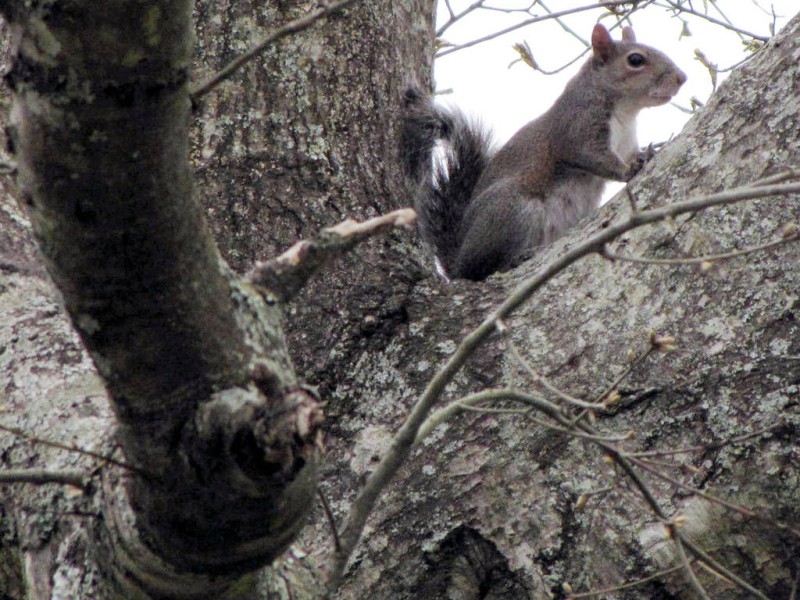
Squirrels are one of the most recognizable wildlife species in southwest Georgia and are found on almost every property in the state. Nearly everyone is familiar with the ubiquitous gray squirrel, but there are two additional species found in our region, the fox squirrel and the flying squirrel.
“The Eastern gray squirrel is the most common squirrel in the Southeast,” said wildlife biologist Ericha Nix. “It’s found in deciduous forests and yards almost everywhere. It has gray fur with a white underbelly and a bushy, gray tail. Gray squirrels are most active during early morning and late afternoon and most often viewed in trees or on the ground searching for food. Its diet consists of acorns, nuts, pine seeds, fruits, berries, buds, flower bulbs, insects, and even garden vegetables. Breeding takes place in February and again in late summer.”
The Southern fox squirrel is our largest squirrel, weighing up to 2 pounds. Fox squirrels are less agile than gray squirrels, mostly due to their larger size, and are seen more frequently on the ground. This squirrel prefers a more open habitat. The most distinctive feature of the fox squirrel is its black coloring in the facial area, which resembles a mask. Breeding generally takes place during the same time as gray squirrels and leaf nests or tree cavities are used to raise young. Their diet is quite diverse and consists of the same items as the gray squirrel. However, fungi and insects are also important components.
The Southern flying squirrel is the smallest, weighing only a few ounces as an adult. It has a flap of loose skin from the wrist to ankle called a gliding membrane, which allows them to “fly” from place to place. It has extremely large eyes due to its nocturnal behavior. The fur is soft, thick, and brown on the back while the underbelly is white. The tail is brown and flat and used like a rudder for steering when gliding. The diet is similar to that of the other two species of squirrel. Heavily wooded areas are preferred and abandoned tree cavities are used as nests. It is also common to find them nesting in bluebird boxes. Breeding occurs roughly during the same time as the other squirrels.
As interesting and attractive as they are, squirrels can also be nuisances.
“The gray squirrel causes most of the squirrel damage done to property,” Nix said. “A common complaint is squirrels in an attic. One solution is to place liberal numbers of mothballs in the attic as a temporary deterrent. Reapply treatment often. Exclusion from the attic is the best method of control. Check for holes and openings under eaves and where wires enter the house. Plug holes with wire mesh when squirrels are out of the attic; otherwise, you will trap them inside. Inspect the chimney, and if it is open, cover and secure with wire mesh. Remove branches from trees that allow squirrels access to the roof.”
Damage caused to the buds and bark of a tree can be difficult to control. According to Nix, the tree must be completely isolated. Place a two-foot-wide band of metal flashing at least 6 feet from the ground around the trunk of the tree. Remove low hanging branches at least 6 feet from the ground so that squirrels cannot jump up into the branches.
“To protect shrubs and garden bulbs, you can try various commercial repellants, though this option can be costly,” Nix continued. “Repellants need to be re-applied often, especially in the South. Another option to protect bulbs is to place wire mesh over the planted area. This option will work to control damage to a small plot, but is not economically feasible in a large area. Tolerance and planting a surplus of bulbs may be your best option.”
Another option to control squirrels where regulations and game laws allow is hunting. Hunting can be quite effective and most successful during early morning or late afternoon when gray squirrels are most active. Trapping can also be successful by using a simple box trap baited with peanut butter or nuts. Place traps along the paths of heavy use. Traps can be purchased from a feed or hardware store.
“Bird feeders hanging from tree limbs are easy targets for squirrels,” said Nix. “You can try to squirrel-proof feeders using various styles of metal poles, but a better solution may be changing the feeder location. You may also try hanging the feeder from a slender wire high enough off the ground so the squirrel can’t reach it by jumping.”
Flying squirrels will readily take over bird nesting boxes, especially those in the style of a bluebird box. Many people enjoy watching flying squirrels as much as birds, so this may not be a problem. However, squirrels frequently damage the nesting box by gnawing at the entrance hole and enlarging it. This can be prevented by using a metal cover.
“For the most part, squirrels are enjoyable to observe,” Nix concluded. “When damage occurs, it does create problems. With a little patience and detective work, you can take care of most squirrel issues yourself and make your coexistence with squirrels much more pleasant.”
Related Articles

PHOTOS: Albany State vs. Johnson C. Smith
Several galleries from Reginald Christian. Click the arrow to scroll through the photos.

Fuentes, bullpen key to Braves’ postseason plans
Raisel Iglesias was an All-Star. Dylan Lee could have been, and Robert Suarez likely would have been. But you can still make an argument that Didier Fuentes has been the Braves’ most valuable reliever throughout this season.

Friday Night Five: Lee County’s Jaden Upshaw is Player of the Week
Friday Night Five
