
Vietnam soldiers’ stories: One soldier, one life
Carlton Fletcher
ALBANY — For many, the essence of the war in Vietnam can be broken down by the numbers: the 58,000-plus American troops killed, some 4 million military and civilian deaths and perhaps twice that many injuries, billions of dollars spent …
Daunting figures, all. But encountering one who diminishes Vietnam to numbers offers one certainty: The person doing the talking didn’t fight in the war. Because the only number that mattered to soldiers who fought in the horror tale that was Vietnam is one.
One soldier … one life.
These are some of their tales:
DAVID FULLER: In retrospect, David Fuller knows he could have been a country club kid, could have gone off to college and lived the easy life. But he’s not wired that way.
No, Fuller and one of his Albany buddies decided they’d enlist in the Army back in ‘65, maybe even give airborne a try. You were, after all, paid an extra $250 a month, and, besides, adventure junkie Fuller had never even been in an airplane.
“I’m the happy person I am today because of that decision,” the retired Albany journalist said. “If I hadn’t enlisted, I’d be a different person today. I think, in retrospect, I got one of the greatest educations I ever could have gotten.”
Fuller proved quickly that he was no conventional soldier. He grew bored with basic training at Fort Benning (“I told my parents, ‘I’ve been here eight weeks and learned two things: How to eat with a big spoon and how to say ‘MF,’” he says.), and things weren’t much better at advanced training at Fort Leonard Wood, Mo., where the barracks froze up during cold winter nights.
Jumping out of an airplane certainly got Fuller’s attention, but he soured on the Army while at the John F. Kennedy Warfare Center while training for Special Forces.
“I didn’t think I was truly working toward my goal of going to war,” he said.
So while on weekend leave at Myrtle Beach, S.C., Fuller and one of his buddies decided they’d had enough of the Army. They didn’t go back, instead hitching their way to Toronto. In Canada the two AWOL soldiers lived a drifter’s life, relying on the charity of others for their sustenance.
After a short — but adventure-filled — period, the two made their way back to Fort Dix, N.J., where they were court martialed and busted down in rank to E-1. When it came time for the pair to choose their preferred duty assignment, the choice was limited.
“The form they gave us had one choice for duty: RVN,” Fuller said. “The Republic of Vietnam.”
Fuller says he learned a lot of what he needed to know about Vietnam almost immediately.
“We got on a bus with wired windows and were later told the wire was there to keep anyone from throwing a grenade in,” he said. “I was with the 101st Airborne in Phang Rang, and the first night there we took mortar fire.”
Fuller learned the important stuff — how to live in a hole, how to recognize “butterfly bombs” that would blow your foot off, how to suck water out of bamboo with a ballpoint pen when there were no supplies — while “in country.”
“You couldn’t prepare for Vietnam,” he said. “People dealt with it by talking about their last day, when they would go home. And they did a lot of drugs.”
Five months after he arrived in Vietnam, Fuller was coming back from an operation when a round from his M-16 “baked off.” The accidental misfire hit Fuller in the ankle and exited his leg at the knee.
Medics on the scene worked on Fuller’s severely damaged leg — shot him up with morphine and applied a tourniquet. He endured three surgeries during a 24-hour period at a field hospital before being airlifted to Yokahama, Japan. There, he was told that gangrene had set in and that doctors were preparing to remove his leg above the knee.
“People were always talking about the ‘first day of the rest of your life’ during that time,” Fuller says. “But that’s nothing like the first day you wake up as an amputee. You can regret what has happened, but you can’t turn back the hands of time. I managed to find serenity.”
Fuller eventually was called on to talk to other amputees who had a tougher time coping with their new circumstances, and after he returned to Albany he finished college at Ohio State University via the GI Bill. He worked as a journalist for both The Albany Herald and WALB television before retiring.
CHARLES HOLSEY: Charles Holsey learned a lot during his tour of duty as a Military Police officer in Vietnam, but perhaps the most important lesson he learned was the concept of brotherhood.
“I got off the plane in Vietnam and ran into a black guy who told me to give him some ‘dap,’” Holsey, a semi-retired Albany veteran said, chuckling at the memory. “I told him I didn’t know what that was, but he said, ‘You will before you leave this place.’ He showed me what he was talking about and gave me a quick lesson on brotherhood.
“He said all soldiers were in the war together, but it was especially important for us black guys to watch each other’s back. He pointed out that we had a common goal in Vietnam: To try and get through it.”
The war in Vietnam was rumored to be ending at any time when Holsey graduated Monroe High School. He’d heard many of his friends talk of college, but he knew his family could not afford to send him. So he enlisted in the Air Force.
“I was classifed 1-A, so I figured my only option was to enlist,” Holsey said. “I really wasn’t concerned about the war. I’d become aware of it around age 14, but I figured it would be over by the time I finished high school. Since I enlisted, I also figured I wouldn’t really have to worry about combat.
“I’d finish my time and use the GI Bill to get an education.”
But after Holsey completed basic and advanced training (in small arms and weapons) at Lackland AFB, Texas, he was sent to Camp Bullis, Texas, for Army combat training. It was apparent what the Air Force had in store for Holsey: Bullis was noted for its mock Vietnamese training village.
Sent to Vietnam in March of 1970, Holsey became part of the last line of defense at Bein Hoa Air Base. Duty, though, was unlike anything he’d ever experienced.
“I went over there with the eye of the tiger, ready to fight,” he said. “But, man, I wasn’t ready for what they had us do. They gave us a brief training period when we first got there to get acclimated, but since I was a new guy I drew night duty. I was on guard from 9 p.m. to 6 a.m. You’d either be in a bunker with one other person or at a listening post all alone.
“It was so dark, you literally could not see your hand in front of your face.”
Holsey never engaged the enemy in active combat, but he took on sniper fire and lived through an experience that has haunted him in nightmares ever since.
“I was napping on bunker duty one night, and I don’t know to this day if this was real or a dream, but I saw a trip flare go off and I heard shooting,” he said. “I prepared to engage and saw a guy caught up in concertina wire. I remember shooting my gun, but I never knew if that was real or a dream. That nightmare has followed me the rest of my life.
“When I got home, my dad tried to make me up one time, and I was in the middle of that nightmare. I grabbed him and was getting ready to fight him before he was able to wake me.”
Holsey said his 10 months in Vietnam “aged me five years” as he watched fellow soldiers lose their sanity and others so strung out on drugs they couldn’t function.
“I saw things no normal 19-year-old should ever see,” he said.
Holsey was one of the lucky soldiers called home during President Nixon’s first wave of troop withdrawals, and he returned to Albany.
FRANK MILLS: As a specially-trained Morse Code interpreter in Vietnam, Frank Mills lived the maybe not so glamorous but exciting life of a spy, intercepting messages sent by the North Vietnamese Army and the Viet Cong along the Ho Chi Minh Trail and relaying their coordinates and information to American troops.
Which probably would have gone down better had Mills not been assured during training that he would not be going to Vietnam.
“We were told that as part of the Army Security Agency, we would have to serve a four-year commitment but it wouldn’t be in Vietnam,” Mills said. “They said, ‘There’s no ASA in Vietnam.’”
What they didn’t tell Mills and some of his code-breaker buddies is that they’d been reclassified as Radio Research specialists after 16 weeks of Morse Code training and 18 more weeks of training to “talk” in the code. So rather than heading to Thailand as expected after the 28-hour plane ride into Lang Binh, Mills found himself among a group headed for Saigon.
Mills had been one of Albany’s original “river rats,” a part of the third graduating class of Dougherty High School in 1967. Figuring he’d be drafted soon anyway, he enlisted at age 17 and completed his basic training at Fort Jackson, S.C. He was shipped to Fort Devens, Mass., to study Morse Code and soon became an honest-to-God “dittybopper.” (A term used for Army intelligence personnel.)
“When we flew into Vietnam, the plane was forced to circle the runway because it was taking on enemy fire,” Mills said. “We were rushed off the plane, because of the shooting, but mainly because the plane that dropped the 200 to 250 of us off was taking another group out of Vietnam. They were anxious to get moving.”
Mills served with the 1st Air Cavalry unit but essentially lived in a fortified bunker with eight other encryption experts. No one was allowed into their restricted area, and one of the greatest dangers the code-breakers faced was walking the mile or so to mess hall for meals. No mess hall was allowed in their restricted area.
Still, danger was always present.
“I was in the Mekong Delta just as it was turning dark one day, and I saw a mortar shell hit a fuel dump,” Mills said. “You could see the explosion and flames a mile away. About an hour later there was another huge explosion: Our ammo dump had caught fire and munitions were going off. We spent the rest of that night hunkered behind sandbags.
“Funny thing, since I’ve been back in Albany, I’ve talked to two other people from our area who were there that night.”
Mills also saw his best friend, Harold Biller, killed when the “sixth truck in a convoy of eight” ran over a rocket. The resulting explosion all but decapitated Biller.
“I never really knew why we went to Vietnam to start with,” Mills said. “But what was really tough was coming home. Our country was in the middle of the Civil Rights Movement, Martin Luther King and Bobby Kennedy had been assassinated and there were anti-war riots everywhere.
“That’s the thing about the Army: They teach you how to go to war, how to live in war and how to survive a war. But they don’t teach you how to come back from war.”
Disillusioned after returning to Albany, Mills “grew my hair to my ass” and essentially decided he “hated the Army.”
“I ran into one of the guys I served with last week — Benito Guerrero — and we talked about how things were back then,” Mills said. “We didn’t really hate the Army. We hated the circumstances.”
Some 15 years after leaving Vietnam, Mills joined the National Guard. He retired from active duty in 2007 but still works as a career training consultant with the Guard.
TOMORROW: Soldiers’ stories II.
Related Articles
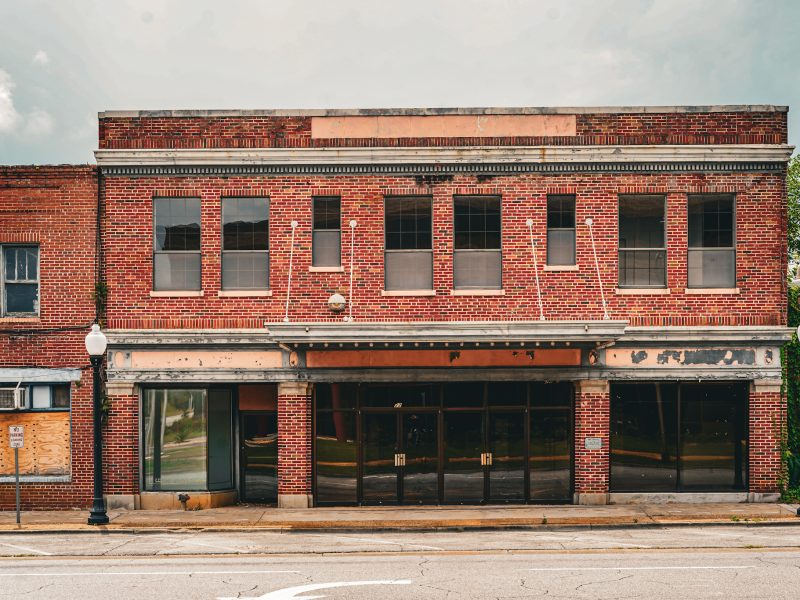
Putting on the Ritz: The rise, fall and renewal of Albany’s Harlem District
On July 7, the Albany City Commission unanimously approved final construction drawings for a comprehensive restoration of the Ritz Theatre and Cultural Center, clearing the way for the project to move into competitive bidding after years of planning and preservation efforts. The decision marks the latest chapter in a decades-long effort to preserve one of Southwest Georgia’s most significant African American landmarks.
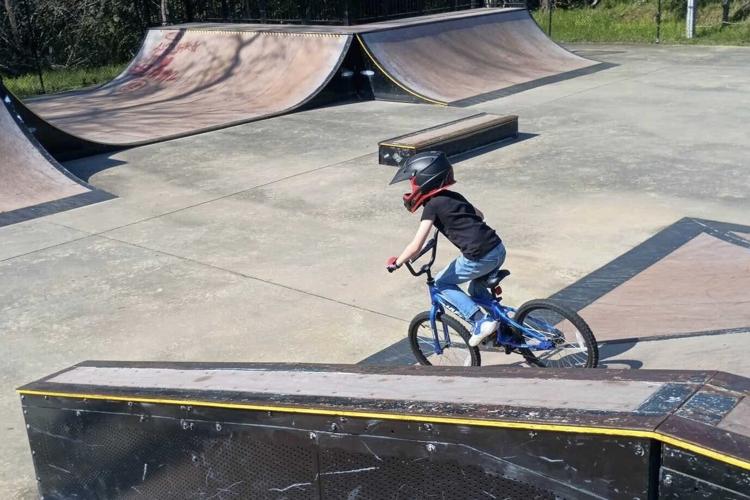
Albany City Commission set to vote on skate park funding
“There have been other sites discussed. Based on information (from) the community, we decided on the current site. That’s the only site we’re looking at right now.”
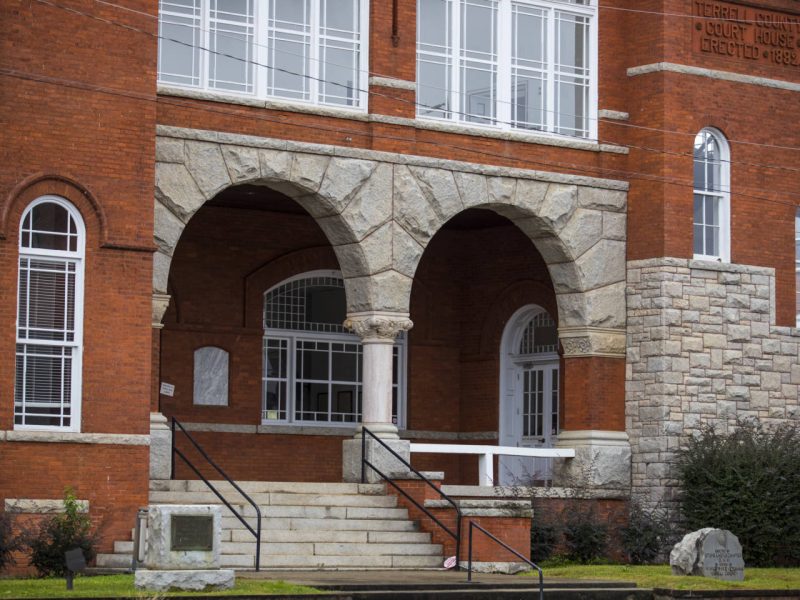
Following Lee’s lead, Terrell County hits pause on data centers
The Terrell County Board of Commissioners voted unanimously Tuesday to adopt a six-month moratorium on new data centers, giving county officials time to develop zoning regulations governing where such facilities could be located and how they would operate.
