
Train depot symbol of Leesburg’s past
Historic Leesburg train depot to be resurrected
By Brad McEwen
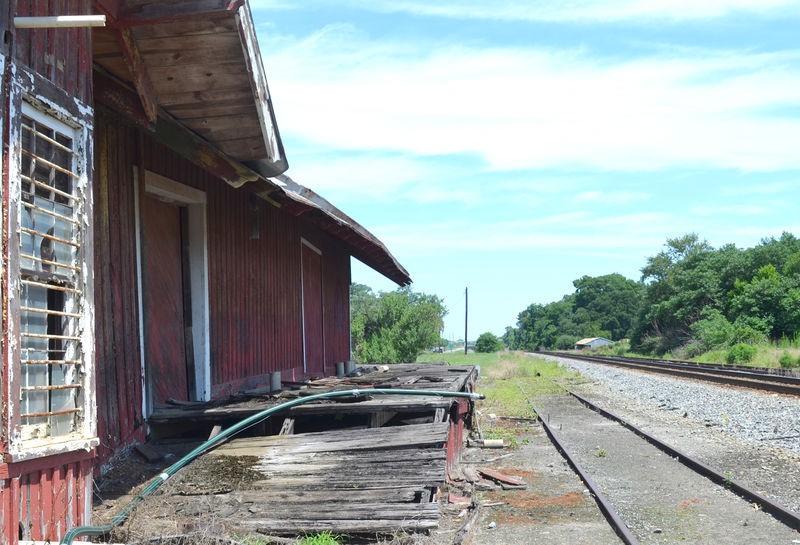
LEESBURG — When long-awaited renovations begin on the historic Leesburg train depot in the coming weeks, workers will be doing more than putting a new shine on an old penny. They will be lovingly resurrecting an important lynchpin in the community’s history, one that ties current residents to the founding of the city.
In the past few weeks, the depot has been very much in the news as the Leesburg City Council has approved two important contracts that effectively begin the much-needed renovations to restore the train station to its former glory.
The first of those two moves was made at a called meeting of the commission July 27, during which the city entered into a contract with the Georgia Department of Transportation to receive $226,620 in federal funding to renovate the building’s exterior. The second step was taken at the council’s Aug. 2 meeting, at which the members voted unanimously to enter into a contract with Fourth Street Design and Construction LLC to handle the work.
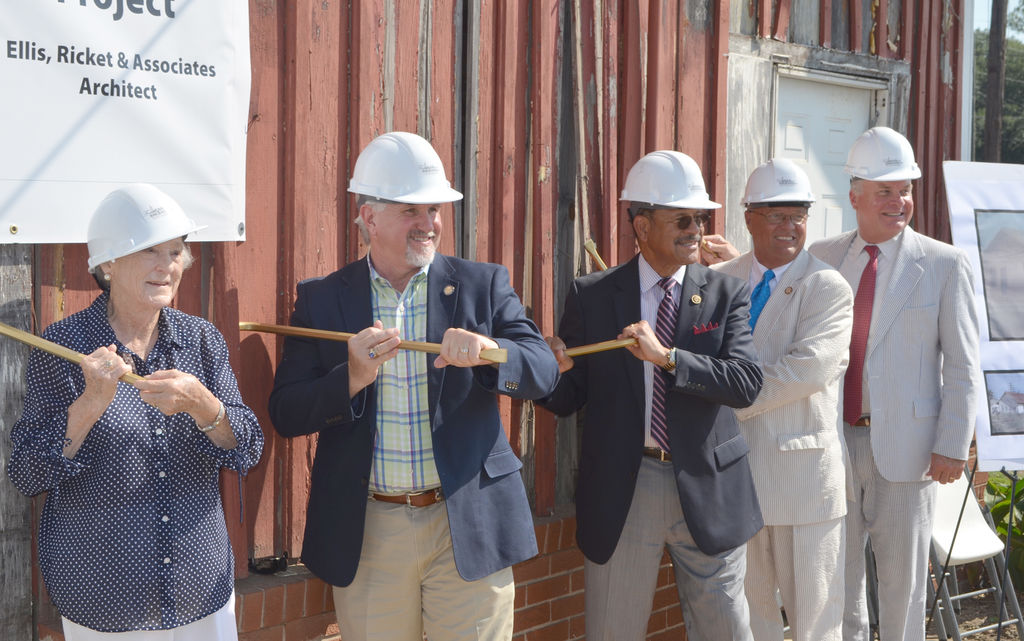
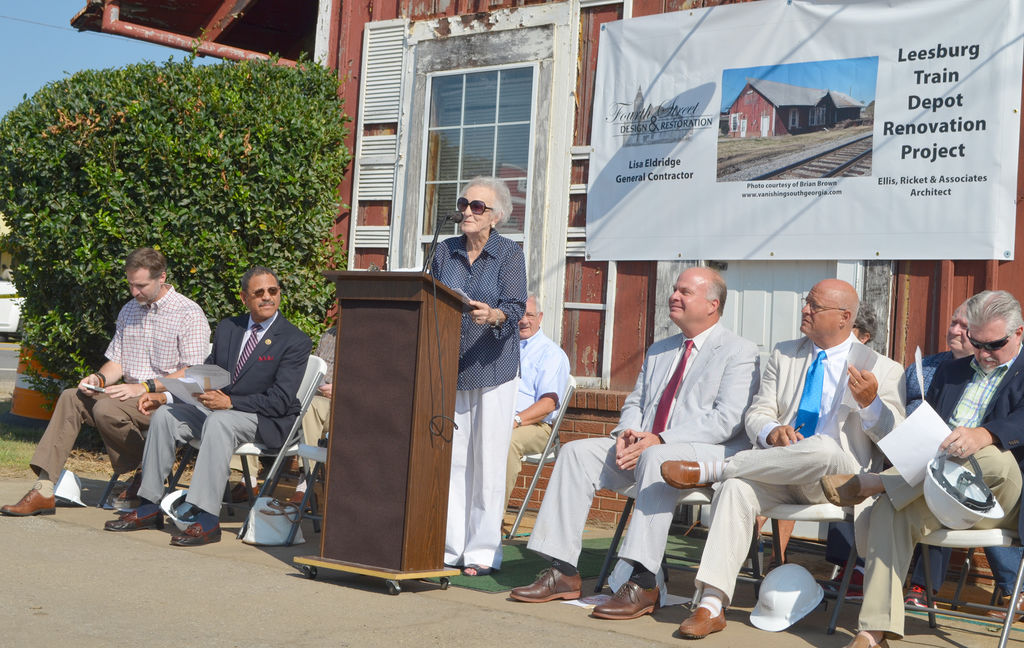
With those important steps out of the way, city officials held a special ceremony earlier this week to celebrate the impending start of the renovations. They were joined by some of the important players that have worked since the early 1990s to make the depot renovation a reality, including State Rep. Ed Rynders, State Sen. Greg Kirk and U.S. Congressman Sanford Bishop.
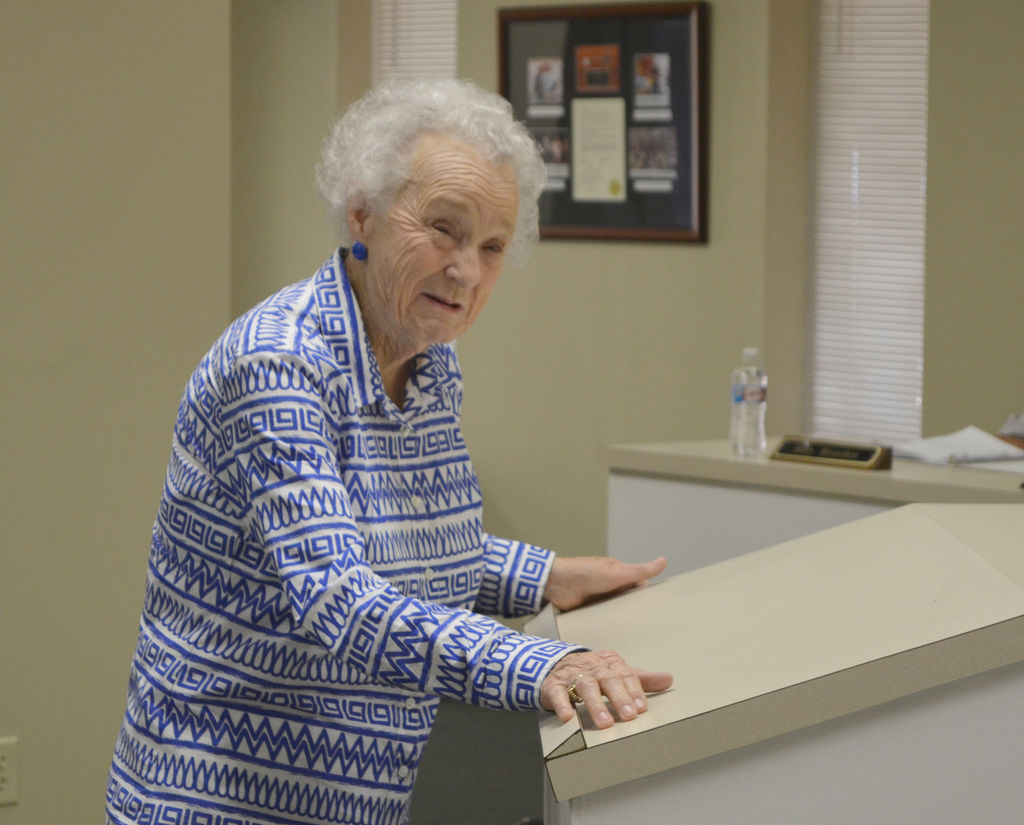
In addition to serving as master of ceremonies at Thursday’s gathering, Opal Cannon, who has long been a guiding force for the community and who has been at the forefront of the depot renovation efforts for the better part of 15 years, speaks often of the importance of the depot.
“A lot of people don’t know it, but there wouldn’t be a Leesburg without that depot,” Cannon said. “Everything built up around it. A lot of things have taken place gradually, and sometimes they mushroom. If you look at the history of Lee County, you’d see in the 1940s and ’50s it was going well and then it would drop back down and all of that was because transportation is so important.”
Indeed, history bears out Cannon’s contention that without the railroad, Leesburg might never have existed.
A few years ago, when Cannon and the rest of the historic depot committee, which also included former City Clerk Cathy Spillers, former Tax Commissioner Lee Stanley, former School Superintendent Bobby Clay, and newspaper publisher Darrell Quinn, applied to have the depot listed on the National Register of Historic Places, they included an accounting of the community dating back to the founding of Lee County through a treaty with the Creek Indians in 1825.
According to that document, the county was originally 5,850 square miles and stretched from the Flint River to the Chattahoochee River, covering what is present-day Lee, Quitman, Randolph, Stewart, Sumter, Terrell and Webster counties, as well as parts of Schley, Chattahoochee, Macon, Clay and Marion counties.
For the first several years, the seat of the county was a community “one-half mile west of the Muckalee Creek,” known as Starksville, except for two years when Webster served as the seat from 1854-1856.
Transportation became a key driver in shaping the history of the area in the 1850s when a rail line was completed connecting Americus and Albany. That line ran past a stagecoach stopover called Sneed’s Store, which had already become somewhat of a hub of activity.
“The railroad came through the county in 1857, and the original depot was known as Wooten Station,” current Leesburg City Manager Bob Alexander said. “Originally, that was the place where everybody would get on the train. They chose to find the high ground to build the railroad through, so that’s why the railroad tracks were there. They had enough business to where they built a train depot, so everything kind of built around that.”
In fact the area developed so much that in 1873, the county courthouse was moved to Wooten Station, which was subsequently renamed Leesburg in 1874 and became the county seat.
“There was no town really, until the depot was built,” said Cannon. “A lot of people don’t even know that Starksville ever existed because everything moved over here. Some people even moved their houses over here. And all of that is because of the railroad. Being between Americus and Albany, on a direct route, helps us. The history of the railroad connects us.”
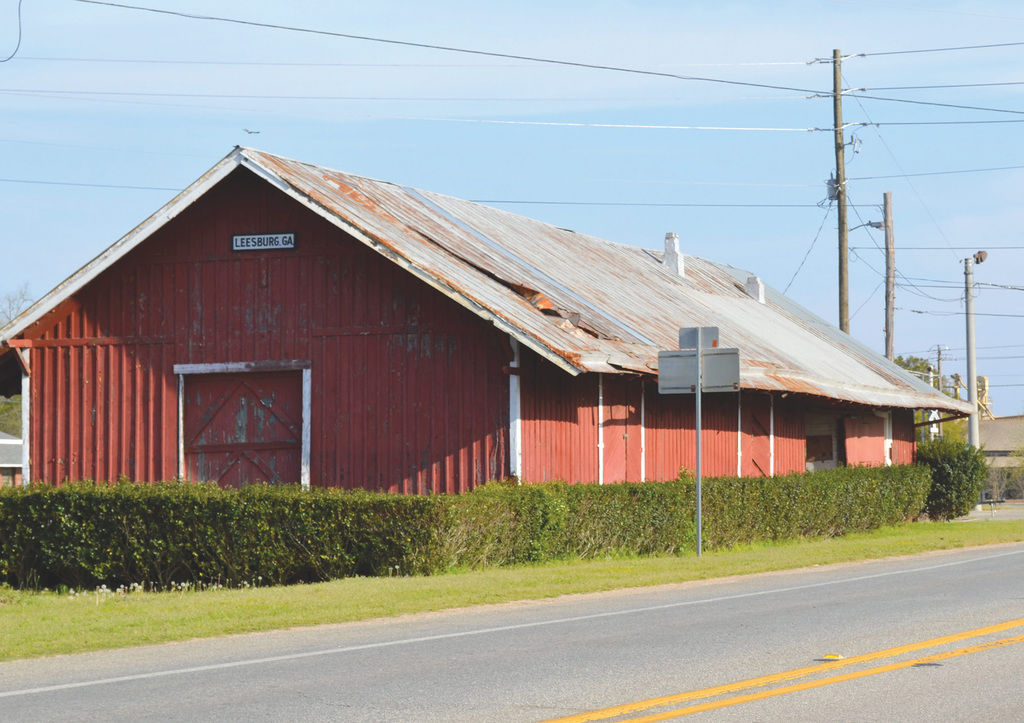
And although some of that history is vague, there’s no disputing the importance the railroad and the depot have had on the city. The current structure was erected in 1896, and there’s been a considerable amount of important history tied to the wooden structure.
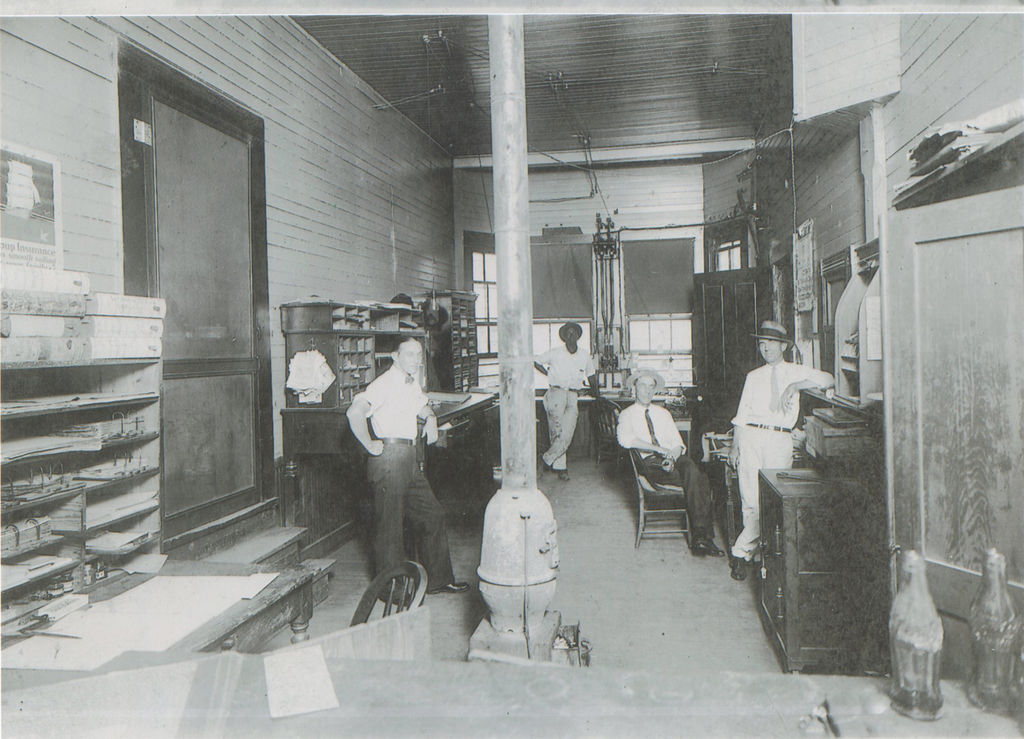
“The depot was a center of activity for many years,” reads the application in the national historic registry. “It was a freight depot and telegraph office. Mail came to and from the city by train. In addition to the mail, the depot received farm supplies, fertilizer, merchandise for the stores and a variety of other miscellaneous items. Numerous farm products were also shipped from the Leesburg depot, including pulpwood, timber, watermelons, pears, grain and cotton.”
In addition to the supplies that were transferred through the train depot, it also served as a doorway to the larger world, thanks to the numerous passenger trains that travelled the rail line over the years. Probably the most famous of those was the Dixie Flyer, which carried passengers from Chicago to Miami and rumbled through Leesburg twice a week from 1908-1954.
“One of the people that rode the Dixie Flyer real often was Al Capone,” said Cannon. “A lot of people came here on that train. There were senior classes that went by train to Washington and New York. And people used to go to college by train.”
Over time, train traffic decreased, and by 1970 functions at the depot had ceased. That was not the end of the depot, however, as it served a few other roles in the community.
“At one time it was a library; a lot of people don’t know that,” Cannon said. “It’s been a library. It’s been used as the police department, fire department and city hall. It’s been so important in the history of this community.”
It’s for that reason that the city leaders have been working to save the depot since the early 1990s. According to Cannon, the impetus that led to the city recently securing the federal funding began with former Mayor Bob Boney.
“The credit for us getting into this originally goes back to Bob Boney,” said Cannon. “Lee Stanley is the first person Boney talked to back in the ’90s about doing something with the depot, and Lee worked very diligently and he got very involved.”
Indeed, Stanley helped spearhead a committee dedicated to restoring the depot, and in 1993, with help from Bishop, the city received a $1,000 preservation grant from the National Trust for Historic Preservation. The grant was used to engage the architectural firm Saunders and Associates to come up with a plan to renovate the structure.
Despite that initial success, Cannon said things stalled, and eventually Boney approached her about getting involved with the committee.
“Somewhere along the way, around 2000, Mayor Boney came to me and said, ‘I need you to take this job over,’” recalled Cannon. “I said, ‘Boney, I’m retired.’ He said, ‘Ms. Opal, you’ll get it done.’ I said, ‘Boney, it’s going to take more than Ms. Opal to do this.’ I’m not one to say, ‘let somebody else do it.’ If it’s got to be done, I don’t mind getting in the mud.”
With renewed vigor Cannon and the others involved in the project began searching for additional ways to make the depot renovations a reality and eventually were successful in a series of events that made the recent celebration a reality.
One of those accomplishments was purchasing the land on which the depot sits from The Central of Georgia Railway Company for $15,000 in 2007.
“We had to do it in pieces,” said Cannon. “First of all, we wanted to purchase the property. We didn’t want to put money into it and have it belong to somebody else. Once we got all that done, we began working on a plan. We got an architect out of Valdosta to come up and work with us, and we began to make long-range plans. It’s just money’s been slow coming. But right now, there is nobody that’s as happy as I am. I was beginning to think I was going to die before it got done.”
Additionally, the city was successful in having the property listed on the National Historic Registry, but Cannon said the best thing that happened was gaining the support of Bishop.
“The greatest friend I found was Sanford Bishop,” she said. “We were applying for these little grants and those little grants, and I just called and talked to him one day and told him I wanted to come and talk to him about it. He got us a nice grant, and that’s the money we’ll use to do the exterior of the building.”
The scope of that exterior work includes having the structure restored to it original condition, which is mandated because it is on the Historic Register. Once that is complete, the city, driven by the depot committee, will begin the process of looking for additional funding in order to fix up the inside. A decision also has to be made about the property’s specific use.
Cannon, Alexander and Bishop have all expressed a desire to see the depot eventually serve as a welcome and visitors center, but some of the details have yet to be ironed out.
“It’s going to be a visitors center,” said Alexander. “The question is, is it going to be a visitors center that’s staffed full-time? Is it going to be an event center that people can rent out, or is it going to be something that’s utilized all the time?”
The group also wants the depot to serve as some kind of museum to help educate the community about Leesburg’s history.
“I plan to hang in there until we get a lot of history showing in that building” said Cannon. “The depot is something that’s going to affect the city and the county. It’s on the main road and it’s right there where everybody can see it.”
Although she’s excited about the immediate future of the depot, Cannon said she feels a sense of relief as she looks back at everything that was done to get to this point.
“I’m 88 years old, and I was a lot younger when I started working on it,” she said. “It hasn’t always been upbeat. There were a lot of things against us. I have had to face some embarrassment. More than one person has said to me, ‘Ms. Opal, why don’t y’all just strike a match to that old depot?’
“There were a lot of things against us, but right now I think the climate for communication is better in Lee County than I’ve seen in a long time. You’ve got an upswing of happy, practical people who really want thing to be better. Positive, that’s the word I’m looking for. It can get to be a habit to dwell on (the negative things), but I feel positive, very positive about it.”
Cannon said she also feels good about finding the money needed to move on to Phase 2 of the renovations which will address the building’s interior.
“Once it looks like there’s life there and there’s hope of getting it done, we’ll pick up the money,” she said. “I’ve had numerous people tell me they were going to donate. You know people like to know where their money’s going. If I had said I was going to make a dance hall out of it after we finish, people would say, ‘Now why’d I give you that money?’ So what we’re going to do is make a decision, with the City Council, on who’s going to occupy it. And I want to live to see it finished.”
If things go as planned, Cannon says she thinks the historic depot will go down as one of the most important things that’s happened in Lee County and the saga of saving it from extinction will be yet another tale in the long and storied history of the county.
“I want to thank you for sticking in there with us,” Cannon recently told the City Council. “I think it’s going to make the biggest difference of anything that’s happened in this town in a long, long time. And it’s going to be an asset to the county because it’s going to be where everybody sees it and, personally, I thank you for doing it. I think that it’s going to go down in history as something you can be very proud of.”
Related Articles

Southwest Georgia artists recognized at packed opening of exhibition
The annual juried exhibition, one of the region’s largest showcases of visual art, features approximately 46 artists and nearly 90 works spanning painting, sculpture, ceramics, photography and mixed media.

Powerful performances drive Theatre Albany’s ‘The Color Purple’
From the street, strands of purple ribbon wind around the white columns of the historic theater, hinting at the story waiting beyond its doors. Inside the foyer, a carefully curated slideshow flickers across a large screen, cycling through the faces of the cast. Some are seasoned performers. Others are stepping onto a stage for the very first time. Teachers stand alongside former students. Parents perform beside their children. People who worship in different churches, work different jobs and come from different corners of Southwest Georgia gather beneath the same lights to tell the same story.

The Worst Job in the Marines: Telling Parents Their Child Was Dead. It Was Also an Honor
Telling a family their child died in combat is something no one wants to do, but someone has to. Christopher Murphy described his service as a Casualty Assistance Calls Office as miserable but vital.

