
Gas price spike likely has peaked in Georgia, market experts say
Georgia, normally below the national average, is well above it after pipeline leak
By Jim Hendricks
ALBANY — Gas prices in metro Albany were averaging nearly 8 cents higher on Monday compared to Sept. 19, but market experts say that spike caused by the interruption of a major fuel pipeline appears to have peaked in Georgia.
Still, the reduction in inventory from the loss of service of the Colonial Pipeline may drag the trend back down.
“While it appears that the worst may be behind us, we’re not out of the woods yet, where gasoline inventory levels are concerned,” Gregg Laskoski, senior petroleum analyst for GasBuddy, said. “The overall drop in gasoline inventory tied to Colonial Pipeline was approximately 8.5 million barrels. To put that in perspective, in the two weeks following Hurricane Katrina, East Coast gasoline inventories shed 3.3 million barrels.”
On Monday, AAA Auto Group’s Daily Fuel Gauge Report had the state average at $2.349, 14.2 cents higher than the national average that Georgia is usually under. The national average is nearly flat compared to Sept. 19 and a month ago, and 8 cents below Sept. 26, 2015. GasBuddy had the national average nearly flat week to week, a half-cent cheaper than last month and 8.3 cents cheaper than last year.
GasBuddy’s survey had Georgia on Monday at $2.352, up 2.3 cents in a week and 22.8 cents compared to last month. AAA’s report had the differences at 3.3 cents higher in a week and 23.3 cents up in a month. Compared to last year, the surveys found Georgia motorists were paying 19.5-19.8 cents more per gallon.
“The reduction in pump prices is a good sign that supplies are reaching the areas most affected by the outage,” Mark Jenkins, spokesman for AAA—The Auto Club Group, said. “It could take a couple of weeks, but prices should eventually return to levels seen before the leak, then fall in line with other states as they follow a downward trend through the rest of the year.”
“It’s been almost a week since service has been restored to Colonial Pipeline’s Line No. 1, a major gasoline source for the southeast and Atlantic seaboard,” Gregg Laskoski, senior petroleum analyst for GasBuddy, said. “While it appears that retail gas prices have peaked in four of the six states hit hardest (Alabama, Georgia and the Carolinas) by the pipeline damage and shutdown, and those averages are now ebbing lower, statewide averages continue to climb in two states: Tennessee ($2.16 per gallon) and Virginia ($2.10 per gallon). Those states’ averages were at $2.14 and $2.08, respectively, on Sept. 20th, the day before service was restored.”
Metro Albany is usually on the lower end of the eight Georgia metro areas included in the Daily Fuel Gauge Report, but on Monday it was third-highest, trailing only Atlanta, $2.463, and Athens, $2.418. No other state metro area was above Macon’s $2.214 average Monday, with the lowest average — $2.144 — reported in Columbus.
Albany’s average had climbed 7.9 cents since the $2.223 reported on the Fuel Gauge Report on Sept. 19, and was 28.9 cents higher than last month and 20.1 cents higher than last year. GasBuddy reported Monday that at least one Albany station was selling at $1.899 Monday and several were in the $2.099-$2.199 range.
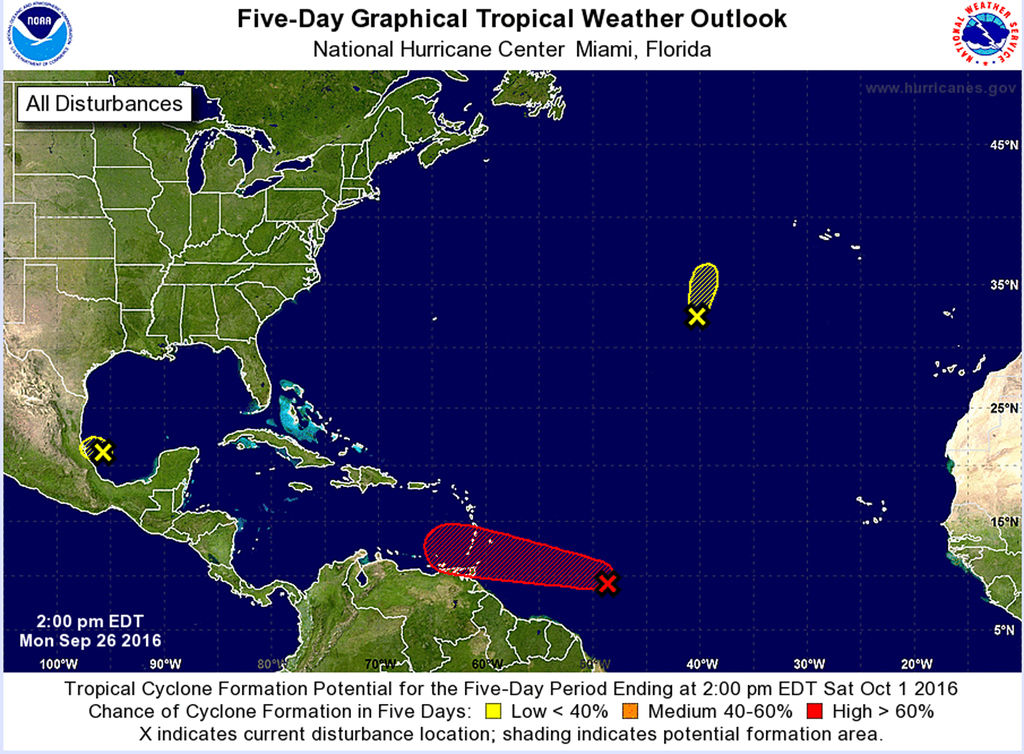
Another factor for autumn gas prices are Atlantic tropical storms. The National Hurricane Center on Monday was monitoring a low pressure system about 1,100 miles east-southeast of the Windward Islands that meteorologists were giving a 60 percent chance of developing into a cyclone over the next two days and a 90 percent chance of becoming one within five days.
The storm system was heading west-northwest at 15-20 mph and was expected to dump rain on the Windward Islands and southern Lesser Antilles by late today or Wednesday. The NHC projection has the storm possibly hitting the northern coast of South America.
Related Articles

Dougherty Jail graduates first class of female GED recipients
“It was an escape. I can say this has been challenging. I want to express my gratitude for being able to attend this program.”

From cotton to cloud: In the data center debate, is rural Georgia once again being asked to carry the cost?
Across much of rural Georgia, the abandoned cotton warehouses and shrinking tax bases remain — enduring reminders that industries built to serve distant markets do not necessarily stay rooted in the communities that first sustained them.
Dawson Council approves $400,000 lifeline in emergency meeting as financial accountability remains elusive
Less than a week after city officials publicly acknowledged the City of Dawson cannot continue operating without additional financing, the Dawson City Council convened a hastily called emergency meeting Tuesday evening and unanimously approved authority to borrow up to $400,000 through a tax anticipation note.
