
Dawson Council approves $400,000 lifeline in emergency meeting as financial accountability remains elusive
Less than a week after city officials publicly acknowledged the City of Dawson cannot continue operating without additional financing, the Dawson City Council convened a hastily called emergency meeting Tuesday evening and unanimously approved authority to borrow up to $400,000 through a tax anticipation note.
DAWSON — Less than a week after city officials publicly acknowledged the city of Dawson cannot continue operating without additional financing, the Dawson City Council convened a hastily called emergency meeting Tuesday evening and unanimously approved authority to borrow up to $400,000 through a tax anticipation note.
The meeting lasted less than 10 minutes.
Although several members of the public attended hoping to ask questions about the city’s worsening financial condition and the proposed borrowing, no public comment period was included on the agenda, and no public comments were accepted before the council voted unanimously to approve the measure.
The emergency meeting followed last week’s regular council meeting, during which city officials presented financial reports showing the city is operating with a structural budget deficit and lacks sufficient cash flow to continue meeting expenses without outside funding. Officials also acknowledged that multiple annual financial audits remain incomplete, limiting the city’s financing options while the city works to stabilize its finances.
Tuesday’s meeting produced no additional financial reports, no updated budget documents and no discussion regarding how the borrowed funds would be monitored or reported to the public.
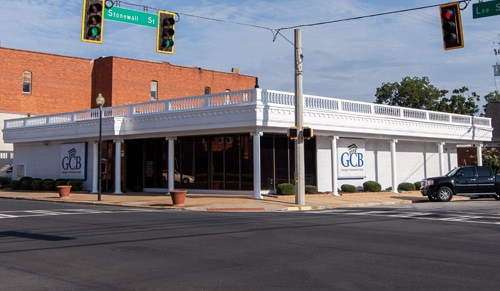
The resolution authorizes Dawson to issue a Tax Anticipation Note structured as a revolving line of credit with Georgia Community Bank in an amount not to exceed $400,000.
Unlike a traditional municipal bond issued for capital projects, a tax anticipation note is short-term borrowing intended to provide cash flow until property taxes are collected later in the year.
Under the agreement approved Tuesday:
- The city may draw money as needed, up to $400,000.
- Interest will accrue only on amounts actually borrowed.
- The interest rate is 5.60% annually.
- The note matures Dec. 31, 2026.
- Georgia Community Bank will serve as the lender.
- The city pledges its full faith and credit to repay the obligation using future tax revenues.
Rather than receiving the full $400,000 immediately, the agreement establishes a line of credit that city officials may draw upon throughout the remainder of the year. Each withdrawal will simply be recorded on an attached schedule of draws, with interest calculated only on the outstanding balance.
The resolution further states the borrowed money may be used to pay current operating expenses, accrued interest, attorney fees associated with issuing the note and other costs of the borrowing.
The emergency borrowing comes just days after city officials presented council members with financial information showing Dawson’s recurring revenues are insufficient to cover recurring operating expenses.
Documents discussed during last week’s meeting projected recurring revenues of approximately $5.88 million against planned expenditures of roughly $6.18 million, leaving the city dependent on transfers from its Public Utilities Fund while seeking temporary financing to continue operations.
Officials acknowledged the city has been unable to complete annual audits dating back to 2023 and said those audits must be completed as part of broader efforts to restore financial stability.
City leaders described the proposed line of credit as necessary to cover payroll and other operating expenses while the city works through its financial recovery.
Despite the significance of authorizing as much as $400,000 in emergency borrowing, Tuesday’s meeting included virtually no discussion beyond reading and approving the resolution.
Council members were not presented with updated financial statements showing the city’s current cash position.
Despite authorizing as much as $400,000 in emergency borrowing, city officials offered little explanation of how the line of credit will be managed. The council was not told how much of the available funds the city expects to draw immediately, which operating expenses would take priority, what safeguards or internal controls would govern future withdrawals, how often council members would receive updates on the outstanding balance, or what financial benchmarks would determine whether additional borrowing would become necessary.
The resolution itself authorizes the borrowing but does not require public reporting each time funds are drawn, establish spending priorities beyond “current expenses,” or require periodic reports to the council regarding the status of the line of credit.
The meeting consisted almost entirely of approving the financing resolution before adjourning.
For citizens seeking additional information about the city’s financial condition, the emergency session provided few new answers beyond authorizing the borrowing itself.
The amended Fiscal Year 2025-26 budget has not been publicly presented despite significant changes in the city’s finances. Likewise, the proposed Fiscal Year 2026-27 budget referenced during recent meetings has not yet been made available for public review.
The absence of those documents leaves the public unable to determine whether the tax anticipation note represents a temporary cash-flow solution or addresses a more fundamental structural deficit.
The resolution states Georgia law allows municipalities to obtain temporary loans in anticipation of property tax collections provided statutory borrowing limits are met. City officials certified the proposed borrowing complies with those requirements.
According to the resolution, the city’s maximum legal borrowing authority equals 75% of the taxes collected during calendar year 2025. Based on approximately $924,715 in tax collections last year, Dawson’s statutory borrowing limit would be approximately $693,536, placing the proposed $400,000 line of credit within the legal threshold.
Officials also certified the city has no unpaid tax anticipation borrowing from previous years and pledged that total obligations incurred during 2026 will not exceed anticipated revenues for the year.
Tuesday’s emergency meeting marks the latest development in months of increasing scrutiny surrounding Dawson’s finances.
Recent council meetings have focused on past due audits, budget shortfalls, questions surrounding city equipment purchases, incomplete financial records, inter-fund transfers, and repeated requests by council members, citizens and the media for greater financial transparency.
Related Articles

PHOTOS: Albany State Homecoming Fair and Carnival
Click the arrow to scroll through the photos.

PHOTOS: Albany State Homecoming 2026 – Business After Hours
Click the arrow to scroll through the photos.
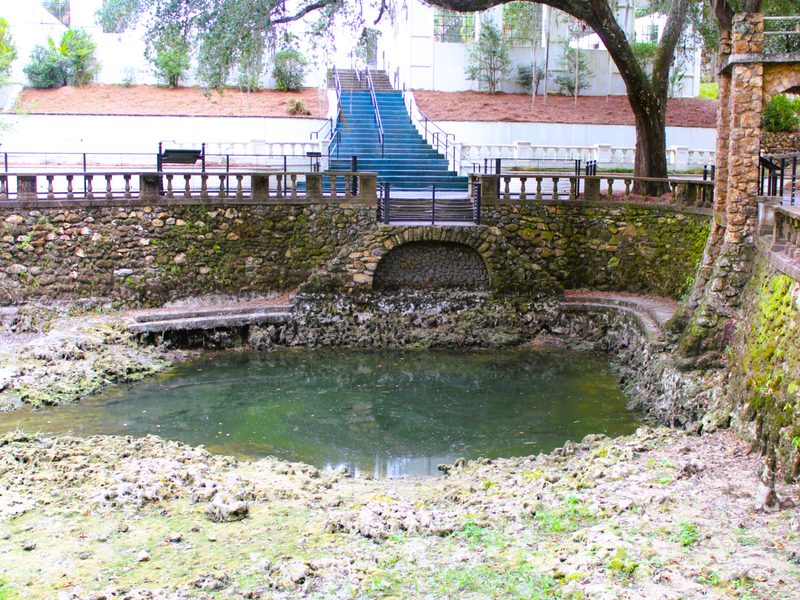
Weather conditions, water usage lead to dried-up Radium Springs
Radium Springs was purchased by DNR after the Flood of 1998, the second “500-year flood” that hit the area in a four-year period.
