
Persian parrotia a good alternative to Bradford pear
Consumer Q&As
By Arty Schronce
Q: I saw some small trees with colorful foliage planted along a street. I was told they were parrotias. Can you give me more information about them?
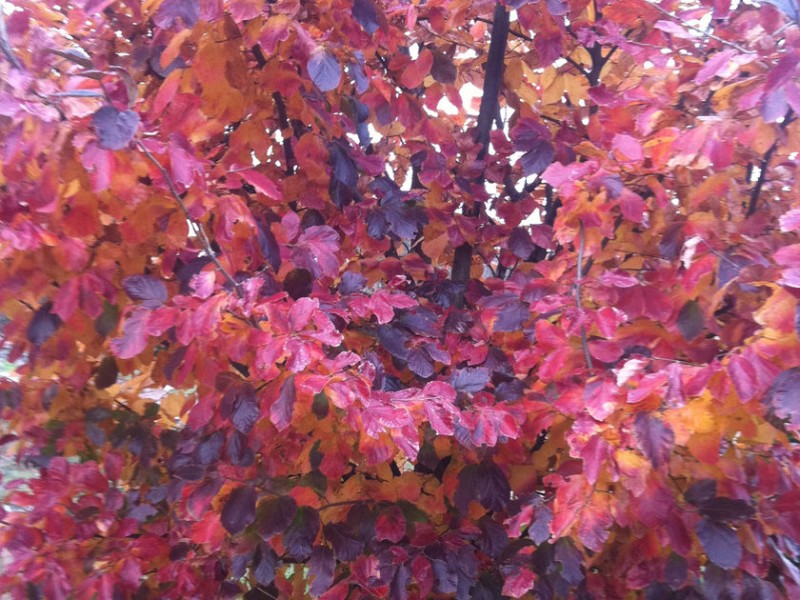
A: Persian parrotia (Parrotia persica), sometimes simply called parrotia, is a desirable but relatively uncommon small to medium-sized tree. It is sometimes grown as a very large shrub while young. One of its most is valued characteristics is its fall foliage with a broad range of colors from maroon to crimson to scarlet and gold. As the tree matures, its bark begins to exfoliate revealing shades of gray and brown, making it an especially nice feature in the winter landscape. Parrotia’s rosy flowers in early spring are attractive, but not particularly showy.
Although it may be a little harder to find than some other trees, Persian parrotia is worth seeking. It is an excellent alternative to the overplanted and problematic Callery pears such as the Bradford pear.
Q: What are some good roses to grow in pots? I want to grow one in a large pot or whiskey barrel.
A: With the exception of large climbers, most roses can be grown in containers provided a few basic considerations are met. It is important that the container be large enough to provide ample space for the roots. Generally, the bigger, the better. It should also have drainage holes. Choose a sunny location with good air circulation just as if the rose were planted in the ground. You will need to water more frequently because of the limited root space.
Consider miniature roses when selecting varieties for containers. These tiny versions may not be what you had in mind when wanting a rose, but their small stature makes them ideal candidates.
There is also a group of roses called “patio roses” that you should look at. They are compact but not as small as the miniatures. Dwarf polyanthas are another group to consider. Some of the “antique” roses have small stems and statures and may be good choices.
Your best option is to visit a garden center in late winter or early spring when they generally receive their selection of bare-root roses. Find one whose color, fragrance and other attributes appeal to you and ask about growing it in a container. The horticulturists there will be able to offer advice as well as pointing you to some suitable containers if you don’t have one already.
Q: How many peanut farmers are there in Georgia?
A: According to the Georgia Peanut Commission, there are approximately 3,500 peanut farmers in the state. These farmers planted peanuts in more than 75 Georgia counties.
Q: Is corn a grain or a vegetable?
A: It depends. Corn can be considered either a grain or a vegetable based on when it is harvested. Corn that is harvested when fully mature and dry is considered a grain. It is processed into cornmeal, grits, hominy and other products. Popcorn is also harvested when mature and is considered a grain.
Fresh corn is harvested when it is soft and has kernels full of liquid. It is considered a vegetable.
“Sweet corn” is the type of corn that is usually harvested fresh and eaten as a vegetable. It has a higher sugar content than “field corn,” the starchier type of corn that is grown as a grain. Field corn can, however, be harvested earlier and eaten as a vegetable but it is nowhere near as sweet as sweet corn.
To complicate matters, you can say that, from a botanical standpoint, an ear of corn is also the fruit of the corn plant. But things are complicated enough already.
If you have questions about agriculture, horticulture, food safety or services or products regulated by the Georgia Department of Agriculture, write Arty Schronce ([email protected]) or visit the department’s website at www.agr.georgia.gov.
Related Articles

‘Sounds Like a Mutiny.’ Secret Recording Exposes Claims of Toxic Leadership After a Marine’s Suicide
This week’s War Horse story follows the systemic failures before and after the death of Cpl. Drew Mobley who was the third in two years at Marine Corps Base Quantico to die by suicide.
Southwest Georgia artists recognized at packed opening of exhibition
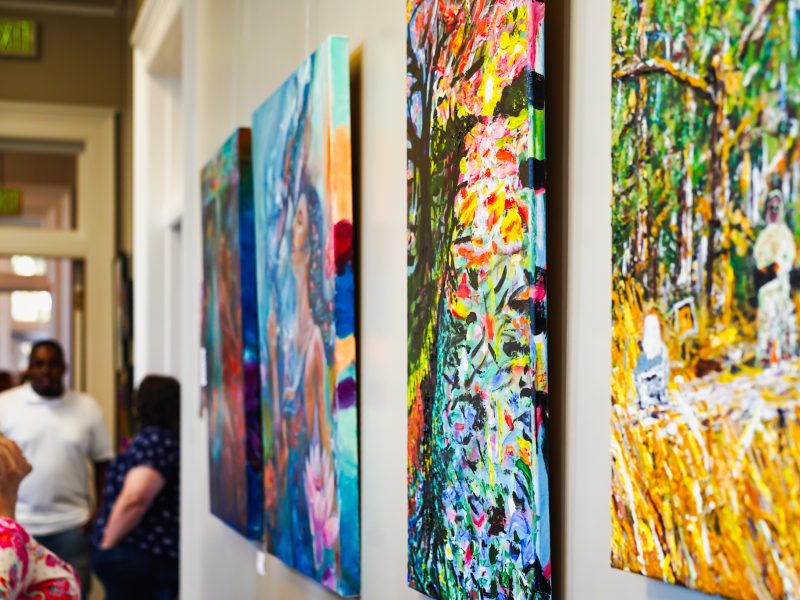
The annual juried exhibition, one of the region’s largest showcases of visual art, features approximately 46 artists and nearly 90 works spanning painting, sculpture, ceramics, photography and mixed media.
Powerful performances drive Theatre Albany’s ‘The Color Purple’
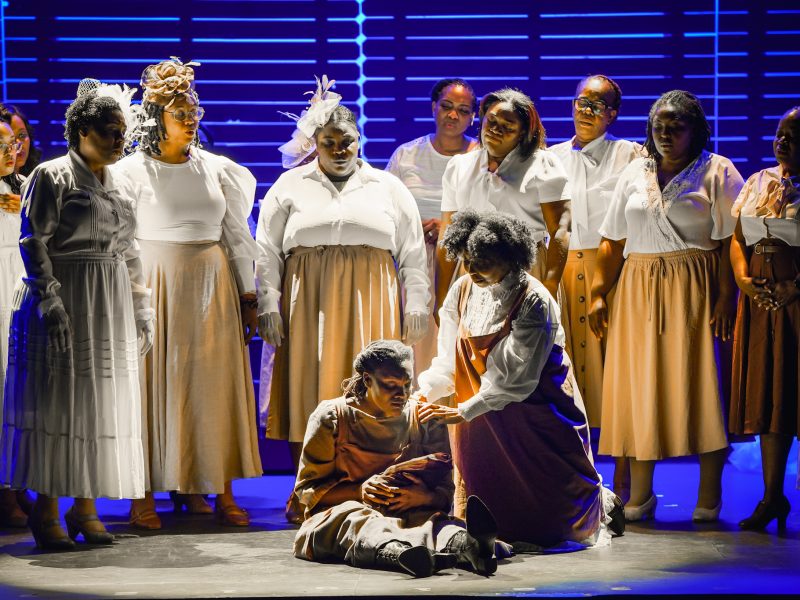
From the street, strands of purple ribbon wind around the white columns of the historic theater, hinting at the story waiting beyond its doors. Inside the foyer, a carefully curated slideshow flickers across a large screen, cycling through the faces of the cast. Some are seasoned performers. Others are stepping onto a stage for the very first time. Teachers stand alongside former students. Parents perform beside their children. People who worship in different churches, work different jobs and come from different corners of Southwest Georgia gather beneath the same lights to tell the same story.
