
EVERYTHING ALBANY: Linotype and street lights: History is easy to find
You don’t have to go too far to discover that Albany is full of unique history
By Cindi Cox
I didn’t have to go too far to discover that Albany is full of unique history. As soon as I stepped out of my van and headed to the main entrance of The Albany Herald, I noticed an engraved marker on the sidewalk which reads:
On February 9, 1889, the first electric lights brightened Broad and Washington Street in Albany. The City had the first Edison municipal incandescent system ever erected in the South, making Albany famous and attracting tourist from throughout the state to see the new lighting system.
My next historic observation came when I entered the lobby at The Herald. There in the center of the room is a huge linotype machine. I hadn’t seen one of those since the early 1970s when I did some high school volunteer work with a small printing company in downtown Melbourne, Fla. Little did I know then that I would go on to spend the rest of my life working around newspapers, printing and publishing.
One of the most notable inventions in the world of newspaper printing is the Linotype machine, which was developed in 1884 by a German watchmaker named Ottmar Mergenthaler. This machine drastically sped up the printing process and helped revolutionize the newspaper industry by its innovative technique of “line casting,” which placed entire lines of type for printing, rather than just individual letter typesetting.
The Linotype is a 7-foot-tall typesetting machine that works by creating one line of type at a time. It has small brass units that have edges indented with characters, which are assembled into lines to compose the text. Once the line is established, a line of type is automatically cast using a solid bar known as the Linotype slug. The operator types the information on the keyboard and the Linotype pulls up the type, which can then be printed.
The Linotype keyboard looks very similar to a typewriter. It has 90 keys and it separates letters based on their case — all lowercase letters are on one side based on their frequency of letter use and all uppercase letters are on the other side. There is no backspace key or deletion key on a Linotype machine, which makes it really difficult to abort a mistake.
Prior to the Linotype, all type was set by hand — one letter at a time. This caused chaos and slowed down the printing process because it would take a lot of time to find letters and then assemble them into lines. The Linotype drastically cut down on the number of workers needed for typesetting and was believed to have revolutionized the newspaper printing industry from its introduction in the mid-1800s until the mid-1970s, when most newspapers switched to offset printing.
The Albany Herald stopped using its Linotype in 1977 with its last publication using that machine taking place in January, 30. After that, the printing process officially converted from “hot type” to “cold type.”
Seeing that old Linotype machine in the lobby of The Herald brought back memories of my first newspaper job. Straight out of high school I was hired in the paste-up and proofreading department at Florida Today, a Gannett publication located on Florida’s Space Coast. Florida Today was founded in 1966 as a forerunner to USA Today which was published its first issue on September 15, 1982.
Gannett publications were graphically innovative as the first major newspapers using colored ink (lots of it) and boxes, pull quotes, charts, graphs and colorful photographs in its modern design. My job was to proofread stories, to set copy and to design ads. The process we used back then seems ancient today. Reporters had to write to a certain length in order to fit their stories into a specific amount of space. If the story was too long, the end of the story would literally be chopped off with a sharp-edged razor knife. It didn’t matter if it was mid-paragraph or occasionally mid-sentence!
Bing! Bang! Shazam! The story was brutally sliced off to make it fit into the hole.
Journalists were taught to use an inverted pyramid style of writing. The goal was to always get the key 5W information (who, what, where, why and when) into the first paragraph, followed by details and quotes of less and less importance as the story went on. That way it would not matter too much if the story had to be abruptly cut off to fit into the allotted space.
Content was typeset onto large strips of glossy paper which was run through a hand-wax machine and laid down on large paste-up boards (average thickness card-board stock) featuring non-transferable blue lines like the lines on graph paper. The lines were used to help with proper alignment. Once the printed paper was set evenly onto the paste-up boards, a small rubber roller was used to smooth everything out. The rolling process always reminded me of a rolling pin in the kitchen used to smooth out homemade noodles or a pie crust.
Hunting for typos or errors in a story was a tedious and time-consuming job. If a word was misspelled it, too, had to be cut out of the sentence or paragraph and then retyped and inserted perfectly aligned back into the exact spot from where it had been removed. It had to be secured back into place with clear adhesive tape. It could not be crooked or the entire paragraph or story would be askew.
Designing advertising or making boxes for highlighted content was just as complicated. We used border-tape which came in a variety of thickness and was laid down just like scotch-tape with the dark line down the middle. Getting it to stay even was always a challenge. Clip art from huge catalogues was used to ad flair to the designs. Very little photography was used in advertising until the late 1980s.
Oh how I longed for the day that I would be writing stories rather than pasting up copy and proof-reading for mistakes. And yes, I also dreamed of a better way until, eventually, that better way came with the onset of new technology. Wow how everything has changed.
Stay tuned next week for more history on the Albany Herald. After that I might take a bus trip around town and talk about the Good Life. As always, your ideas, comments and feedback is greatly appreciated.
Contact Cinci Cox at (229) 434-8744 or email [email protected]. Follow @ABH_CindiCox on Twitter.
Related Articles
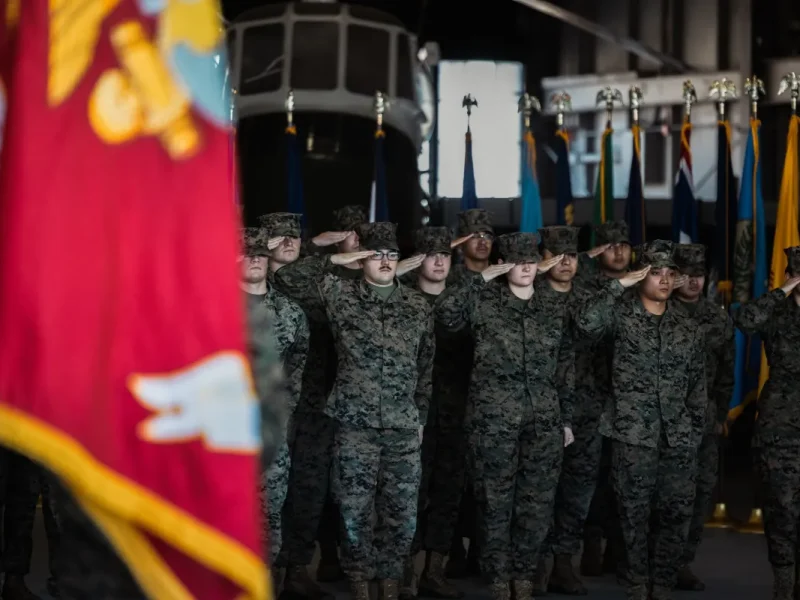
‘Sounds Like a Mutiny.’ Secret Recording Exposes Claims of Toxic Leadership After a Marine’s Suicide
This week’s War Horse story follows the systemic failures before and after the death of Cpl. Drew Mobley who was the third in two years at Marine Corps Base Quantico to die by suicide.

Southwest Georgia artists recognized at packed opening of exhibition
The annual juried exhibition, one of the region’s largest showcases of visual art, features approximately 46 artists and nearly 90 works spanning painting, sculpture, ceramics, photography and mixed media.
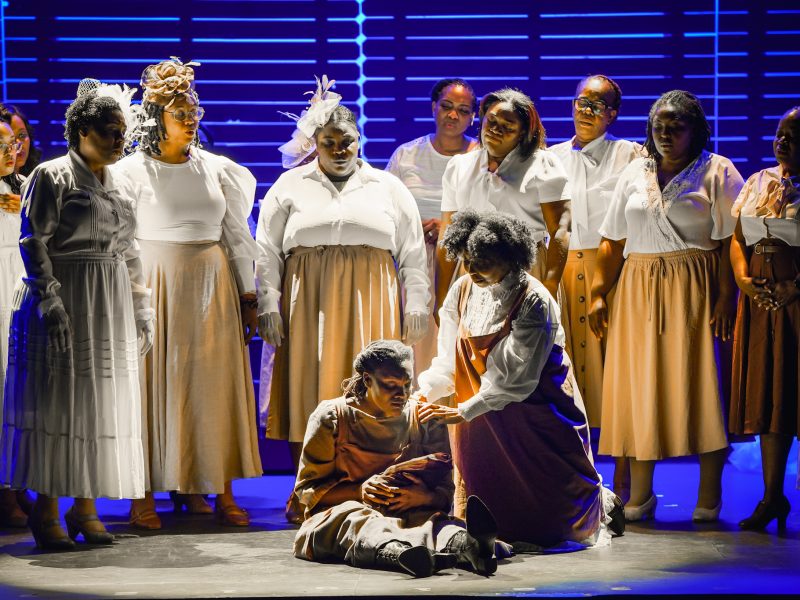
Powerful performances drive Theatre Albany’s ‘The Color Purple’
From the street, strands of purple ribbon wind around the white columns of the historic theater, hinting at the story waiting beyond its doors. Inside the foyer, a carefully curated slideshow flickers across a large screen, cycling through the faces of the cast. Some are seasoned performers. Others are stepping onto a stage for the very first time. Teachers stand alongside former students. Parents perform beside their children. People who worship in different churches, work different jobs and come from different corners of Southwest Georgia gather beneath the same lights to tell the same story.
