
Politics on lawmakers’ minds in return to Gold Dome
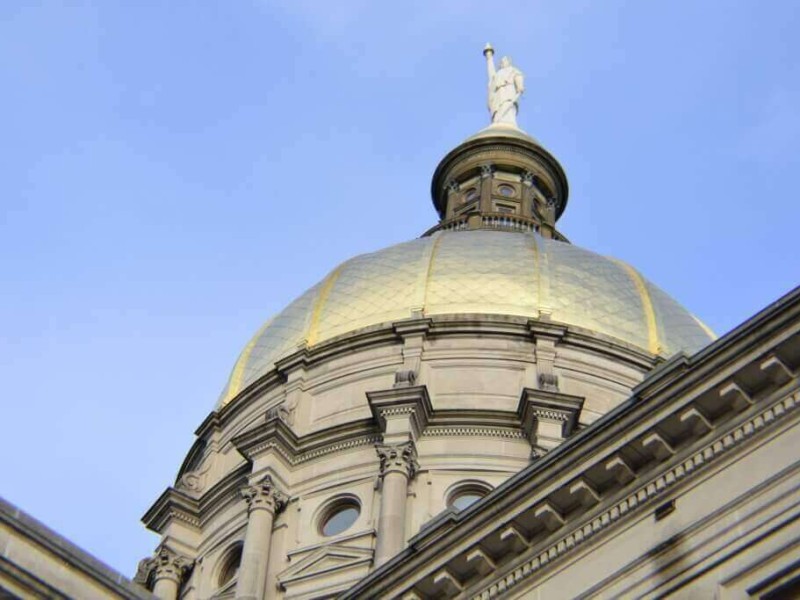
Ross Williams/Georgia Recorder
By Jill Nolin
Georgia Recorder
ATLANTA — Will school voucher supporters try again after a searing defeat in 2023? How will lawmakers spend billions of dollars of budget surplus? Are Republicans really eying Medicaid expansion?
These are some of the burning political questions going into what is expected to be an action-packed 2024 legislation session, which kicked off Monday in downtown Atlanta.
The session comes on the heels of a bitter court-ordered redistricting do-over during which lawmakers feuded over new political maps that the judge has since signed off on. And it’s an election-year session that will play out as voters head to the polls on March 12 to help decide which presidential candidates will be at the top of the ballot this fall.
Many new bills will no doubt spring fresh from the fertile minds of Georgia’s lawmakers and lobbyists, like more bills aimed at changing how the state runs elections.
But this is the second of a two-year session, which means the many bills left hanging from last year are still alive for this year, and there are a lot of leftovers from last year, including some key leaders’ top priorities.
Some of last year’s most intensely debated bills may also be revisited.
For example, GOP lawmakers pushed through a plan to create an prosecutors oversight commission that would have the power to remove elected district attorneys from office. But that commission stalled after the state Supreme Court declined to approve rules and regulations as is. A bill designed to fix the law already has been filed.
And lawmakers are teed up to revisit an issue that sprung up in the final days of the session last year: public access to fishing on Georgia’s rivers. A House study panel recommended more changes in response to concerns from riverfront property owners.
Some of the issues that seem poised to loom large until the gavel falls a final time early in the spring include:
Health care policy is on the menu: Georgia’s Republican leaders have steadfastly resisted full Medicaid expansion under the Affordable Care Act for more than a decade, making Georgia one of 10 states that has not expanded the health insurance program for the poor.
But there are new signs that some key GOP leaders may be willing to consider it, or at least an Arkansas-style version that skirts traditional expansion while still putting an insurance card in the pockets of more uninsured Georgians.
A special House panel met with Arkansas officials over the break to hear about that state’s Medicaid premium assistance program, which purchases private insurance on the marketplace instead of enrolling more people in the state-run program. That influential committee presented “options” in its final report that included lawmakers pursuing a Medicaid waiver “to further support the care of patients who are currently uninsured and the working poor, especially in rural communities.”
Any potential proposal could be paired with changes to hospital regulations. Last year, Lt. Gov. Burt Jones pushed hard for changes to the state’s certificate of need program, which limits the number of medical services available in an area.
A Senate-passed proposal to scale back those health care regulations collided last year with a House-prioritized bill designed to build on the previous year’s landmark behavioral health measure. Both of those bills remain alive for this session, though some advocates have said they expect the behavioral health legislation to splinter into more bite-size measures.
This new chatter is happening as the governor’s partial Medicaid expansion program is off to a sluggish start, sparking increased criticism and renewed calls for full expansion from Democrats.
Initially delayed by the Biden administration, the program launched in July and had enrolled about 2,300 people as of mid-December. As many as 370,000 may be eligible, according to the state’s projections.
There are signs state revenues are slowing after a string of years where collections surged. But the state is also sitting on a massive pile of cash, with about $16 billion socked away in surplus and rainy-day funds.
Gov. Brian Kemp will kick things off by unveiling his spending proposal. But he has already announced some of his plans, including a one-time $1,000 bonus for state workers, teachers and other school workers, funding for school security and a push to accelerate an already approved series of income tax rate cuts.
This is also the first time in recent years that the governor has allowed state agency heads to request a spending increase. They could ask for 3% more in funding, so long as they also offer up ideas for cutting expenses by 1%.
The governor will outline more of his priorities for this year in a speech to Georgia’s business community Wednesday and his annual State of the State address set for Thursday.
The cost of educating Georgia’s public school students makes up the biggest portion of the state’s annual budget, and education policy always takes up much of the conversation during the session.
Lawmakers could consider changes to the Quality Basic Education formula, which determines how state dollars are distributed among Georgia students. The formula was created in 1985, and generations of lawmakers have called for an overhaul without much success.
Stephen Owens, director of education at the Georgia Budget and Policy Institute, said the amount of money schools are spending on buses has ballooned over the past few decades as the share of state funding for school transportation has been essentially stagnant.
“We’ve gained hundreds of thousands of students since then,” he said. “The cost of labor, buses, fuel have all gone up, but state funding remains at that same dollar amount since Bill Clinton was in office. In the 1990s, the state paid over half of all the costs to transport kids to and from the school. If the state still paid half the cost, that would be an additional $400 million every year to school districts. This is a slow-moving bus wreck.”
Last year, a bill aimed at sending $6,500 to families in low-performing schools to pull their children out of public school passed the Senate but failed in the House after a handful of Republicans rejected it, sending it back to the House Education Committee. Vouchers are likely to make a return this year, but it’s not clear whether those holdouts will stop holding out.
Artificial intelligence has quickly moved from the realm of science fiction to part of everyday life. Georgia lawmakers from both parties have been meeting over the break to discuss how the state should react to the rapidly evolving technology.
Several lawmakers have expressed concern over potential scams using AI. Specifically, they say they would like to try to mitigate the risk of fraudsters using deepfake technology to blackmail innocent Georgians.
The impact of AI on the economy is uncertain, and lawmakers say they hope to introduce legislation to provide guardrails to protect Georgians’ privacy and other rights while not stifling economic innovation.
On the positive side, lawmakers say they are hopeful the new technology will help save lives through applications like monitoring traffic and health care data.
Lt. Gov. Burt Jones has said one of his top priorities will be a bill aimed at addressing cyberbullying and harmful social media use among minors.
Some transgender Georgia youths and their allies fear another year could bring another bill that they say could chip away at their rights.
In 2022, lawmakers passed a ban on transgender girls playing on girls’ sports teams. Last year saw a ban on hormone therapy for transgender minors. An election year could mean Republicans, who control majorities in both chambers, will seek to craft socially conservative legislation to please their base.
Author

Related Articles
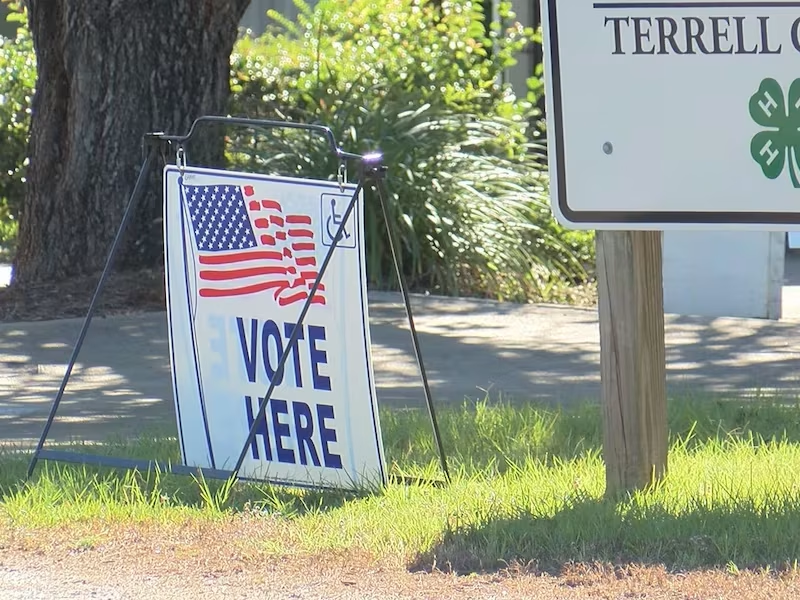
Who decides elections in Terrell County? Data show older voters dominate turnout as turnout declines
According to the Georgia Secretary of State, 1,731 of Terrell County’s 6,048 active registered voters cast ballots in the May primary, a turnout rate of 28.6%. Four weeks later, only 922 voters participated in the June 16 primary runoff, reducing turnout to 15.2%.
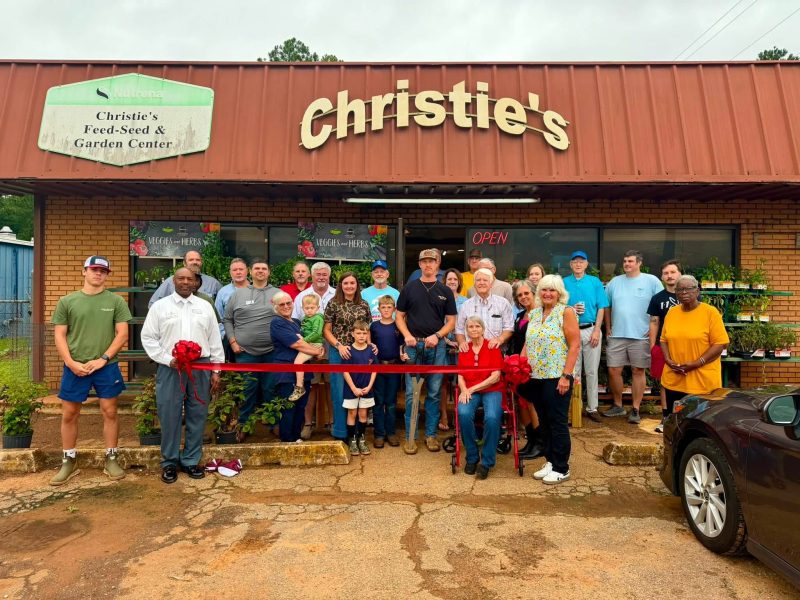
Christie’s Feed & Seed enters new chapter under new ownership
A longtime Dawson business has entered a new era as Riley and Jessie Davis officially assumed ownership of Christie’s Feed & Seed, with the Terrell County Chamber of Commerce marking the transition during a ribbon-cutting ceremony.
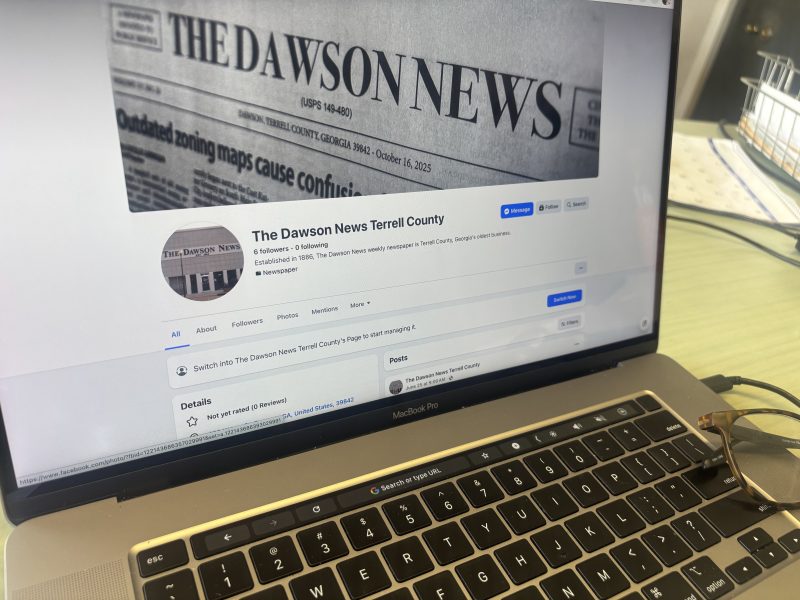
Dawson News grows online with Albany Herald website, Facebook page
Residents can now find Dawson News coverage alongside regional reporting on the Albany Herald’s website while also following breaking news, community events and feature stories through the Dawson News Facebook page.
