
Survey shows teens engage in risky driving behavior
Texas A&M transportation study reveals teen drivers engage in risky behavior despite dangers
From Staff Reports
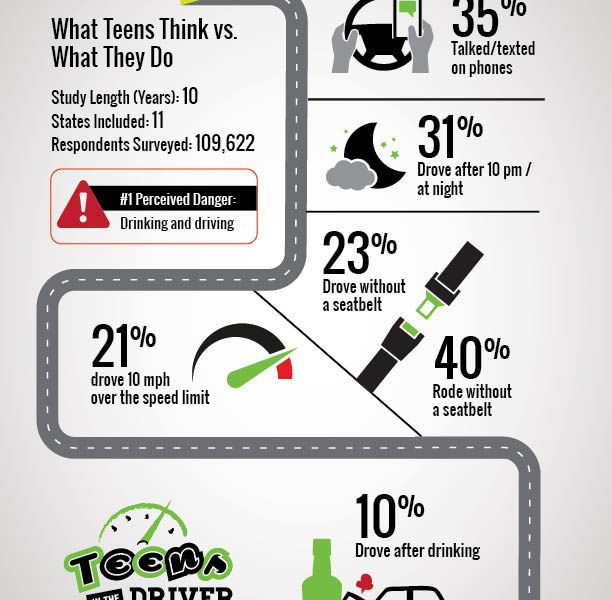
TEXAS — In one of the largest studies of its kind, the Texas A&M Transportation Institute found through the Teen Driver Risk Awareness Survey that, despite knowing the dangers of risky behavior while driving, many teens continue to do them anyway. The survey was conducted through TTI’s Teens in the Driver Seat program from 2007 to 2016.
109,622 teen drivers submitted responses to the survey in 11 states including Texas, Georgia, North Carolina, Nebraska, Connecticut, California, Colorado, Oklahoma, New Mexico, New York and Pennsylvania. All teens participating in the survey attended high schools that have implemented Teens in the Driver Seat. TDS is a peer-to-peer, traffic safety program designed to teach teen drivers about the five most dangerous behaviors associated with riding or driving in a car.
Those five dangerous behaviors are:
— Distractions;
— Driving at night;
— Speeding and street racing;
— Not wearing a seatbelt;
— Driving under the influence.
TDS was started in 2002 with the help of the Texas Department of Transportation’s Section 402 program.
The purpose of the study was to determine what teenagers perceive to be the most dangerous aspects of driving compared to the risky behavior the teens are actually exhibiting behind the wheel in the 30 days prior to the survey, according to TTI Associate Transportation Researcher Lisa Minjares-Kyle, who presented the survey’s findings at the 62nd Annual American Driver and Traffic Safety Education Association in Rosemont, Ill.
According to the survey, 23 percent of teen respondents admitted to driving without a seatbelt, and more than 40 percent said they didn’t wear a seatbelt as a passenger. Twenty-one percent of respondents admitted to speeding, and 16 percent said they ran a red light. A little more than 10 percent said they drove after drinking alcohol.
Respondents identified drinking alcohol as the most dangerous perceived crash risk factor. Yet, based on the dangerous activities they admitted, drinking and driving was among the least reported.
“The respondents told us that talking on their phones and texting while driving were among the most dangerous activities they could do. However, about 35 percent of the teens admitted to doing both either ‘some’ or ‘a lot’ over the previous 30 days,” Minjares-Kyle said. “We know teen drivers are at greater crash risk and are distracted easily when they have lots of friends with them while driving, yet many don’t recognize their peers as distractions to driving and nearly 50 percent self-reported riding and driving with peers, more than any of the other behaviors.”
Researchers also determined some differences in responses based on gender. Male participants most often perceived drinking, texting, phone use, speeding and failure to wear a seat belt as top risks, while female participants cited drinking, phone use, talking, music and eating as the most dangerous.
Survey information and results can be found at https://static.tti.tamu.edu/tti.tamu.edu/documents/TRB-1801857.pdf.
Related Articles
Albany Rescue Mission in recovery but still can use some help
“We can’t do this without the community. We are so grateful for the willing vessels. We just can’t thank them enough. We also appreciate the other ministries that have sown seeds into our ministry.”

Plenty of oil, not enough diesel — and southwest Georgia farmers are paying for it
Sedrick Rowe doesn’t spray herbicides on his 10 acres of organic peanuts. He fights weeds with his tractor instead, which means he runs it more often than most farmers — and burns at least 30 gallons of diesel on a typical day. This harvest season, every one of those gallons costs more than it has at any point on record.

Dougherty schools plan task force as SNAP changes raise concern over free meals
The Dougherty County School System plans to create a task force to help families retain food assistance and navigate new reporting requirements as district officials warn that declining SNAP participation could eventually affect the federal provision that allows every student to eat free at school.
