
Plenty of oil, not enough diesel — and southwest Georgia farmers are paying for it
Sedrick Rowe doesn’t spray herbicides on his 10 acres of organic peanuts. He fights weeds with his tractor instead, which means he runs it more often than most farmers — and burns at least 30 gallons of diesel on a typical day. This harvest season, every one of those gallons costs more than it has at any point on record.
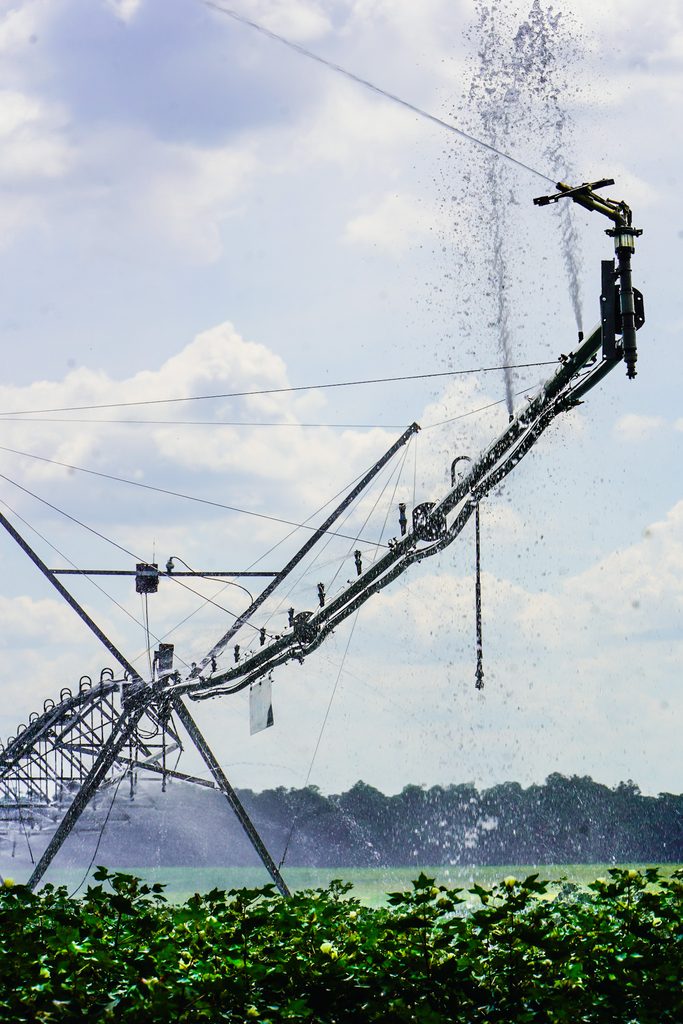
An Albany organic peanut farmer burns at least 30 gallons of diesel fuel a day, and with fuel, seed and fertilizer costs all climbing, he warns small growers may be forced to sit out a season.
ALBANY — Sedrick Rowe doesn’t spray herbicides on his 10 acres of organic peanuts. He fights weeds with his tractor instead, which means he runs it more often than most farmers — and burns at least 30 gallons of diesel fuel on a typical day.
This harvest season, every one of those gallons costs more than it has at any point on record.
“It’s very costly,” Rowe, a first-generation farmer who works his operation alone with one tractor, said. He has cut back on hired help as prices for nearly everything have climbed, and the fuel bill now limits how often he can put the tractor in the field.
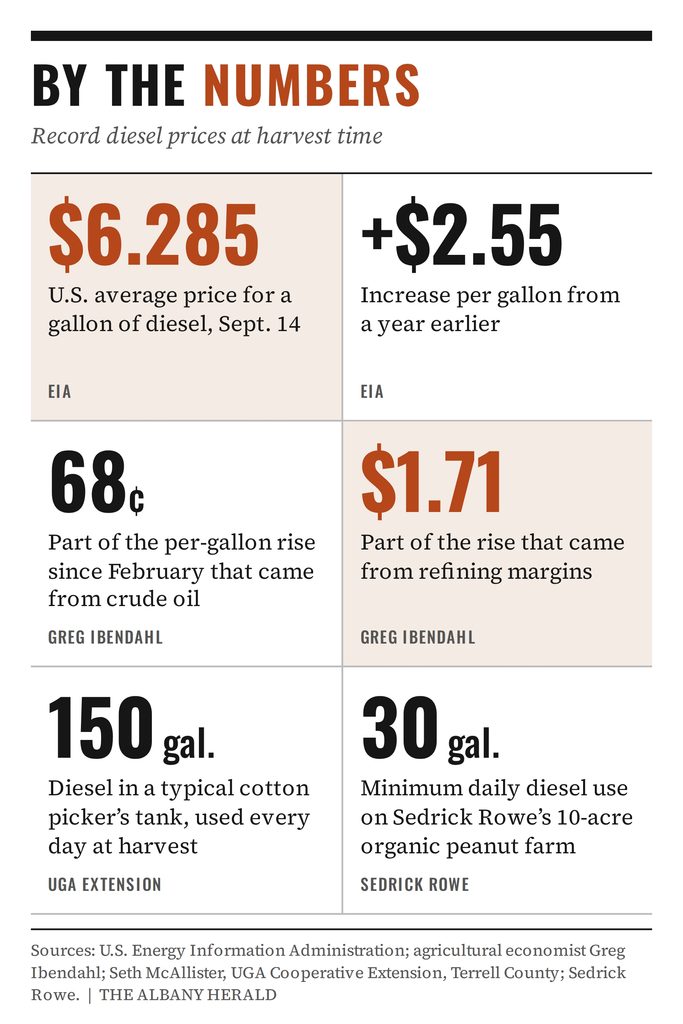
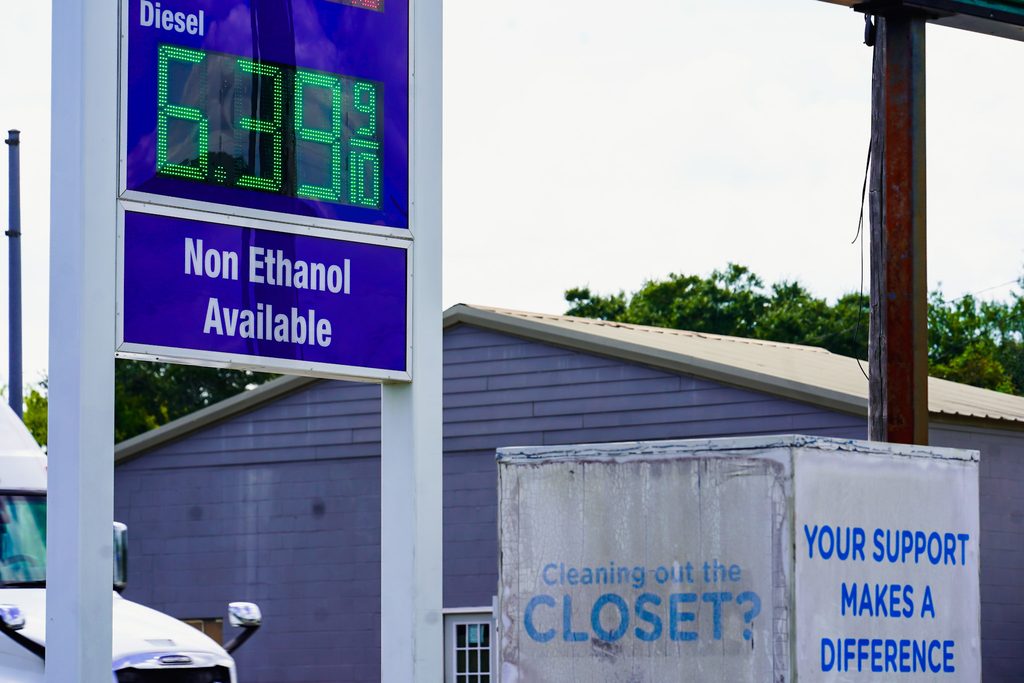
Diesel set an all-time high Sept. 4, when AAA’s national average reached $5.85 a gallon, topping the record set in June 2022. It has kept climbing. By Sept. 14, the U.S. Energy Information Administration put the national average at $6.285 a gallon, up about $2.55 from a year earlier.
For farmers in the middle of peanut and cotton harvest, the natural hope is that falling oil prices will bring relief. Analysts say that’s unlikely any time soon, because the world isn’t short on crude oil.
It’s short on diesel.
Harvest runs on diesel
“We’re entering harvest season, and some of these large horsepower tractors, combines and cotton pickers — they use a lot of fuel,” Seth McAllister, the University of Georgia Cooperative Extension agent in Terrell County, said. A cotton picker typically holds 150 gallons of diesel and runs every day, he said.
Larger peanut operations often run three to five peanut pickers in a single field, McAllister said. That means at least five tractors, usually two more pulling dump carts, and a semi hauling peanuts from the field to the buying point.
“If we made the exact same yield in the exact same field, we would have double the cost for the fuel and the logistics getting it to market than we had a year ago,” he said.
Farmers have few ways to soften the blow.
“We’re price-takers, not price-makers,” McAllister said. “We have to harvest when the crop’s ready.”
Growers who didn’t lock in fuel prices ahead of time are paying current rates, and storage space for fuel on farms is limited, he said. Most farm equipment runs on red-dyed diesel, which is exempt from highway fuel taxes but can’t be used in on-road trucks. Most farmers took out their operating loans in January, before prices spiked.
“At this point, they’re either burning up equity or taking out additional loans to get them to the end of the season,” McAllister said.
Cutting corners that could cost the crop
Some growers are already cutting back in ways that could hurt yields. Most irrigation systems in the area run on electricity, but fields far from power lines depend on diesel pumps. Cotton and corn are largely finished with irrigation, McAllister said, but peanuts still need water — and the one expense farmers can cut right now is “simply not cutting the pivot on.”
That risk goes beyond a smaller crop. Peanuts grow underground and must be dug and turned over when soil moisture is right.
“If we try to dig them too wet or dig them too dry, we lose a lot more,” McAllister said. “So our harvest efficiency goes way down.”
The price spike also wiped out a rare bit of good news. Grower sentiment over the past year and a half has been “as dismal as I have heard in my career,” McAllister said. About six weeks ago, commodity prices began rising slightly for the first time in two years.
“But now that fuel has jumped up so much, it’s pretty much taking all that sting out of it,” he said. “It’s even worse now than it was.”
Georgia farmers were already under strain before fuel peaked. In an American Farm Bureau Federation survey conducted in April, 92 of 121 Georgia respondents said their finances were worse than in 2025.
Small farms feel it first
For Rowe, the pressure is already shaping next year. High costs mean he will plant fewer acres than he would like, he said.
“With seed prices, fertilizer prices from overseas, it’s just a lot trickling down,” Rowe said. “If you don’t have a big bank account, it’s kind of hard to survive.”
Small and midsize growers are the most exposed, he said.
“You may see a lot of large farmers just minimizing their typical acreage, and then a lot of small farmers just may have to sit out for a year or so,” he said.
Rowe grew up in Albany surrounded by pecan orchards and fields of peanuts and soybeans. He earned a master’s degree from Fort Valley State University, where he researched peanut pests and organic methods of controlling weeds and insects. That work led him to grow organic peanuts, a crop few Georgia farmers had tried. He markets his crop through the Georgia Organic Peanut Association cooperative and was appointed by former U.S. Agriculture Secretary Tom Vilsack to the USDA’s Advisory Committee on Minority Farmers.
“I don’t have a lot of acres, so I have to do things I can profit from on a smaller scale,” Rowe said. Record fuel prices are squeezing exactly that kind of margin.”
Why cheaper oil won’t fix it
The shortage traces back to two wars.
Ukrainian drone strikes on Russian refineries led Moscow to create an all-out ban on diesel exports through Sept. 30. Russia was once Europe’s largest diesel supplier. According to the American Action Forum, a Washington-based policy institute, Russia’s exports of diesel and similar fuels fell from more than 800,000 barrels a day in 2025 to about 50,000 by late July.
Refineries in the Persian Gulf had managed to replace much of that Russian supply in Europe. But this summer, the U.S.-Iran war that began Feb. 28 disrupted shipping through the Strait of Hormuz, cutting off most of those exports. Combined, diesel exports from the Gulf and Russia are about 1.6 million barrels a day lower than in February, according to Greg Ibendahl, an agricultural economist and farm finance extension specialist at Kansas State University, who tracks agricultural financial trends.
Europe has turned to American diesel to fill the gap. U.S. stockpiles of diesel and heating oil averaged their lowest August level since 1982, EIA data show. And U.S. refineries, running at about 98% of capacity by August according to the American Action Forum, can’t simply make more.
Diesel’s price has three main parts: the cost of crude oil; the refiner’s margin for turning crude into diesel; and taxes, distribution and retail markup. Since February, retail diesel has risen about $2.25 a gallon nationally. Only 68 cents of that increase came from crude oil, Ibendahl found. The refining margin accounts for $1.71.
Because a barrel holds 42 gallons, even a $20-a-barrel drop in crude would trim less than 50 cents from a gallon of diesel if nothing else changed. Relief depends on getting more finished diesel back onto the world market, Ibendahl concluded.
The last diesel spike, in 2022, took about 2 1/2 years to settle, according to analysts Meir Hasbani and Eric Lingman of the energy consulting firm Stillwater Associates. Prices came down then because Russian barrels found new buyers, new refineries came online and demand softened.
But according to Hasbani and Lingman, those solutions are no longer on the table. Russian refining is damaged, and its exports are banned, and no comparable new refining capacity is expected for at least two years. The analysts said the Strait of Hormuz re-opening — or a recession that cuts demand — is ultimately what would bring prices down.
Futures markets expect some easing. As of Sept. 14, wholesale diesel futures pointed to about $4 a gallon by April 2027, according to Ibendahl. The EIA forecasts retail diesel will average $4.40 next year, still well above the roughly $3.70 drivers paid just one year ago.
Farmers pay, but don’t get paid back
Consumers will eventually feel the cost. Michigan State University economist David Ortega told NPR that businesses absorb much of the increase at first, “but as contracts reprice and fuel surcharges take hold, more of that cost makes its way to the grocery store.”
Farmers are unlikely to see any of that money.
“The farmer doesn’t see any of that additional revenue,” McAllister said. “It’s all the middleman that’s marking up those margins.”
McAllister points out prices paid to growers for peanuts and cotton have not risen in line with fuel.
“Any fuel surcharge passed to shoppers would be added further down the supply chain, by the companies that store and process those crops, “he said.
Rowe said hauling his crop to processors is another major expense. For residents who want to help, his advice is simple: Buy directly from local farmers.
“That’ll help a lot of farmers,” he said.
Related Articles

Candidates debate health care, development, rural investment at Albany forum
Candidates seeking to represent Southwest Georgia called for greater investment in health care, education and infrastructure during an Oct. 1 forum, but differed over data centers, economic development and how to work across party lines.

Former Dougherty Commissioner Harry James challenges ‘dean of legislature,’ Gerald Greene
Georgia voters go to the polls on Nov. 3.Among the state House races on the ballot in southwest Georgia is District 154, where incumbent Republican Gerald Greene will face Democratic nominee Harry James.
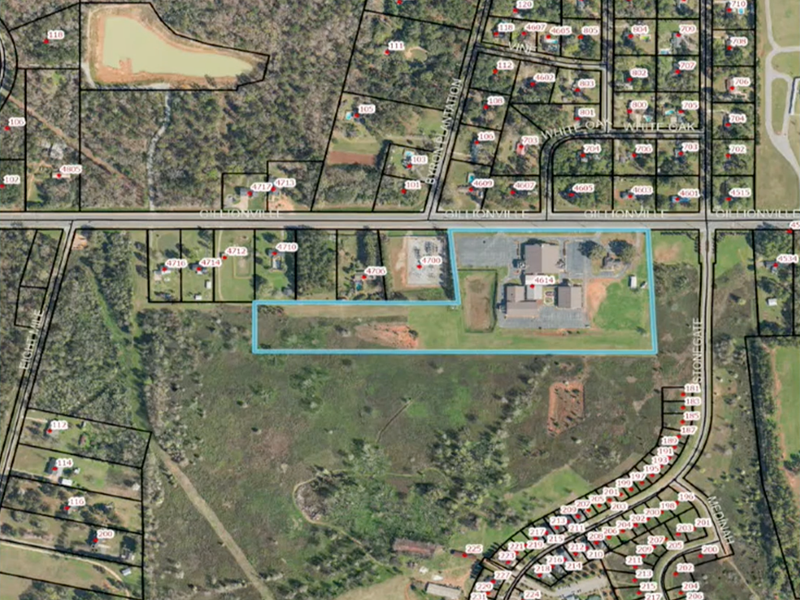
County approves 198-foot Gillionville Road cell tower; no speakers at public hearing
Dougherty County commissioners unanimously approved a 198-foot cell tower behind a church on Gillionville Road, with no one speaking for or against it at the public hearing.
