
Candidates debate health care, development, rural investment at Albany forum
Candidates seeking to represent Southwest Georgia called for greater investment in health care, education and infrastructure during an Oct. 1 forum, but differed over data centers, economic development and how to work across party lines.
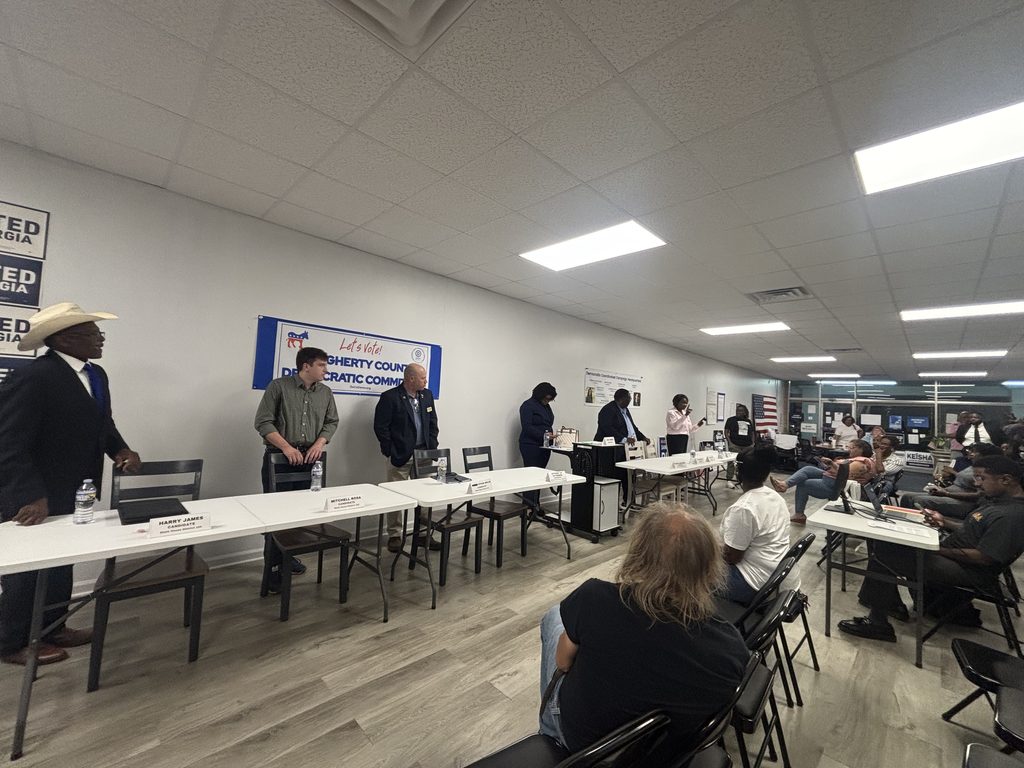
ALBANY — Candidates seeking to represent southwest Georgia called for greater investment in health care, education and infrastructure during an Oct. 1 forum, but differed over data centers, economic development and how to work across party lines.
The forum at Brooks Plaza featured questions about retaining teachers, repairing aging infrastructure, attracting employers and ensuring rural communities receive state resources.
State House candidates participating included Harry James, a Democrat seeking the state House District 154 seat; Democrat Ethan Wolfe and independent Travis Lockhart, both running in House District 151; and Democrat Mitchell Rosa, seeking the District 152 seat. Anthony “AJ” Patterson, a candidate for Dougherty County Commission District 4, also participated.
Wolfe argued that southwest Georgia has been overlooked in state decision-making, with too many young people leaving because they cannot see a future in the region.
“Rural development cannot just be a talking point that comes up during election season,” he said. “It has to be a real plan built with the people who already know the communities best.”
James identified health care, housing, jobs and education as his campaign’s central concerns, describing them as connected needs that determine whether families can build stable lives.
Lockhart emphasized relationships, regional cooperation and his work leading Fresh Start Academy, which operates in Albany and Americus.
Rosa proposed raising the minimum wage to $20 an hour, legalizing recreational marijuana and establishing constitutional protection for abortion rights.
Questions about whether Albany should prioritize a water park over data centers revealed some of the clearest differences among the candidates.
Rosa supported a moratorium on data centers until at least 2030, saying communities need more time to understand their effects.
“And I do love a water park, so let’s build one of those,” he said.
Wolfe described development decisions as primarily local responsibilities but said lawmakers should establish protections for residents and the environment. He opposed passing the cost of additional electricity needed by data centers to existing customers.
“We need to generate new power. Let them pay for it,” Wolfe said.
The candidate also called for accessible public information and opportunities for residents to comment on development proposals.
Lockhart said data centers and recreational projects could co-exist with appropriate planning. He supported a water park and skate park while arguing that communities should prepare for data centers and ensure they benefit financially.
James said responses to development concerns depend on the type of project, adding that problems often arise from local zoning decisions.
Health care access was a recurring concern, particularly for rural communities struggling to attract providers.
James supported full Medicaid expansion and identified inadequate access to care as District 154’s biggest problem. He also said communities need a quality of life that will help attract medical professionals.
Wolfe likewise supported expansion, arguing that broader coverage and preventive care could reduce future costs. He proposed incentives to retain providers and suggested additional clinics or mobile services to reach residents who lack nearby care.
Infrastructure questions focused on what the state should do when local governments cannot afford repairs.
Wolfe favored grants for communities unable to finance improvements themselves, citing Dawson’s infrastructure problems. He said investment in roads and water systems could create jobs and help attract businesses.
“A lot of these cities, a lot of these counties, don’t have the resources to be able to do it on their own,” he said.
James supported state assistance for local infrastructure. Lockhart said his team had met with a federal group about available funding and advocated bringing funding partners together with local officials to develop a regional plan.
On education, candidates were asked about adding a poverty weight to the state’s school funding formula — additional funding tied to students’ economic circumstances.
Rosa said the state should assume more responsibility because communities have unequal local resources.
Wolfe called for revising the Quality Basic Education formula and investing in teacher retention. Lockhart also supported funding changes while emphasizing the importance of keeping experienced educators.
James linked education funding to economic development, saying communities need an educated workforce to attract industry.
The District 151 opponents found common ground when Wolfe praised Fresh Start Academy and said he would like its approach available throughout Georgia.
“You took a lot of kids that probably weren’t going to make it, and you got them to graduation, and we applaud you for that,” Wolfe said.
Lockhart credited the school’s staff and later emphasized career and technical education as a priority.
Questions about working with Republicans drew different answers.
Wolfe cited his military experience working with people from different nations and backgrounds. Lockhart said his independent candidacy positioned him to work with both major parties. James emphasized finding common interests.
“Most of the time, we have more things in common than we have not in common,” the former Dougherty County commissioner said.
Rosa argued that Republican control, rather than partisan gridlock, explained the lack of action on issues he wanted addressed. He said he hoped Democratic gains would allow those priorities to advance without Republican support.
Patterson proposed a revolving loan fund to help small businesses obtain financing and criticized the county’s floating local-option sales tax. He also discussed homelessness as more than a shortage of housing, raising mental health concerns.
Voter registration deadline for the Nov. 3 election is Oct. 5. Early voting runs Oct. 13-30, and Election Day polls will be open from 7 a.m. to 7 p.m. Voters can check their registration, view a sample ballot and find voting locations through Georgia’s My Voter Page at mvp.sos.ga.gov.
Related Articles

Beyond the bushel: Value-added products give southwest Georgia growers a second paycheck
Across the exhibit halls at Spence Field, farmers and small manufacturers showed how they turn raw crops into finished products. They bottle sauces, box gifts, print shirts, and they find new income and new customers along the way.
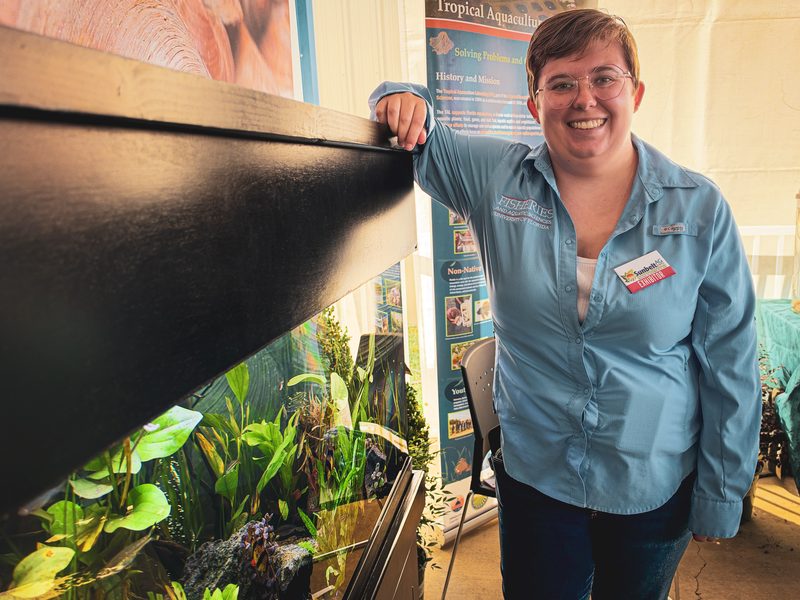
Small fish make big business for Southern farmers
The fish in a University of Florida display at the annual Sunbelt Ag Expo this week were more than technicolor aquarium pets. They are farm products, representing a multimillion-dollar industry that depends on breeding, feeding and keeping some very small livestock alive.
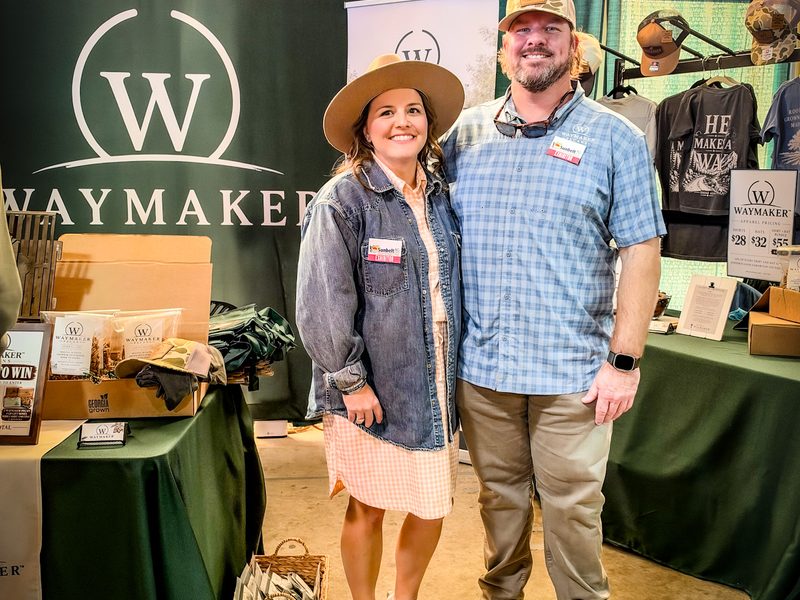
Pelham farmers turn hardship into a regenerative mission
When serious health problems disrupted April Workman’s career, she and her husband, James, began reconsidering how they earned a living, raised their family and cared for their farm.
