
Beyond the bushel: Value-added products give southwest Georgia growers a second paycheck
Across the exhibit halls at Spence Field, farmers and small manufacturers showed how they turn raw crops into finished products. They bottle sauces, box gifts, print shirts, and they find new income and new customers along the way.
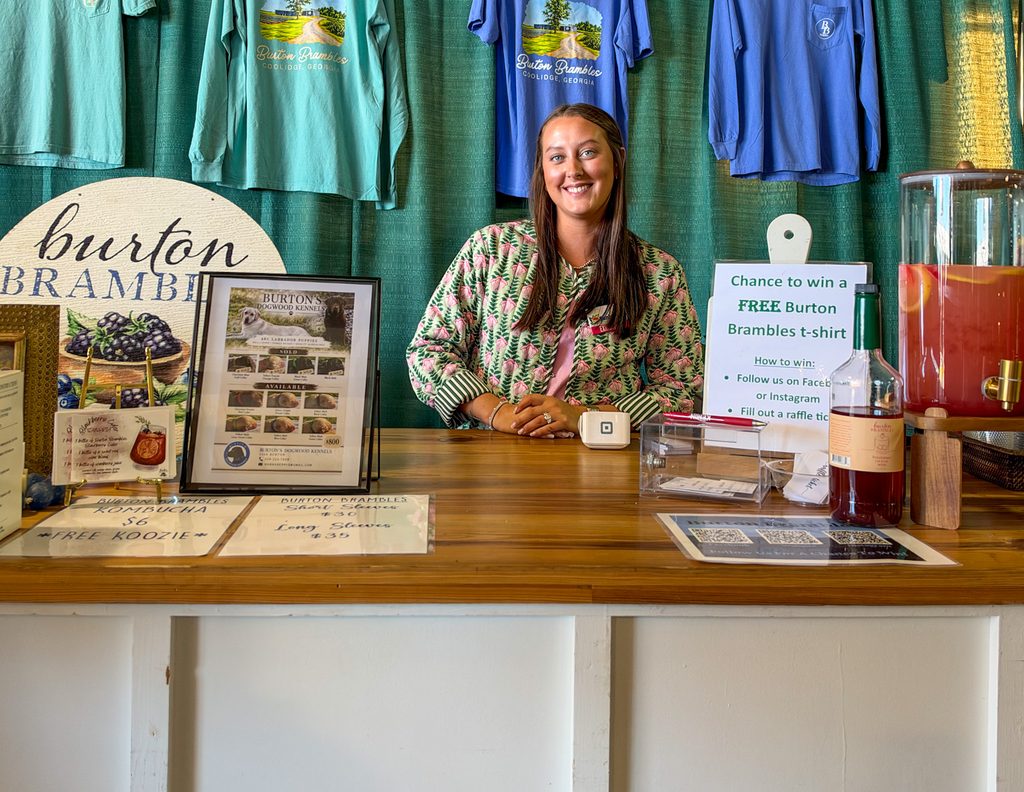
MOULTRIE — Natalie Burton makes a simple promise to the customers who buy her barbecue sauce, cobbler kits and kombucha.
“If my name’s on the jar, my berries are in the jar,” Burton said Wednesday at the Sunbelt Ag Expo here. “So when we sell out, we don’t have any more until the next year.”
Across the exhibit halls at Spence Field, farmers and small manufacturers showed how they turn raw crops into finished products. They bottle sauces, box gifts, print shirts, and they find new income and new customers along the way.
Value-added agriculture means increasing a crop’s worth through processing or other changes, such as turning berries into jam or shelling nuts for sale. The University of Georgia Cooperative Extension says those products can open new markets and help farms keep cash flowing when sales of raw crops slow.
Nationwide, 37,881 farms reported selling processed or value-added agricultural products in 2022, according to the U.S. Department of Agriculture’s Census of Agriculture. Those sales totaled about $5.73 billion. In 2017, 33,523 farms reported about $4.04 billion in such sales. The dollar figures are not adjusted for inflation.
Burton and her husband started Burton Brambles in Coolidge 12 years ago around 6 acres of blackberries. They now grow blackberries, blueberries and strawberries on more than 200 acres, Burton said, including a farm in Tennessee they bought three years ago. The berries are hand-picked and sold to grocery stores across the country.
Burton began the product line after she left teaching to raise her three daughters.
“The products are kind of my sidekick thing that I do,” she said. “When I stopped teaching, we started doing the products just to give me something fun to do on the side, and it has grown tremendously.”
Corporate gift boxes have become a big part of that growth.
“Companies call us and say, ‘Hey, Natalie, I need 50 gift boxes worth about $20 each. What can you give me?’” Burton said. “All they have to do is give me the names and addresses. I ship everything via UPS all over the United States.”
The products also introduce new people to the farm, she said.
“People want to know where their food comes from,” Burton said. “People get excited to know the farmer behind the products.”
For Lindy Savelle, the case for value-added goods comes down to what visitors will buy. Her Georgia Grown Citrus operation at JoNina Farm in Thomas County sells citrus trees and plants. It has added a citrus datil pepper sauce, juice, jellies, jams and T-shirts.
“When people come, not everybody is going to buy a tree,” Savelle said. “They might want something, you know, like a jelly or a jam or a sauce or a T-shirt.”
She said the financial impact is “a lot more than you would think.”
Savelle, an advocate for the state’s Georgia Grown label, said buying local keeps money close to home.
“It might cost a little more, but number one, it’s helping your economy — not just my economy, but ours together,” she said.
Other businesses add value before a product ever reaches a store shelf. Magnolia Loom, based in Sandersville, buys cotton from Georgia farmers, including cotton from Miller County, and turns it into finished shirts.
“We buy cotton from different farmers across the state, and then we have it processed into fabric,” co-owner Torey Rose said. “Then we bring the fabric into our factory in Sandersville, where we cut, sew, garment-dye and decorate.”
One step still happens out of state.
“It has to be done in North Carolina,” Rose said. “That process doesn’t take place in Georgia anymore.”
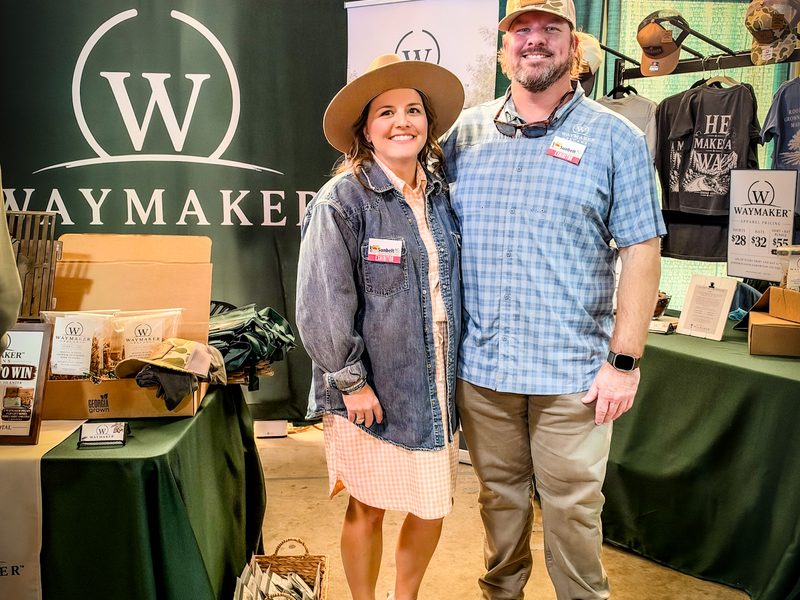
At Waymaker Pecan, April Workman’s family turns farm waste into a product. The family grows pecans on 90 acres and raises poultry. They blend chicken litter with cotton gin waste into compost for their own trees, and they sell it to backyard growers.
“We make our own compost,” Workman said. “We have poultry houses. We take that, and then we take two parts cotton gin waste, and we make our own compost.”
The extra revenue comes with extra expenses. UGA Extension cautions that producers must account for processing space, equipment, energy, labor and storage when deciding whether a product will turn a profit. Food safety and distribution also become part of the business.
For the exhibitors at Spence Field, the work brings customers to the booth and puts a face on the farm. Burton said the gift boxes let her share the farm with people she has never met.
“It’s been one of the best things we’ve done,” she said.
Savelle said she held off on value-added products for years before she changed her mind.
“For the longest time I wasn’t going to do any,” she said, “but it would be silly not to.”
The Sunbelt Ag Expo ran through Thursday at Spence Field in Moultrie.
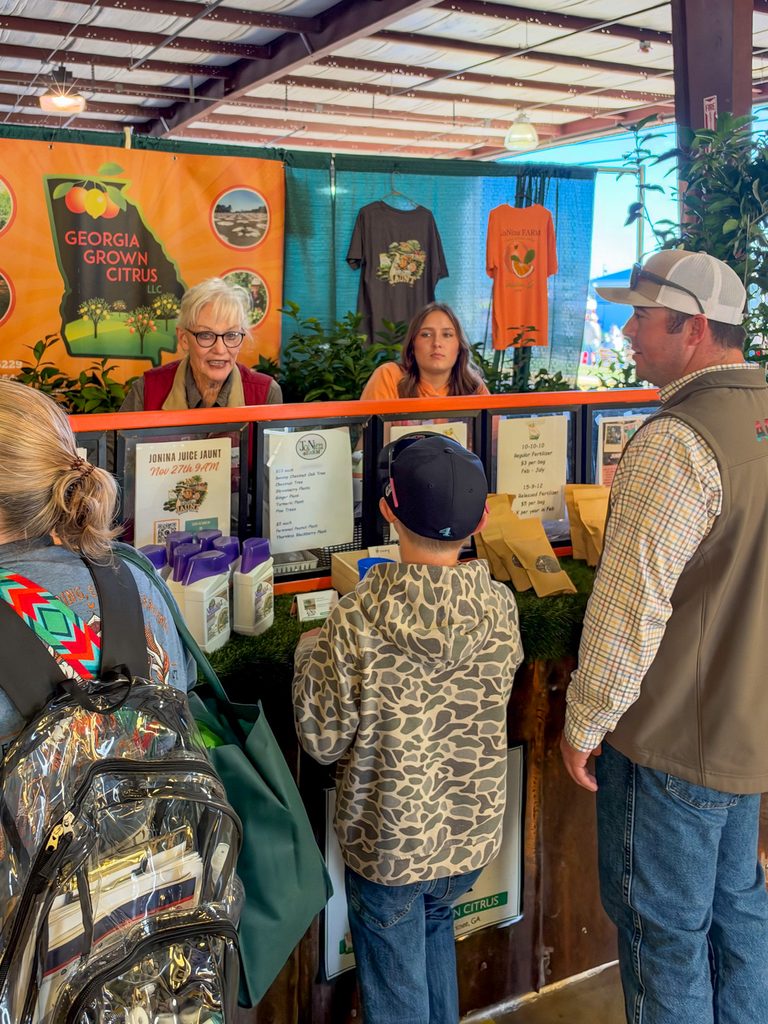
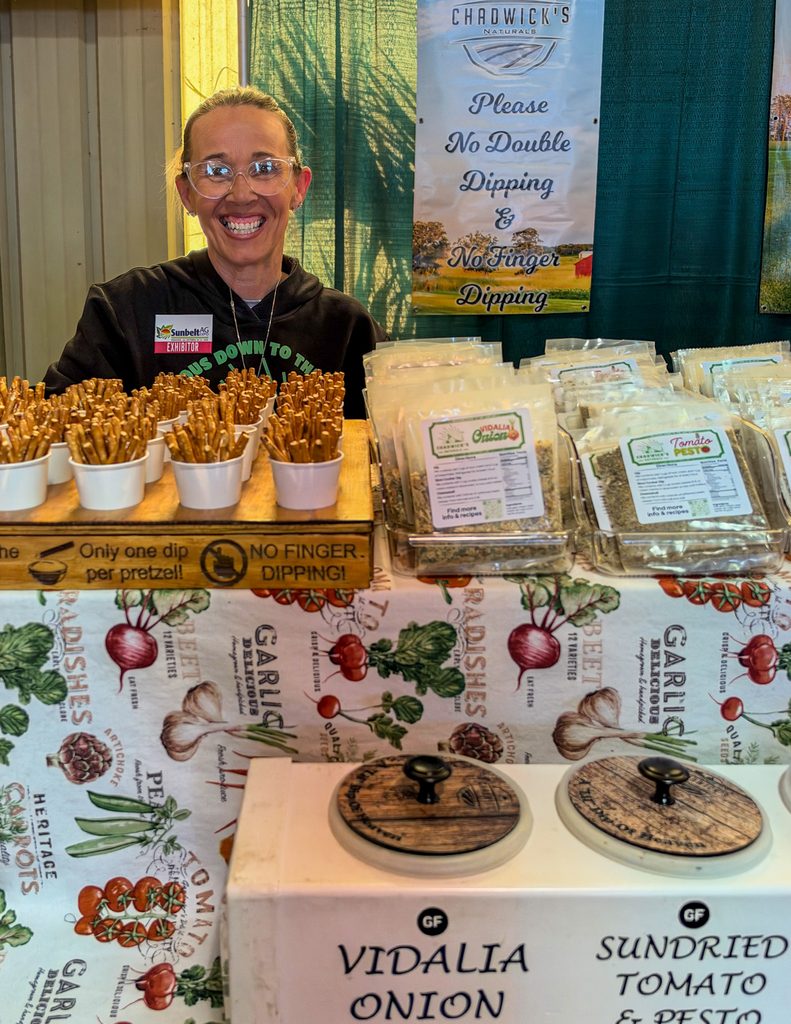
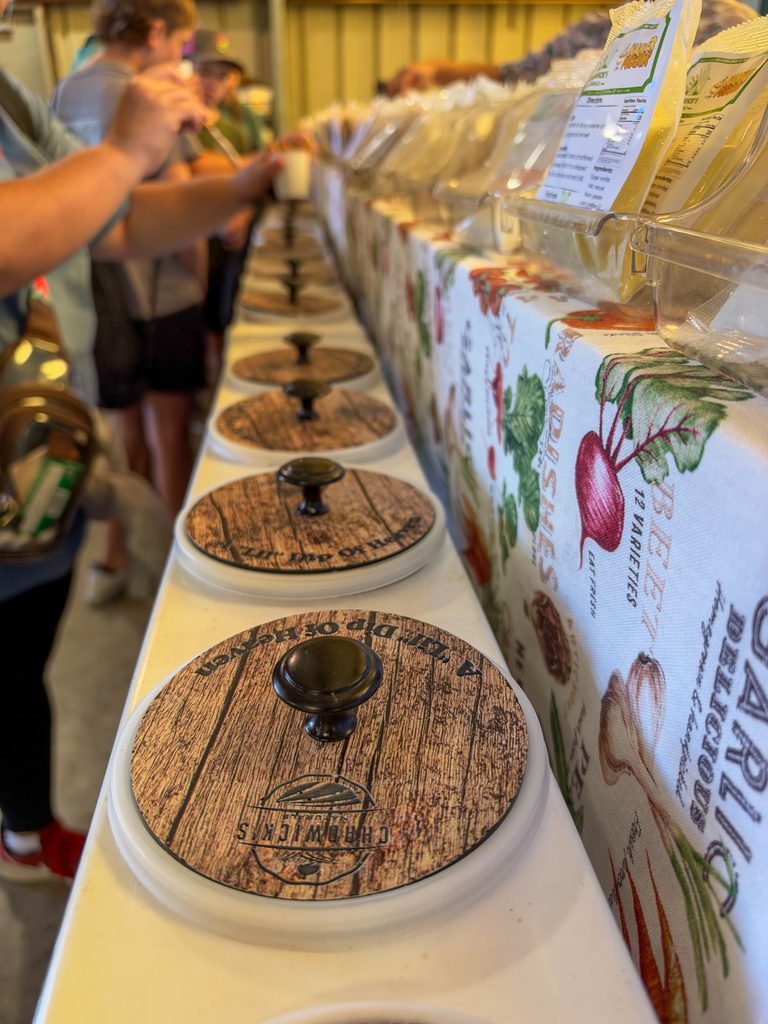
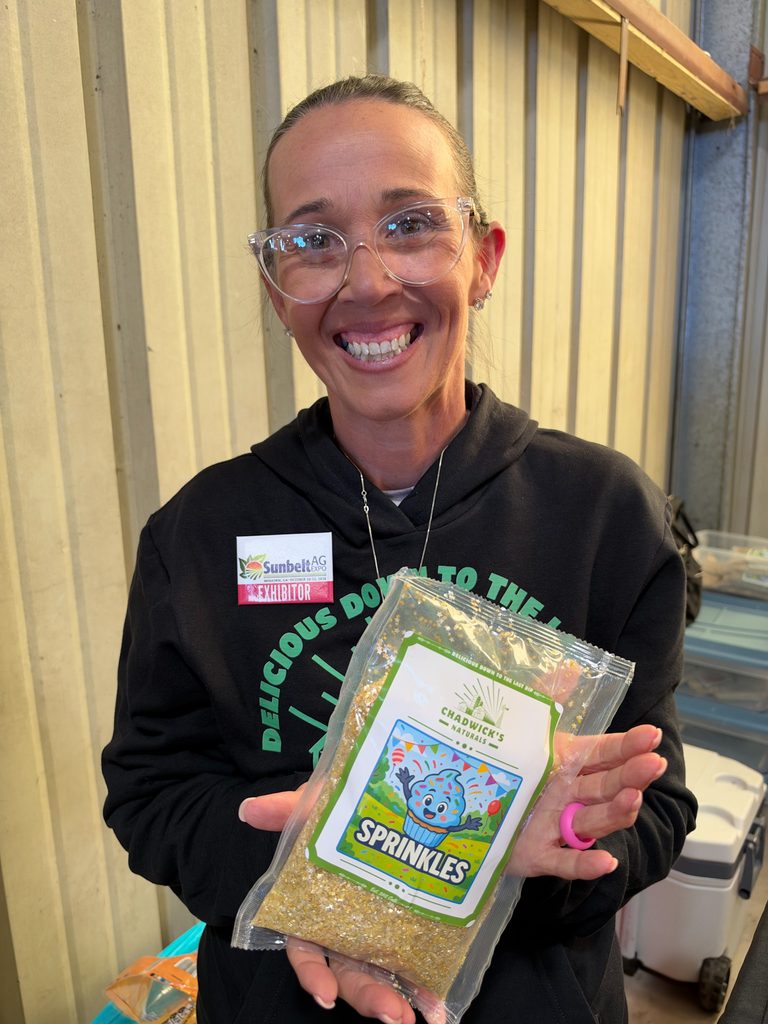
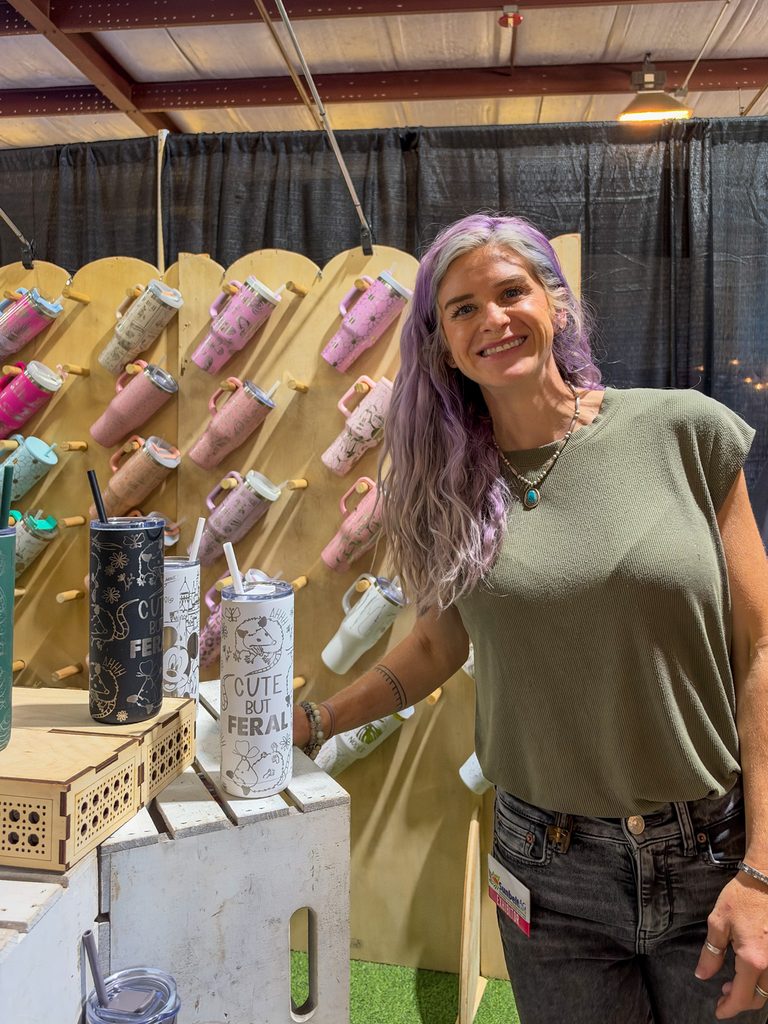
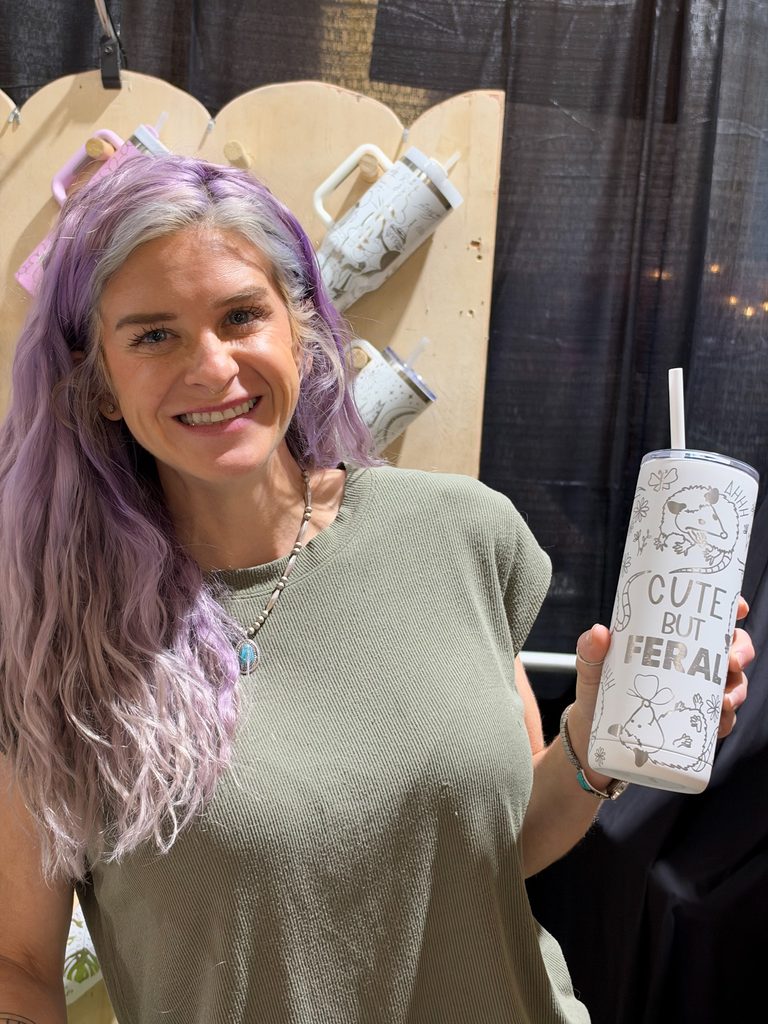
Exhibitors at the Sunbelt Ag Expo in Moultrie showed products made from or inspired by southwest Georgia agriculture on Wednesday. Natalie Burton of Burton Brambles in Coolidge sells berry kombucha, sauces and T-shirts made from the family’s blackberry, blueberry and strawberry crops. Lindy Savelle of Georgia Grown Citrus at JoNina Farm in Thomas County sells citrus trees, plants and fertilizer, along with a citrus datil sauce and other products. Chadwick’s Naturals offers samples of its gluten-free dip mixes, including Vidalia onion, Dilly Dally and Gobs O’ Garlic, and also sells edible sprinkles. Albany-based Fast Pace Laser shows custom engraved tumblers. Staff Photo: Kathryn Crockett
Related Articles
Small fish make big business for Southern farmers
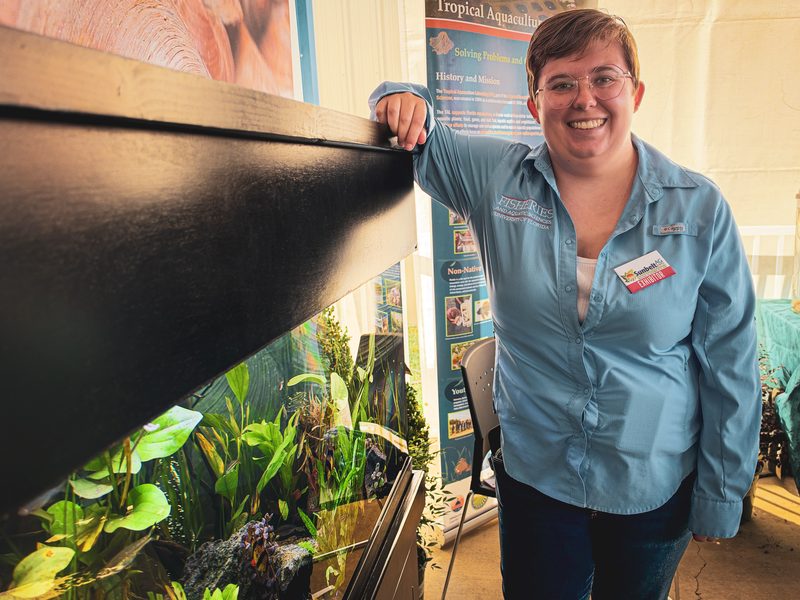
The fish in a University of Florida display at the annual Sunbelt Ag Expo this week were more than technicolor aquarium pets. They are farm products, representing a multimillion-dollar industry that depends on breeding, feeding and keeping some very small livestock alive.
Pelham farmers turn hardship into a regenerative mission
When serious health problems disrupted April Workman’s career, she and her husband, James, began reconsidering how they earned a living, raised their family and cared for their farm.

Land bank’s deadline to reclaim blighted Radium Springs house expires
A house sold by the Albany-Dougherty Land Bank near the Radium Springs fishing pond remains unrepaired, but the deadline to reclaim it under the deed has expired, commissioners were told Monday.
