
Wildlife conservation key at Forest Lodge Farms
Environmentalists gather for a tour of Forest Lodge Farms, which doubles as a conservation center
By Gypsy Crow
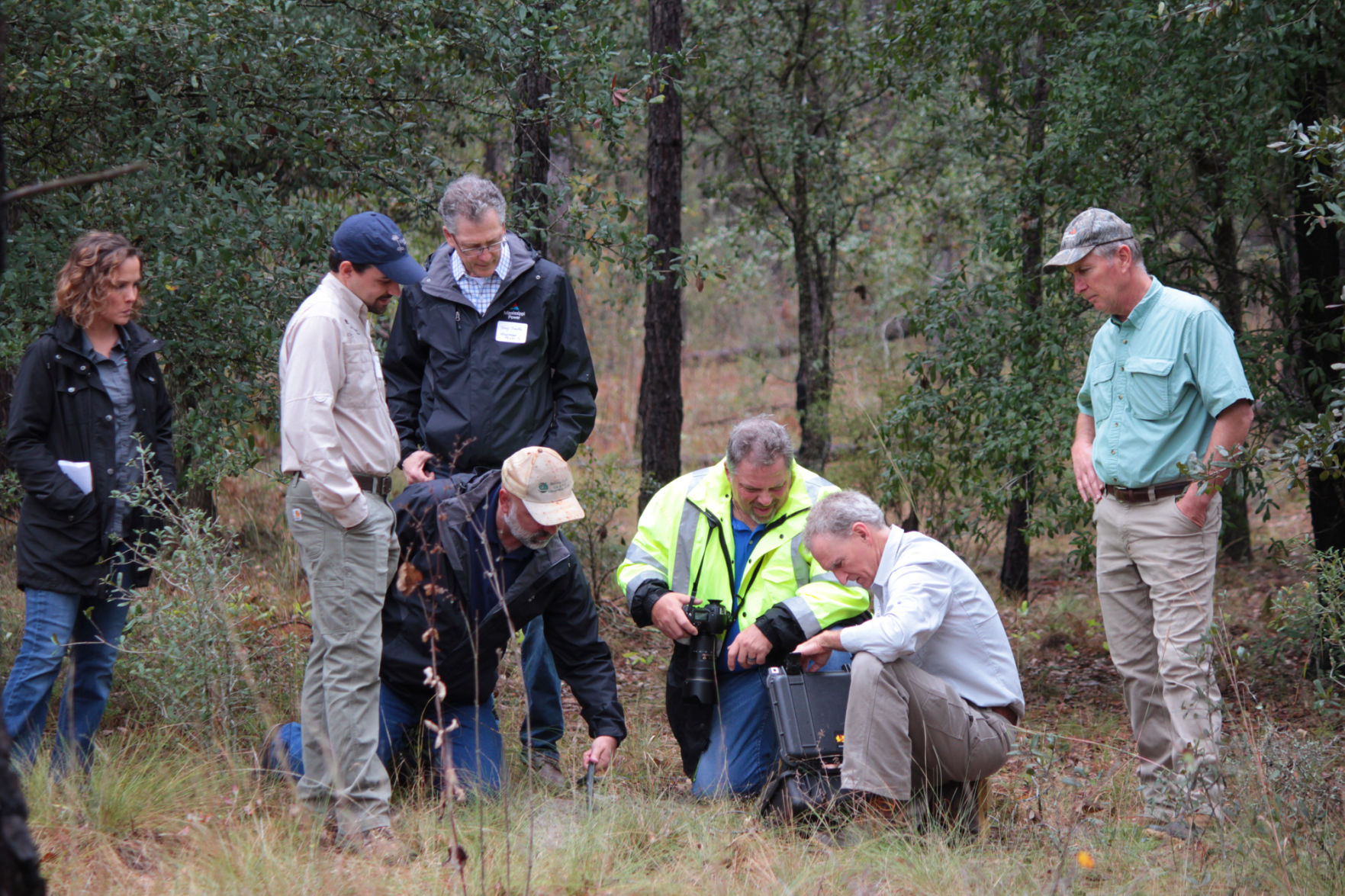
CAMILLA — Environmentalists from multiple power companies and organizations gathered Tuesday morning for a tour of Forest Lodge Farms. The forest, which doubles as a pine tree farm and a conservation center, was directly impacted by Hurricane Michael.
Joe Butler is the fifth generation of his family to care for the farm and forest, which is in the process of converting back to longleaf pine trees, the farm’s original ecosystem before the land was converted into a farm. Butler’s ancestor purchased the land in 1873, and two more generations of Butler’s family have worked on or enjoyed the farm after him. In 2007, Butler’s father put the farm in a conservation easement with the Georgia Forestry Commission, ensuring that the land will always act as a working longleaf pine forest forever. So far, about 350 of the 1,500 acres have converted to longleaf pines.
The longleaf pine ecosystem once covered more than 90 million acres across the Southeast, according to Leslie Cox, stewardship program manager for natural resources and stewardship with the Southern Company. Cox said that only 5 percent of that ecosystem remains, up from about 3 percent a decade ago.
Partners in preserving Georgia’s ecosystem who gathered on Tuesday included representatives from Southern Company, Georgia Power, Alabama Power, Mississippi Power, the National Fish and Wildlife Foundation, Wood & Company Consulting, the Georgia Forestry Commission, the Georgia Department of Natural Resources, the American Forest Foundation, the Orianne Society, and the U.S. Fish and Wildlife Service.
Preserving the ecosystem is more than just planting trees. Prescribed burning is key to sustaining the natural habitat for the wildlife. What makes Butler’s forest unique, is that he burns in smaller units in a mosaic pattern so as to not displace the local wildlife for too long of a period.
“We understand that protecting at-risk species while providing clean, safe, reliable and affordable energy is vital for meeting the needs of our customers today and in the future,” Ron Shipman, vice president of the southwest region of Georgia Power said.
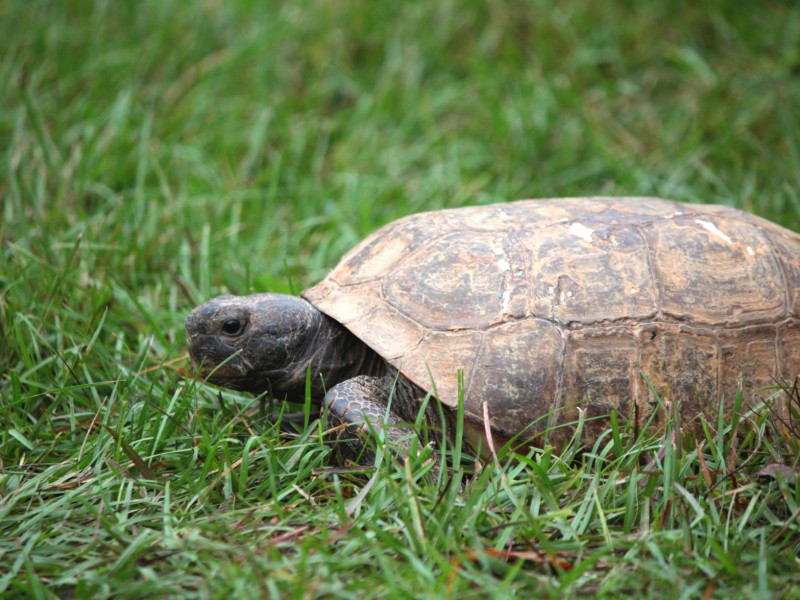
Butler’s little soldiers are the gopher tortoises that inhabit the land. Their burrows help sustain other wildlife species such as quail, indigo snakes and other creatures. Gopher tortoises prefer to burrow in places with more sunlight. To maintain the tortoises’ habitat, longleaf pines must be planted with enough space between them.
About 20 percent of the trees across Forest Lodge Farms were damaged or destroyed by Hurricane Michael. Even the pine trees that were bent but not broken can no longer be used for poles or saw timber for lumber and, according to Butler, are as good as destroyed.
“We just went to look at a stand today that was planted in 2000,” Butler said. “So that’s 18 years worth of growth that’s going to be wasted because I’m going to have to go in and clear cut and start all over. So it’s devastating from a financial standpoint as well as an environmental conservation standpoint because that’s just more equipment in the woods. That’s going to be more damage, more gopher tortoise burrows that might be run over, habitat taken away that we’ve been grooming for 18 years for the benefit of wildlife — game and non-game. We have a lot of deer, turkey and quail on the property as well as a lot of imperiled species that live in this pine ecosystem, such as the fox squirrels we saw today. This storm will cause damage to that management goal as well.”
But all hope isn’t lost. Although losing years of hard work and tree growth was heartbreaking, Butler holds a positive outlook that can be applied to more in life than longleaf pines.
“At times, it makes me want to cry when I go out and see them, to look around and see the trees that have been growing for 55 years snapped off, pushed over,” he said. “But, I just look at it as opportunities. Every tree that blows down gives a little more daylight to the ground. Grasses can grow. Gopher tortoises will move in, and that’s how the longleaf pine system has always been. There’s always been disturbances — hurricanes, tornadoes, fires — for 4,000 years. This is what happens; it’s called natural disturbances. This is just another one, so again, it’s all a part of the life cycle of the long leaf pine ecosystem.”
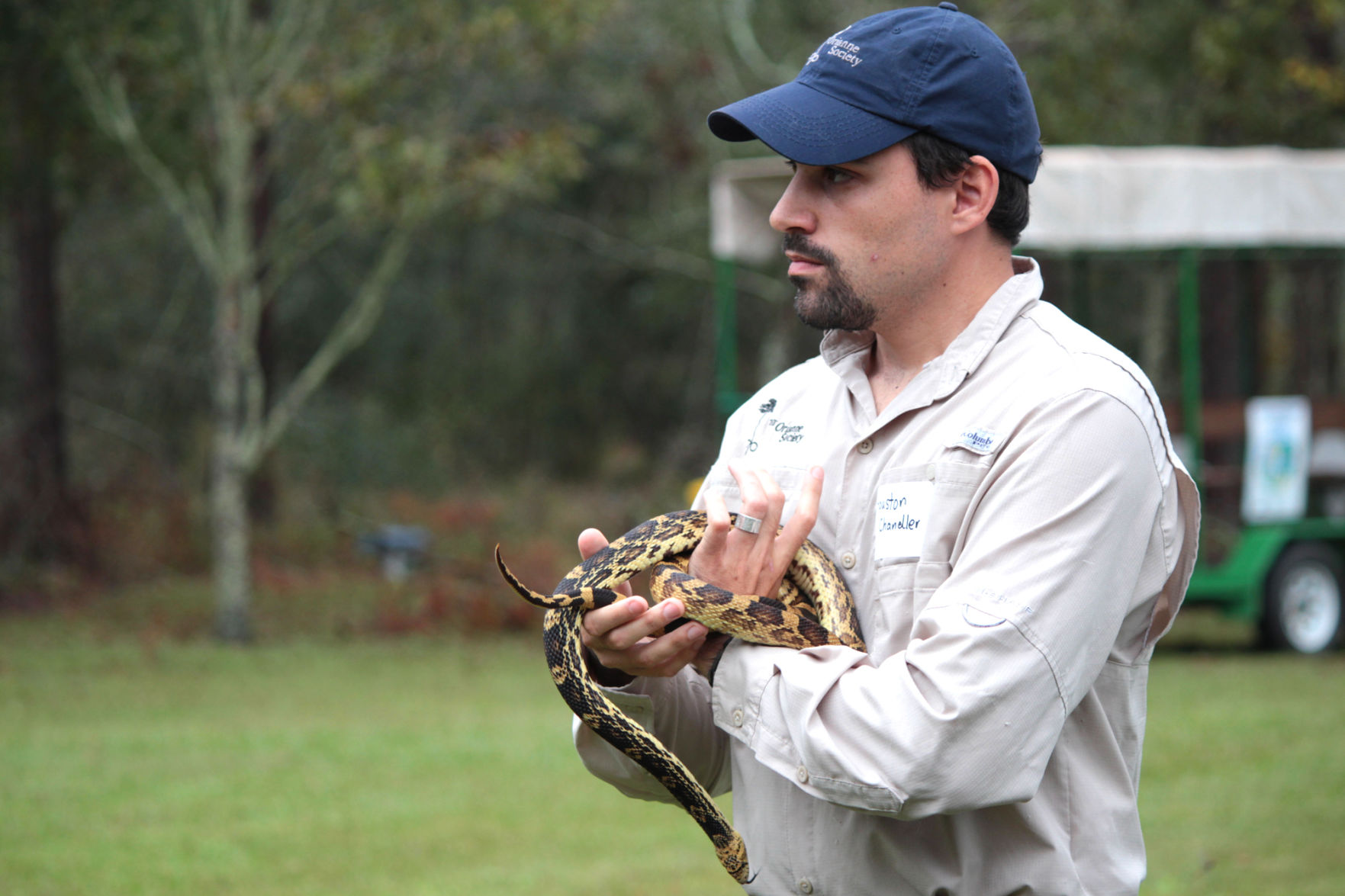
The attendees were able to meet members of the longleaf pine ecosystem up close and personal with the chance to take photos or hold creatures such as a baby gopher tortoise (with permission from DNR) and an indigo snake before spotting a fox squirrel in the wild.
For more information about wildlife conservation, multiple resources are available including:
— www.georgiawildlife.com
— www.talltimbers.org
— www.gatrees.org
— www.quailforever.org
Related Articles
Dougherty Commission OKs agreements for trash traps, Radium Springs Grant effort
The placement of two traps will help take a bite out of the amount of trash making its way into the Flint River. The Flint Riverkeeper and partners will be involved in placing, monitoring and monitoring the traps as well as removing and disposing of trash and recyclables.
Albany officials ponder future needs, mull tax hike
“Utilities have to sustain themselves. They can’t be fleeced. They can’t be (starved) to the point they can’t provide the services.”
Albany Police Chief Michael Persley to retire in February after 33-year career
“That doesn’t mean I’m going to disappear from Albany, Georgia. There are other things I will be involved in. This is not retire and go just sit in the rocking chair.

