
Georgia up slightly in state health rankings, but still on lower end
Georgia receives No. 39 spot in 2018 America’s Health Rankings report
By Andy Miller
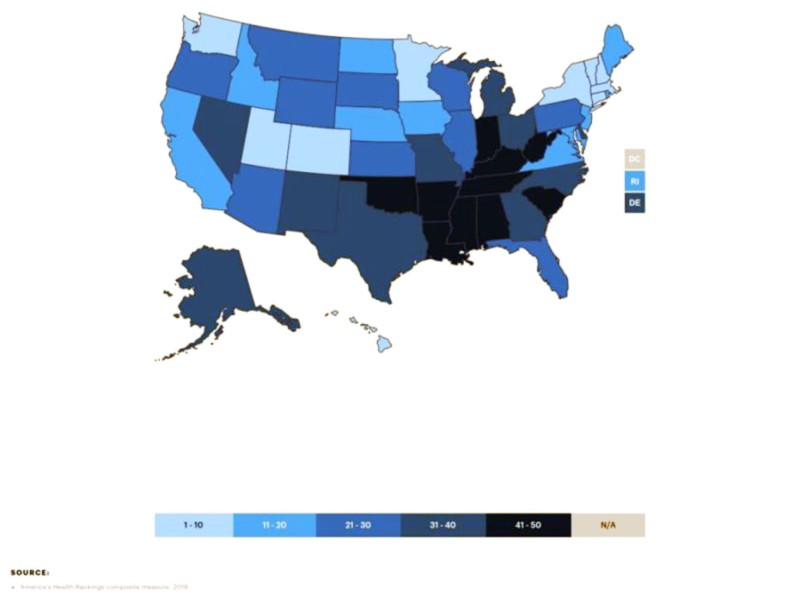
ATLANTA — Georgia improved two spots in a national ranking of the healthiest states, receiving No. 39 in the latest evaluation by the United Health Foundation.
The 2018 America’s Health Rankings report found Georgia mirrored national trends with an increase in adult obesity and a reduced rate of children in poverty.
The nation’s obesity rate exceeded 30 percent of adults for the first time, the report said, while Georgia’s rate of obesity reached 31.6 percent. The state’s rate of children in poverty fell to 21 percent, though it is still more than the national 18.4 percent mark.
The suicide rate rose both in the state and nationwide. Georgia’s increased from 13.2 to 13.8 deaths per 100,000 population, just about the same as the national average of 13.9 deaths.
Hawaii was ranked in the report as the healthiest state in 2018, followed by Massachusetts, Connecticut, Vermont and Utah. Several states in the South or on its periphery were among the unhealthiest — Arkansas was 46th, followed by Oklahoma, Alabama and Mississippi. Louisiana received the lowest ranking.
The report said Georgia’s strengths included having a high meningococcal immunization coverage among adolescents, low prevalence of excessive drinking and a low rate of frequent physical distress. Also, Georgia’s rates of primary care physicians and mental health providers increased from last year’s figures.
The state’s challenges, according to the report, include low immunization coverage among children, a high prevalence of low-birthweight babies and a high percentage of people without health insurance.
“Though it is encouraging to see Georgia improve two positions in America’s Health Rankings, major challenges remain,’’ Marsha Davis, interim dean of the University of Georgia College of Public Health, said.
She cited the state’s high rates of maternal mortality and of babies born with low birthweights.
“Much still needs to be done to promote a healthy start for Georgia’s mothers and babies, starting with improving access to quality prenatal care,’’ Davis said Wednesday. “Likewise, the state’s overall high uninsured rate means people don’t have access to regular preventive care, which contributes to the increased rates we’ve seen in obesity and cancer.”
Obesity is a leading contributor to cardiovascular disease, cancer and other conditions. Additionally, an increase in drug deaths, suicides and cardiovascular disease deaths is contributing to an increase in premature death, the report said.
“This year’s Annual Report spotlights an obesity problem that continues to grow,” Dr. Rhonda Randall, chief medical officer of UnitedHealthcare National Markets, said in a statement. “This means more people will likely develop obesity-related chronic diseases like cardiovascular disease, diabetes and cancer.
“We encourage health professionals, public health officials and elected leaders to use these findings to explore opportunities to better support people in their communities in all aspects of their health.”
Deaths from chronic diseases contribute to the nation’s premature death rate — the number of years lost before an individual reaches age 75. This rate increased for the fourth straight year, driven by suicide and drug deaths, with 7,432 years lost per 100,000 people this year, the report said.
Drug deaths and occupational fatalities have also increased recently, with drug deaths jumping 25 percent and occupational fatalities increasing by 19 percent in the past three years. In Georgia over the past four years, premature death increased 10 percent, from 7,624 to 8,391 years lost before age 75 per 100,000 population.
America’s Health Rankings evaluates 35 core measures in five categories: behavior, community and environment, policy, clinical care and outcomes data.
For the full report, visit www.americashealthrankings.org.
Andy Miller is editor and CEO of Georgia Health News.
Related Articles

Dawson approves $68K excavator purchase after months of contradictory public statements
The decision concludes one portion of a controversy that has generated months of public scrutiny but leaves several unanswered questions regarding how the city’s original machine was damaged, whether employees were held accountable and what documentation supports the decision to replace rather than repair it.

Dawson proposes borrowing up to $420,000 to stay afloat as finances unravel
Documents obtained by The Dawson News show city officials are proposing to balance the budget through a transfer from the Public Utilities Fund while simultaneously seeking authority to borrow as much as $420,000 from a private financial institution to continue meeting payroll and other operating expenses as Dawson works to complete financial audits that have remained unfinished since 2023.

Small actions can help save big on utility bills
The high temperatures of July and August can bring scorching utility bills as air conditioners hum to keep houses cool. Albany Utilities Residential Conservation Auditor Willie Jackson offered some tips on making summer cooling bills more manageable.
