
Teaching grieving: How a class on death is taught during a pandemic
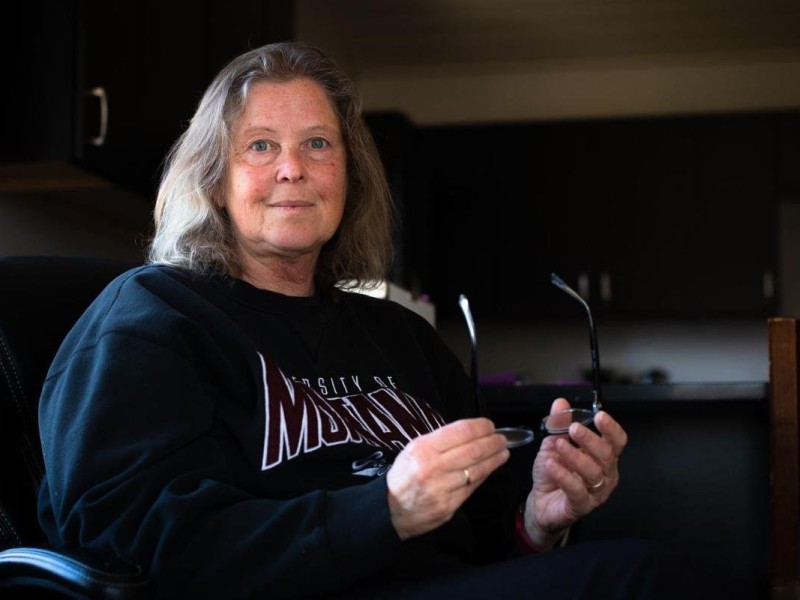
Sara Diggins/Missoulian
By Matt Neuman
Missoulian
MISSOULA, Mont. (Missoulian) — While every class at the University of Montana was affected by the coronavirus pandemic, perhaps few as deeply as one dealing with death and grief. Students in Death, Dying and Grieving, a senior-level social work class, have found themselves putting their new skills and understandings to work in real time as the virus takes a toll on society.
While more than 10,000 people have died in the United States from the pandemic, the class’ professor, Mary-Ann Sontag Bowman, said students were dealing with many types of grief beyond that spurred only by a coronavirus death.
“These students are experiencing all sorts of losses,” Sontag Bowman said. “Many have lost connections with friends because of this. They’ve lost community. Some have had to cancel weddings, and many of them won’t be able to celebrate their graduation. The whole college experience is interrupted. So we’ve studied how to provide grief support, but they’re actually living the course content.”
The class, which started as an online course mainly taught through modules students could access on their own schedule, shifted to including more face-to-face classes, albeit through videoconferencing, as Sontag Bowman tried to increase the level of community and discussion of each person’s experience.
In one such class on April 14, she played the students a recorded call she’d just had with a long-time friend of hers whose husband died of COVID-19 a week prior. In the call she tried to show students key ways to handle interactions with someone experiencing loss in effective, positive ways.
One of the students, Thomas Plumley, a graduate student in the social work masters program, said hearing the call helped him see the importance of just being there for someone, without putting the burden on them to try and feel better.
“It’s so important to see you don’t have to fix anything — just being present and being that body there for them,” Plumley said. “As a social worker, our job isn’t to come up with a solution but to be there for people. She was there for her friend who lost her husband of 39 years. He had a sniffle and a runny nose, and then two weeks later he was dead. She wasn’t going to be fixing anything or offering solutions, she was just being there. Seeing how she would deal with a situation like that was really valuable and eye-opening.”
Sontag Bowman said current events were making the class a rich environment to learn in, despite the tragedy of the situation, but also came with its own challenges. The class, already a heavy subject for many students to bear, became a whole new beast, and she’s tried to find ways to help them cope. In addition to offering the additional, and optional, video-classes, she also eliminated strict due dates.
“I’ve finished some of these sessions, and I’m exhausted, because I’m educating, but also providing support and listening to really hard things these students are going through. That’s something I’m not sure is completely understood about remote education, is that we’re educating in this whole new way that we’ve had to adjust to when we’re also living in a crisis,” she said. “It’s a whole new experience, and it’s not like any of us studied how to deliver content and support students remotely during a pandemic.”
Cheryl Barr, an undergraduate senior in the class, said being in the class has helped her be able to deal with the death of a friend that happened earlier in the semester, despite missing the community of a funeral due to social distancing requirements.
“It’s helped with the grieving process and make it a little more normal that we can’t have a funeral, and their family probably won’t be able to do anything until at least the summertime,” she said. “It’s a heavy class anyway, but since the pandemic, it has gotten even more so. It’s a lot more in-depth and it feels like people are more concerned with each other and their mental health while isolating, and that’s shown through in this class.”
Related Articles
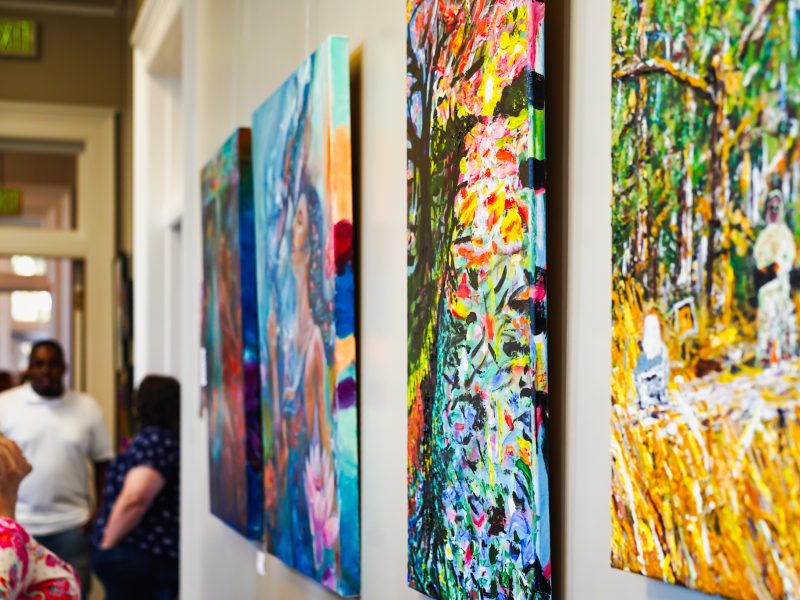
Southwest Georgia artists recognized at packed opening of exhibition
The annual juried exhibition, one of the region’s largest showcases of visual art, features approximately 46 artists and nearly 90 works spanning painting, sculpture, ceramics, photography and mixed media.
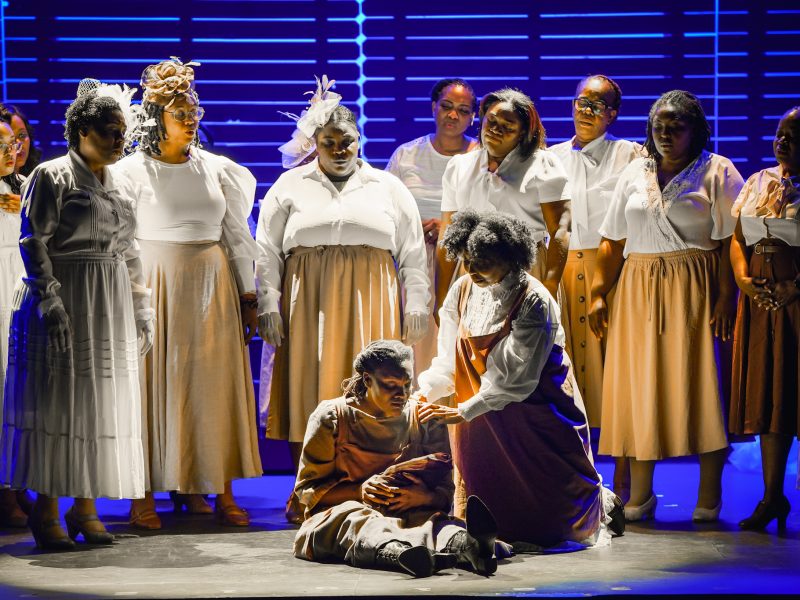
Powerful performances drive Theatre Albany’s ‘The Color Purple’
From the street, strands of purple ribbon wind around the white columns of the historic theater, hinting at the story waiting beyond its doors. Inside the foyer, a carefully curated slideshow flickers across a large screen, cycling through the faces of the cast. Some are seasoned performers. Others are stepping onto a stage for the very first time. Teachers stand alongside former students. Parents perform beside their children. People who worship in different churches, work different jobs and come from different corners of Southwest Georgia gather beneath the same lights to tell the same story.
Annual exhibition showcases southwest Georgia talent, community connections
Now in its 26th year, the exhibition features work by artists from across Southwest Georgia and offers residents an opportunity to engage directly with the area’s creative community.
