
Groups organize to save Okefenokee Swamp
Special Photo
From staff reports
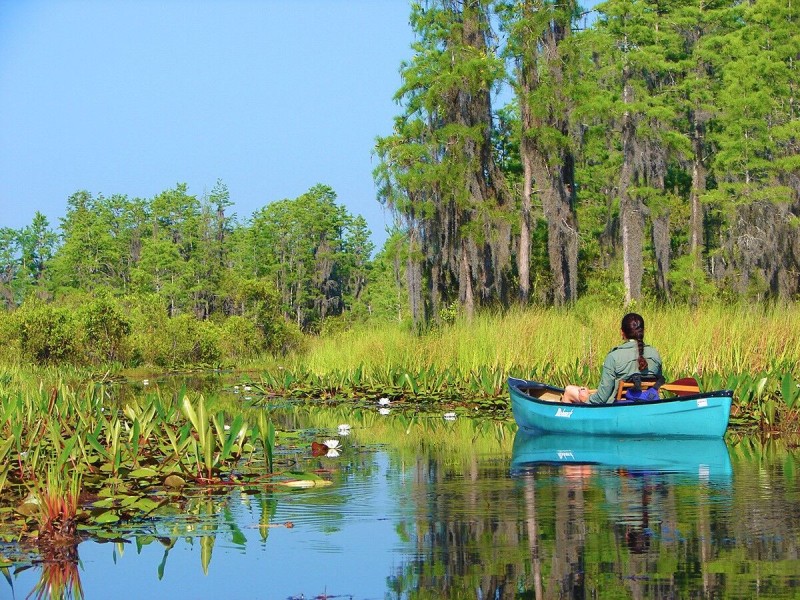
WAYCROSS — More than 30 national, state and local organizations have joined forces in the fight to protect the Okefenokee Swamp. The coalition, known as the Okefenokee Protection Alliance, recently formed in response to a new and alarming threat to the Okefenokee in the form of proposed heavy mineral sands mining adjacent to the swamp.
In July 2019, Twin Pines Minerals LLC submitted a permit application to the U.S. Army Corps of Engineers seeking authorization to mine the first phase of what would eventually become a 12,000-acre project abutting the southeast corner of the Okefenokee National Wildlife Refuge.
After the Corps was deluged with letters opposing the project, Twin Pines withdrew that application and submitted a second application to excavate a roughly 900-acre first phase of the mine. The Corps is now weighing whether to approve that second application. Twin Pines must also secure permission from the state of Georgia.
“The new Okefenokee Protection Alliance is the first collaborative effort to have an exclusive focus on the protection of what is arguably our country’s healthiest remaining wetland of significance,” Christian Hunt, Southeast program representative for Defenders of Wildlife, said. “Everyone came together because of Twin Pines’ permit application, but by design we intend to be active over the long-term and address the present threat that we are dealing with today, as well as future threats that stand to compromise the Okefenokee.”
This week, the Okefenokee Protection Alliance introduced a new website and began urging citizens to write Georgia Gov. Brian Kemp, asking him to protect southeast Georgia’s international natural treasure.
“Just as we have reached out to folks to call on the Corps, we are reaching out to folks to call on Gov. Kemp because it is not just the Corps that has a say,” Rena Peck, executive director of the Georgia River Network, said. “We want Gov. Kemp to stand with his constituents and all the citizens in Georgia who are concerned about the mine and ask the Corps for an Environmental Impact Statement.”
The Okefenokee has a long history of support from Georgia leaders. A similar proposal to mine near the Swamp in the 1990s was stopped when Gov. Zell Miller and others spoke out against it; in the 1970s, W.S. “Bill” Stuckey Jr., who represented the 8th District of Georgia in Congress, successfully fought to designate portions of the swamp as a National Wilderness Area.
Stuckey, now a resident of the Georgia coast, said recently, “I’m hopeful that Gov. Kemp will step in to protect the Okefenokee Wilderness and stop the mine.”
OPA member organizations and federal agencies have expressed concerns that the mine could alter the hydrology of the area and impair the movement and storage of water within the swamp, the St. Marys and Suwannee rivers and the Floridan Aquifer.
This could lead to an increased risk of uncontrollable wildfires and impact access to the swamp for boating, fishing, birding, hunting and photography. Pollution from the mining operation could also impact the health of groundwater and surface water.
The Floridan Aquifer, which lies beneath the swamp, is the water source for all of south Georgia and most of Florida, and feeds many springs in the region, which are already adversely affected by overpumping. Thus, anything that affects the swamp or the aquifer could have far-reaching consequences.
“As the largest blackwater swamp in the United States, the significance of the Okefenokee cannot be overstated,” Alice Keyes, vice president of Coastal Conservation for One Hundred Miles, said. “It is recognized through many designations and determinations, but the characteristics that are worthy of the recognitions and that bolster the local economy continue to be threatened.”
Citing the Okefenokee’s status as a Wetland of International Importance and the largest blackwater swamp in the U.S., OPA’s member organizations have rallied citizens around the cause of saving the swamp.
Over the course of two recent public comment periods, the Corps received more than 60,000 comments, the vast majority of which urged the Corps to deny a permit to Twin Pines for the controversial and potentially destructive mine.
“Momentum and grassroots opposition continues to build,” Hunt said.
Hanging in the balance is a unique ecosystem of incomparable beauty. With 600,000 annual visits, people from all 50 states boat, bird, fish, and hunt within the legendary swamp that spans across more than 400,000 acres, much of which is protected as a federal wilderness area.
“It’s a special place, but in the U.S. Fish and Wildlife Service it stands out among refuges,” Jon Andrew, Florida Refuge liason for the National Wildlife Refuge Association and former regional chief of Refuges for the southeast region for the U.S. Fish and Wildlife Service. “The Okefenokee is the largest National Wildlife Refuge east of the Mississippi. You have to go to the Southwest or Alaska to find refuges of comparable size, and it presents the opportunity to manage an ecosystem, which is rare anywhere, but especially rare in the Eastern U.S.”
Tourism associated with the swamp supports more than 700 local jobs in the four rural counties surrounding the swamp and generates $64.7 million in local economic output annually.
In addition, the Okefenokee feeds both the St. Marys and Suwannee Rivers in Georgia and Florida, both of which are rich in outdoor recreation opportunities in their own right and provide habitat for federally protected fish and other rare wildlife.
“The presence of a powerful and united coalition such as OPA is essential,” Alex Kearns, chairman of the St. Marys EarthKeepers, said. “It allows local organizations and citizens a megaphone, a way to be heard. Ours are the lives that will be most directly impacted because our health and our economy are fundamentally tied to the well-being of the Okefenokee.”
OPA’s mission is to “protect the Okefenokee National Wildlife Refuge from any activities that could jeopardize the integrity of the swamp now and in the future so that the wildlife that inhabits it and the people who recreate and work in the swamp can thrive.” For more information, visit www.protectokefenokee.org.
Related Articles

Who decides elections in Terrell County? Data show older voters dominate turnout as turnout declines
According to the Georgia Secretary of State, 1,731 of Terrell County’s 6,048 active registered voters cast ballots in the May primary, a turnout rate of 28.6%. Four weeks later, only 922 voters participated in the June 16 primary runoff, reducing turnout to 15.2%.
Christie’s Feed & Seed enters new chapter under new ownership
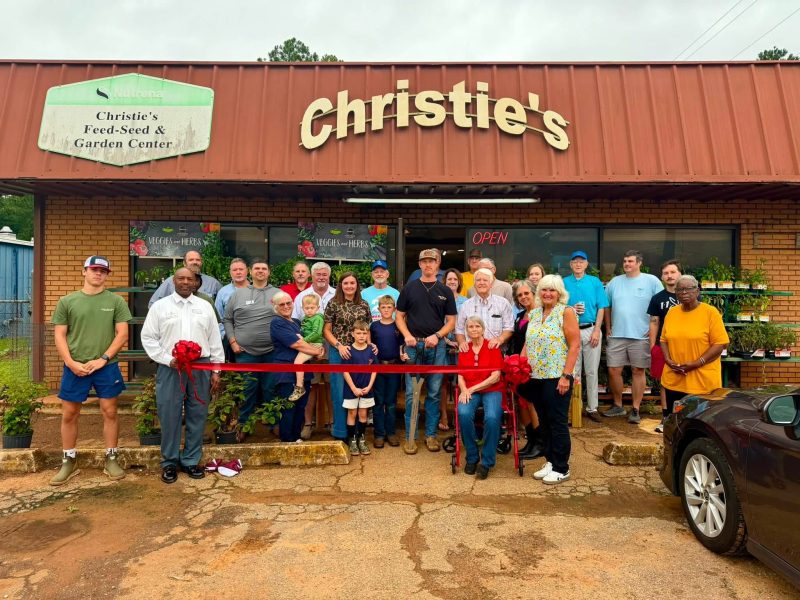
A longtime Dawson business has entered a new era as Riley and Jessie Davis officially assumed ownership of Christie’s Feed & Seed, with the Terrell County Chamber of Commerce marking the transition during a ribbon-cutting ceremony.
Dawson News grows online with Albany Herald website, Facebook page
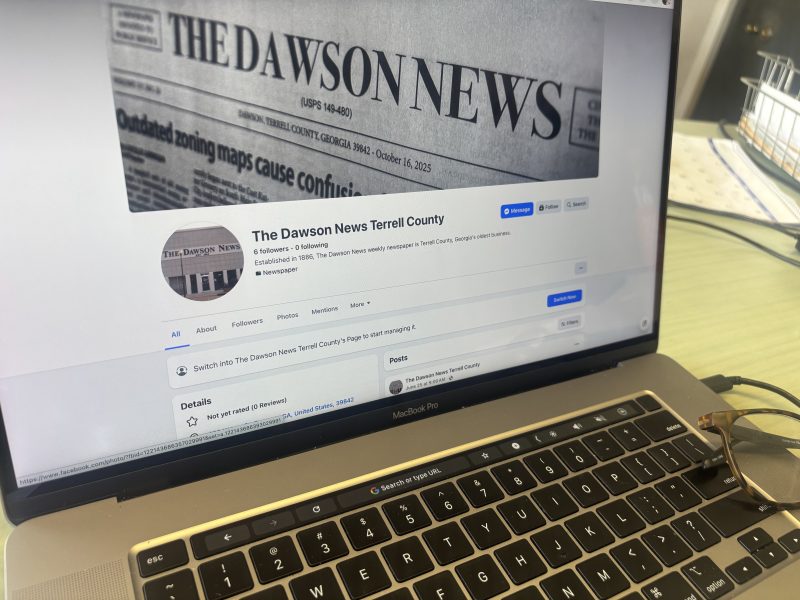
Residents can now find Dawson News coverage alongside regional reporting on the Albany Herald’s website while also following breaking news, community events and feature stories through the Dawson News Facebook page.
