
UGA-Griffin’s FoodPIC offers support for new product feasibility
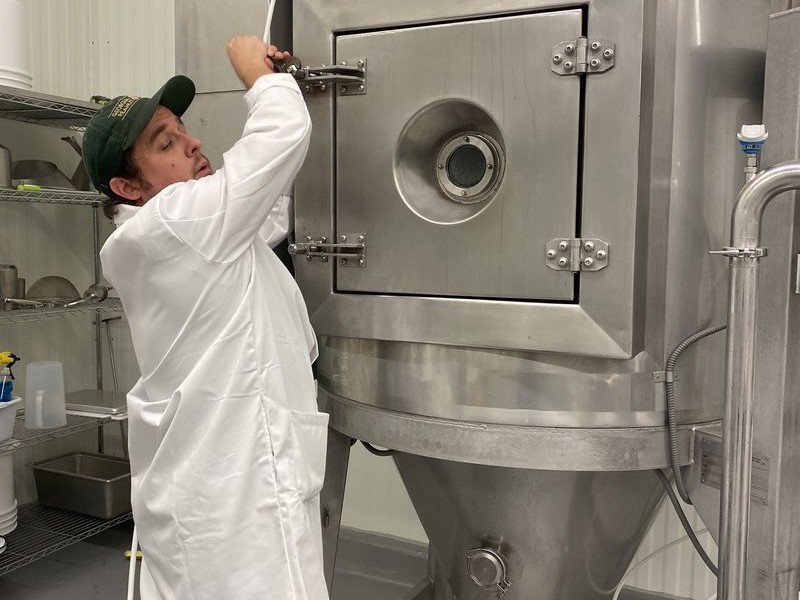
Special Photo: Ligaya Figueras
By Ligaya Figueras
CAES News
GRIFFIN — As farmers across the state swelter in the summer heat tending crops and livestock, food scientists inside a state-of-the-art 14,500-square-foot facility on the University of Georgia campus in Griffin are laboring over a different side of the agricultural equation: How can we get the biggest bang for the buck from Georgia’s food commodities?
UGA’s Food Product Innovation and Commercialization Center is a one-stop shop for food businesses looking to launch a product. FoodPIC, as it’s known, provides support for product feasibility, development, packaging, food safety, consumer acceptance (for example, crickets, even in powdered form, are a tricky food sell) and marketing. The center, part of the College of Agricultural and Environmental Sciences, primarily works with Georgia companies and commodities, although it also conducts research and development for entities in other states as well as overseas.
A glance inside a display case near the entrance bears evidence of FoodPIC’s involvement in bringing locally made products to the marketplace: a tub of Proper Pepper pimento cheese, a jar of Classic City Bee Company smoked honey, a bottle of Pecan Ridge Plantation pecan truffle oil, a package of Charleston & Church cheddar rounds.
Besides operating as a fee-for-service business accelerator, scientists here look for ways to turn raw foods from Georgia into value-added products, as they told the AJC. Their “what-if” projects are some of the most exciting work coming from this facility, which debuted in 2017. Yet, the sell hasn’t always been easy.
“It’s hard to move folks in the agricultural sector to look at the value of things beyond their fruit and vegetables,” Kirk Kealey, the center’s director from 2015 until his retirement in March, said. “Let’s look at sauce, wine, juice. There’s where we have a huge opportunity.” (Prior to his tenure in academia, Kealey held positions with General Mills, M&M Mars Inc. and PepsiCo Inc., which provided insight into the world of shelf-stable foods, confections and beverages.)
Take, for example, Georgia’s emerging citrus market and a crop like the satsuma. Is it good for something besides peeling and eating? What about turning the fresh fruit into a powdered drink?
Plenty of Georgia fruit juice has seen time in a FoodPIC spray dryer — from satsumas to peaches to muscadines to pomegranates, said Kevin Mis Solval.
Besides a drink powder, the center is working with the Georgia Pomegranate Growers Association, based in Alma, to study the potential for other novel pomegranate products, such as pectin and fruit juice powders with antioxidant properties.
Anyone who has visited the Georgia coast during winter months has likely seen a jellyfish bloom.
Cannonball jellyfish, also known as Georgia jellyball, is edible, but most Americans don’t have a taste for it; about 90% of the harvest is salted and dried before being exported to Asia, where it is deemed a delicacy.
Mis Solval calls it a “missed opportunity” for the domestic market. He and his colleagues hope to change that.
Thanks to a nearly half-million-dollar grant from the U.S. Department of Agriculture, faculty at FoodPIC are working to develop jellyfish products, such as in the form of nutritional supplements, that take advantage of the marine animal’s high collagen content, a protein normally extracted from bovine sources.
From food-as-medicine efforts to powdered fruit juice to collagen extractions — who knew there was so much innovation happening inside this nondescript brick building in Griffin?
Related Articles

‘Sounds Like a Mutiny.’ Secret Recording Exposes Claims of Toxic Leadership After a Marine’s Suicide
This week’s War Horse story follows the systemic failures before and after the death of Cpl. Drew Mobley who was the third in two years at Marine Corps Base Quantico to die by suicide.
Southwest Georgia artists recognized at packed opening of exhibition
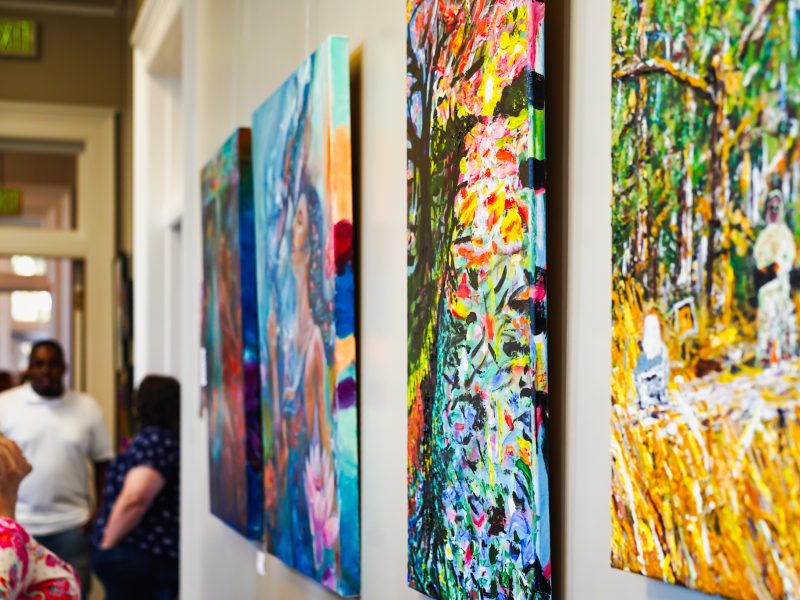
The annual juried exhibition, one of the region’s largest showcases of visual art, features approximately 46 artists and nearly 90 works spanning painting, sculpture, ceramics, photography and mixed media.

Powerful performances drive Theatre Albany’s ‘The Color Purple’
From the street, strands of purple ribbon wind around the white columns of the historic theater, hinting at the story waiting beyond its doors. Inside the foyer, a carefully curated slideshow flickers across a large screen, cycling through the faces of the cast. Some are seasoned performers. Others are stepping onto a stage for the very first time. Teachers stand alongside former students. Parents perform beside their children. People who worship in different churches, work different jobs and come from different corners of Southwest Georgia gather beneath the same lights to tell the same story.
