
CREEDE HINSHAW: Decay doesn’t have to be a bad thing
By Creede Hinshaw
[email protected]
Let’s think about decay for a moment. This week I was on my knees in our back woods, harvesting mulch from a long-buried stack of English ivy-covered pine logs. “How many decades,” I wondered, “did it take these logs to decay into mulch? How long did those logs rot?”
Upon removing the ivy, the wood was so pliable I pulled it apart with my gloved-hands, twisting the wood into an enormous bounty of beautiful, fragrant mulch for our azaleas. Whose chain saw cut that tree? Who stacked those logs? I will never know, but what I do know is that — while I was doing nothing … nothing — those logs were slowly, inexorably, mysteriously decaying, thanks to water, vines, ants and other bugs. All I had to do was unearth the stack, break it down and put it in my lawn cart.
The process of decay needs a publicist. Many of us have our earliest encounter with decay sitting in a dentist’s chair, a visit involving teeth, needles, drills, terror and discomfort. It’s hard for most of us to ever overcome that negativity. The older we grow the more we realize that decay is irreversible. We can forestall it with diet, exercise and surgery (plastic and otherwise), but in the end we will be “ashes to ashes, dust to dust, earth to earth.”
Thus, the process of decay has a lot of bad press to overcome, even in church. Last Sunday in worship, we sang the sad, though ultimately victorious, song, “Abide with Me.” Poet Henry Lyte paints a litany of depressing observations: “life’s little day … the darkness deepens … the tempter’s power … death, tears, ills.” Stanza 2 morosely acknowledges, “… change and decay in all around I see …”
Change and decay are not necessarily grounds for despair. Where would we be without decay? We’d be in a huge mess, that’s where we’d be. Think plastic.
What if trees, fallen leaves, grass clippings, pruned branches, household garbage didn’t decay? What would we do? What if bodies of living creatures — including us — didn’t return to earth? Not to be morbid, but I’m not sure life would be tenable without decay. My backyard compost pile is another happy example for me of the usefulness of decay and decomposition. I have a ready supply of first-class potting soil, thanks to household scraps and some yard waste.
The clear-eyed writers of the Bible recognized the natural course of life, the aging process, the decay inherent in us all. Paul describes humans as “corruptible” (1 Cor 15:42 KJV). The NIV translates this word as “perishable.” We all have a shelf life, an expiration date.
Paul doesn’t leave it there, however. Later in the same chapter (verse 53) he affirms that in Christ “the perishable must clothe itself in the imperishable.” In the mystery of heaven/eternal life, decay is no more. But until then, decay is a reality.
The leaves will soon be falling, restoring our yards and maybe gardens with nutrients. They’ll decay without our observing the process. That’s a good thing. Change and decay in all around I see … and am grateful.
Author

Related Articles

‘Sounds Like a Mutiny.’ Secret Recording Exposes Claims of Toxic Leadership After a Marine’s Suicide
This week’s War Horse story follows the systemic failures before and after the death of Cpl. Drew Mobley who was the third in two years at Marine Corps Base Quantico to die by suicide.
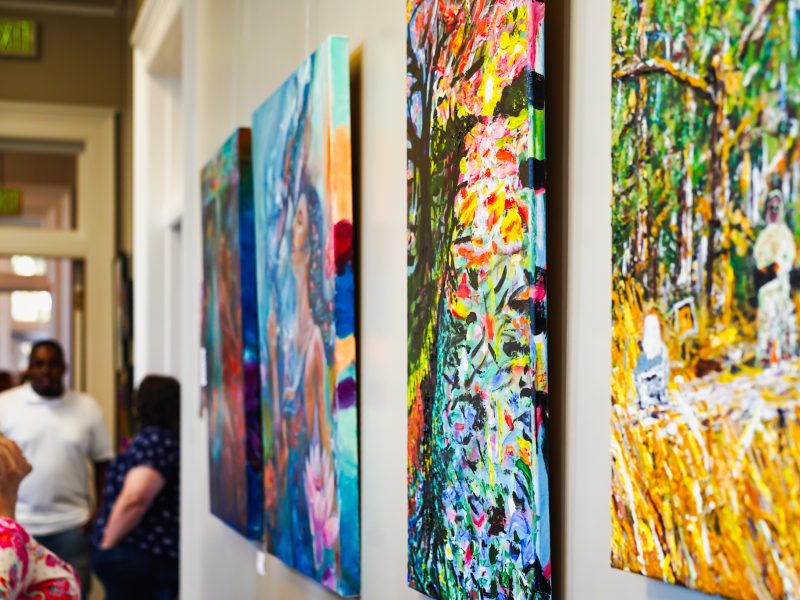
Southwest Georgia artists recognized at packed opening of exhibition
The annual juried exhibition, one of the region’s largest showcases of visual art, features approximately 46 artists and nearly 90 works spanning painting, sculpture, ceramics, photography and mixed media.
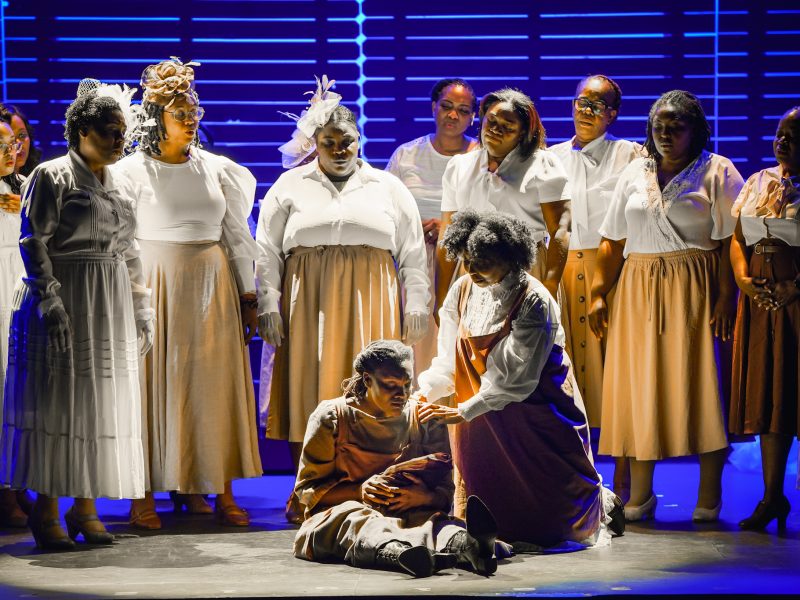
Powerful performances drive Theatre Albany’s ‘The Color Purple’
From the street, strands of purple ribbon wind around the white columns of the historic theater, hinting at the story waiting beyond its doors. Inside the foyer, a carefully curated slideshow flickers across a large screen, cycling through the faces of the cast. Some are seasoned performers. Others are stepping onto a stage for the very first time. Teachers stand alongside former students. Parents perform beside their children. People who worship in different churches, work different jobs and come from different corners of Southwest Georgia gather beneath the same lights to tell the same story.
