
Georgia Groundbreakers: UGA’s Pop Warner a football innovator
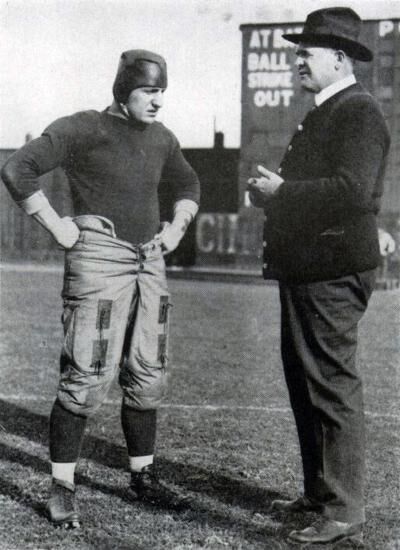
Special Photo
By Scott Michaux
UGA News Service
Editor’s Note: This story is part of a series called “Georgia Groundbreakers” that celebrates innovative and visionary faculty, students, alumni and leaders throughout the history of the University of Georgia — and their profound, enduring impact on our state, our nation and the world.
ATHENS — The football programs at the University of Georgia and Iowa State University don’t share a lot in common. They’ve never played each other in the 130 years since they each started formal football programs in 1892. Their campuses in Athens and Ames, Iowa, are separated by 800 miles. They don’t even compete in the same recruiting pool for players.
Yet in 1895, Georgia and what was then called Iowa Agricultural College and Model Farm shared the same first-time head football coach — Glenn Scobey “Pop” Warner. Before becoming the first man to exceed 300 coaching victories, to innovate everything from formations to techniques to equipment and whose name for nearly a century has been synonymous with youth football in America — before all of that, Pop Warner quit his law practice in Buffalo, N.Y., to moonlight as head coach of two colleges at the same time.
“Things were a free-for-all then,” Jon Butler, the executive director of Pop Warner Little Scholars, the largest youth football and cheerleading program in America for 93 years, said.
It’s safe to say that neither Georgia nor Iowa State knew who they were getting when they signed him to coach. Glenn Warner had never even seen a football game when he set off to Cornell in 1892 at age 21. He only went to college because he’d lost all of his money betting and figured the only way to secure more funding from his father, a former Civil War cavalry officer, was to commit to studying law.
On the train to Ithaca, N.Y., he ran into Cornell’s football coach, Carl Johanson, who took one look at the 200-pound Warner and ordered him to attend practice. Warner — quickly nicknamed “Pop” because he was older than most of the college kids at Cornell — was a gifted athlete. His first love was baseball, and he also participated in track and field, and was Cornell’s heavyweight boxing champion for two years. Despite his lack of football experience or knowledge, he proved to be a standout at guard and a natural leader. After graduating, he hung around another season in 1894 and served as Cornell’s captain.
When that season finished, Warner had no option but to put his law studies to use as an attorney in Buffalo. That lasted only a few months. In the spring of 1895, the folks at Iowa Agricultural College wrote Cornell asking for references to fill its vacant head coaching position. Warner applied himself and accepted an offer for $25 per week. He simultaneously applied for a similar position at Georgia and got an offer of $34 a week to come coach in Athens.
Instead of making a choice, the ambitious Warner got creative. Since Iowa State began its season in August, six weeks before Georgia, he worked out a deal to coach in Iowa until mid-September and then head to Georgia to begin coaching there while continuing to advise the team in Iowa via long-distance correspondence.
It wasn’t until after Warner left for Athens that Iowa State played its first official game of the season at Northwestern, winning 36-0. The Chicago Tribune headline said “Struck by a Cyclone,” earning Iowa State its Cyclones nickname.
At Georgia, Warner found conditions that were far from ideal. With no athletic facilities, bleachers that held only about 150 people (the student body was only 248) and a bare field behind the New College that wasn’t level and had rocks sticking out of the red clay. Only 13 students showed up for the team.
At Georgia, Warner made his official debut as a sideline head coach on Oct. 19, 1895, against Wofford at Herty Field (UGA won 34-0). The team went 3-4 — its first losing season but good enough for Georgia to make the uncommon step of hiring him back the next season for $40 a week. (Iowa State retained him as well for five seasons, even though he never was present for a game there.) One of those losses included what is considered football’s first (not-yet-legal) forward pass when North Carolina’s quarterback, instead of punting, threw the ball out of desperation and it was caught by another UNC player who went 70 yards for a decisive touchdown. Warner objected vociferously but the refs claimed they didn’t see it and the play stood.
Warner’s 1896 squad was considered Georgia’s first great team, going undefeated at 4-0, 3-0 in the Southern Intercollegiate Athletic Association, to win its first conference title. The finale pitted Pop Warner against Auburn coach John Heisman — two future coaching legends who at the time were unknown outside their own campuses. The Bulldogs won the Thanksgiving encounter, and thus the SIAA title, 12-6 thanks to a couple of Warner innovations.
The first touchdown came thanks to what some have regarded as football’s first “huddle,” when quarterback Richard Von Albade Gammon gathered his offense out of earshot to script four plays called without signals to keep Auburn’s defense guessing. The second came after the first onsides kick ever deployed in the South fooled the unsuspecting Tigers.
“They were just young bucks coming up but there were no nationally famous coaches at that time,” said Miller of the Warner-Heisman matchup. “Walter Camp and Amos Alonzo Stagg were first and then came Warner, Heisman, Fielding Yost and Knute Rockne. These guys were the originals — like the founding fathers. They were the first ones who had the chance to rise to prominence.”
Warner’s success at Georgia led him back home to Cornell in 1897 for twice his salary in Athens. Georgia’s program, meanwhile, was discontinued that same year after Gammon died from injuries suffered in a game against Virginia. The legislature passed a bill that would have banned football in the state of Georgia, but the governor vetoed the bill at the request of Gammon’s mother. The Bulldogs, did not win another conference title until 1920. By then, Warner had three national championships.
Warner pushed college football’s evolution with his innovative ideas that included everything from creative substitutions, hidden-ball tricks, sewing football-shaped leather patches on uniforms to confuse defenders or drawing receiving routes that went out of bounds to sneak behind the secondary.
“Nothing was illegal until somebody did it and they made a rule against it,” said Butler.
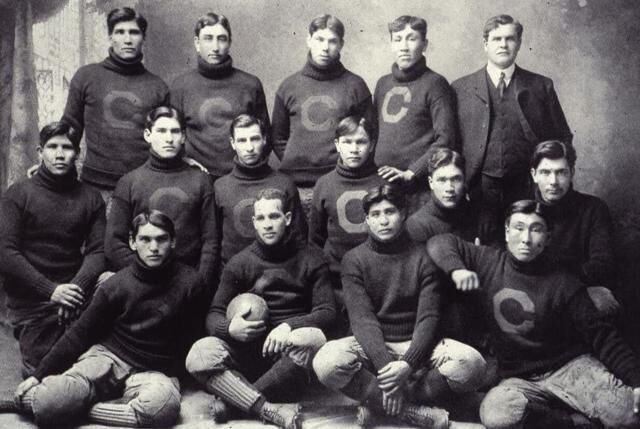
After Georgia, Warner spent 1897-1914 bouncing between two stints — one at his alma mater and the other at the Carlisle Indian Industrial School, a boarding school founded to teach Native American children and young adults skills to advance in U.S. society. His 13 combined seasons with Carlisle were the most he spent at any school in his 45 years as head coach.
After two winning seasons with Cornell, Warner resigned in 1898 after tensions among the team led to a small uprising against his leadership style. The next year he took the helm at the Carlisle School. It was here where Warner gained national prominence for his coaching and innovations to take advantage of speed and athleticism instead of raw strength.
“When he was at Cornell, he was gaining prominence,” Miller said. “But when he went to Carlisle, he turned a good team into a great one playing against Army and Harvard. He really made his bones there.”
At Carlisle, he started using double laterals and teaching his backs to launch themselves like sprinters from a three-point stance in the backfield.
“Carlisle guys all ran track and they took off like a shot,” Miller said of Warner’s innovative technique that became a norm after the Indians clobbered Columbia using it.
He created the single-wing and later the double-wing formations — precursors to modern spread and shotgun offenses — opening up all sorts of offensive possibilities that kept defenses off-balance. He developed the modern body blocking technique instead of leading with the shoulder. He taught his backs to use the spiral throwing method, weaponizing the downfield passing game after it was legalized in 1906. His punters learned to kick longer spirals as well.
His most famous player at Carlisle was Jim Thorpe, considered one of the greatest all-around athletes of all time. Warner’s Carlisle teams won 114 games and in four seasons between 1907 and 1913 lost only one game — three of those seasons with Thorpe on the roster (1907, 1911-12), the last two earning all-American honors. Warner traveled to Stockholm, Sweden, to coach Thorpe to gold medals in the pentathlon and decathlon in the 1912 Olympic Games.
In 1915, Warner took over an already quality Pitt program that was moving to a new campus. He immediately elevated the Panthers to the next level, winning the first 29 games as head coach there and claiming three national titles in 1915, 1916 and the WWI/Spanish flu-shortened 1918 season. His 1917 team went 10-0 but didn’t get credited with the national championship that was instead presented to his old rival John Heisman’s Georgia Tech team. Heisman challenged Pop’s Pitt team to a decisive postseason matchup to determine a champion, but faculty thwarted the game amidst the war and flu epidemic. The matchup didn’t materialize until November of the 1918 season in Pittsburgh, with the Panthers throttling Heisman’s Georgia Tech 32-0.
Before leaving Pitt, Warner once again double-booked himself with a rising Stanford program, sending his own associate Andrew Kerr west for two seasons before leaving the “disagreeable” weather of Pittsburgh for sunny California himself to take over in 1924. His 1926 Cardinal team earned him his fourth and final national championship with a 10-0-1 season that ended with a Rose Bowl tie against Alabama.
His head coaching career wrapped up back East with his final stint at Temple from 1933-38 for $75,000 annually. It was in Philadelphia that serendipity led to his name being forever associated with youth football.
In 1929, factories in northeast Philly were plagued by young vandals throwing rocks through their windows. A young athlete turned stockbroker named Joe Tomlin suggested the building owners band together to fund a youth athletic program to keep idle kids occupied. By 1933, Tomlin’s Junior Football Conference had expanded to 16 teams representing neighborhoods and suburbs, and he invited dozens of prominent local coaches to speak at a spring banquet and clinic. Temple’s Warner was the only one to brave a freak snowstorm and show up to speak to the 800 kids in attendance.
“He regaled the boys with stories of Jim Thorpe and (fellow Hall of Famer) Ernie Nevers and other great players and stayed for hours signing autographs for every kid and they just adored him,” Miller said. “At the end, the powers that be thought it would be great to have him endorse it and be associated with them. He was willing to let them use his name, though he never coached little league football.”
Pop Warner’s name affiliation helped the program rapidly expand. In 1959, Pop Warner Little Scholars was officially incorporated as a national nonprofit organization and spread from coast to coast. During the 1970s, cheerleading was added to the program to include girls. It remains the only youth football program that requires its participants to maintain academic standards in order to participate and currently serves more than 300,000 boys and girls ages 5-16 in the United States and Japan.
“There’s an awful lot of people who don’t realize there was a person named Pop Warner,” Butler, the executive director of Pop Warner Little Scholars, said of its young participants. “It’s been great for his legacy, for sure, because it is so well-known and it’s been around for 93 years.”
Warner was the most prolific winning coach of his era, retiring with a record 319 career head coaching victories. (His totals do not include the 18 wins Iowa State collected under his long-distance leadership as he coached three other teams simultaneously.) His record stood for nearly 50 years before Bear Bryant surpassed him, and Warner still ranks ninth all-time and, along with Vince Dooley, is among 23 coaches to surpass 200 victories at the Division I level.
He was inducted as a coach into the College Football Hall of Fame as part of its inaugural class in 1951.
Pop Warner’s legacy, however, goes beyond the wins and losses. His innovations in equipment (thigh and shoulder pads and lightweight uniforms designed for speed), practice tools (tackling dummies and blocking sleds) as well as game strategies laid the groundwork for football as we recognize it today. While it’s hard to confirm the veracity of everything Warner is credited for introducing to the game — the trap run, bootleg, end arounds, naked reverse, reverse handoffs on kickoffs, screen pass, spiral passes and punts, etc. — his reputation as an innovator is unquestioned.
“I consider Warner to be the greatest creative genius in American football,” Andy Kerr, a Hall of Fame coach who served as assistant to Warner at Pitt and Stanford before becoming a legend himself at Colgate, once said. “Most of us coaches are imitators, but Pop Warner was an inventor.”
In his book “History of Cornell,” professor of history Morris Bishop wrote that Warner “caused more rule changes than all the other coaches combined.”
What started humbly with his first win on Herty Field at Georgia grew into collegiate football legend.
“His biggest legacy is being one of the first,” said Miller, his biographer. “The idea that someone with no formal training could come into this game and dominate with his ideas and beat these guys at their own game with different ideas. He was just that innovative guy and a thinker who refused to go with the status quo.”
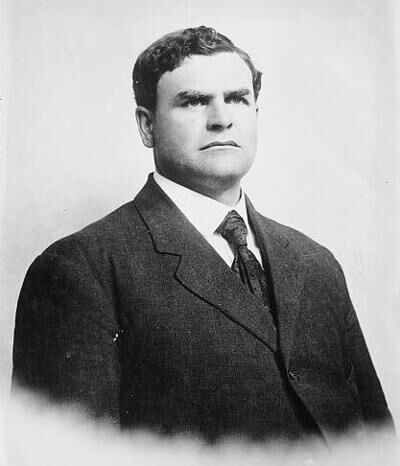
Author

Related Articles

Southwest Georgia artists recognized at packed opening of exhibition
The annual juried exhibition, one of the region’s largest showcases of visual art, features approximately 46 artists and nearly 90 works spanning painting, sculpture, ceramics, photography and mixed media.
Powerful performances drive Theatre Albany’s ‘The Color Purple’
From the street, strands of purple ribbon wind around the white columns of the historic theater, hinting at the story waiting beyond its doors. Inside the foyer, a carefully curated slideshow flickers across a large screen, cycling through the faces of the cast. Some are seasoned performers. Others are stepping onto a stage for the very first time. Teachers stand alongside former students. Parents perform beside their children. People who worship in different churches, work different jobs and come from different corners of Southwest Georgia gather beneath the same lights to tell the same story.
The Worst Job in the Marines: Telling Parents Their Child Was Dead. It Was Also an Honor
Telling a family their child died in combat is something no one wants to do, but someone has to. Christopher Murphy described his service as a Casualty Assistance Calls Office as miserable but vital.

