
Little mounds with holes throughout the lawn mean ground bees
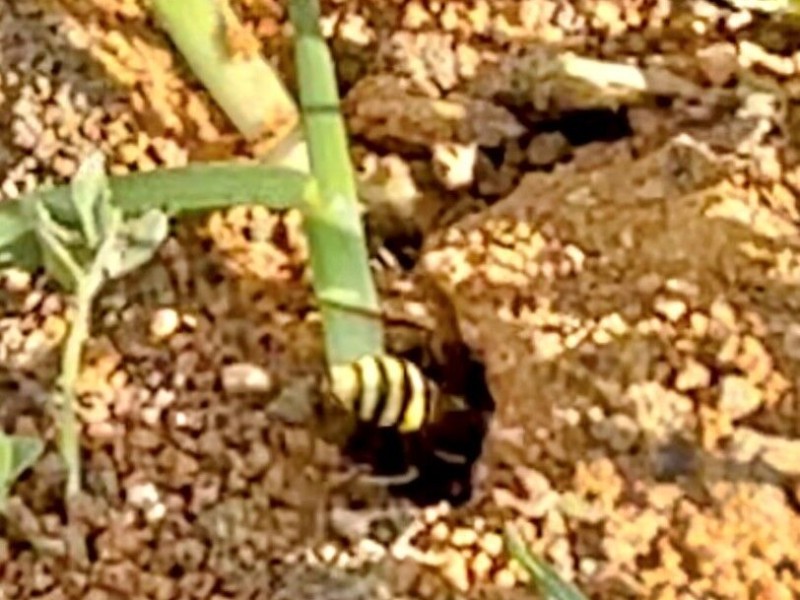
Special Photo: James Morgan
By James Morgan
Dougherty County
Extension Coordinator
ALBANY — While out taking some photos for an upcoming article about azaleas recently, I noticed quite a bit of bee activity near my leg. I looked down and noticed the many mounds on the bank of grass at the Albany Theatre. I immediately started taking photos and capturing video. I tell you, those bees move fast. I stayed until I was able to see one go into the hole that was previously created. This happens annually around this time of year.
A few years ago, while out running through the neighborhood, I noticed a considerable number of little mounds in the front yards of my neighbors. I thought to myself, as I kept running, “That’s a lot of bee or earthworm activity.”
A few days later I received a picture from a landscape professional that showed a mound of soil with a hole in the middle. From the picture I could make a better diagnosis than I could from just running past the yard. I later returned to the home that I passed and upon inspection saw the exact same mounds that resembled the one in the photo. The ground or digger bees were active in at least three landscapes in my neighborhood.
Female ground bees dig nests in the ground up to 6 or so inches deep in which to raise young. The bees pile earth around the sides of the hole. These bees can be very active in March and April. The female ground bee stocks the nest with pollen and nectar to feed the young bees. Some solitary wasps stock their nests with insects.
We do not recommend chemical controls for ground bees or wasps. These bees can be beneficial — serving to pollinate plants or destroy harmful insects. They will probably only be around for four to six weeks and then disappear until next year.
If you must control them, use cultural controls:
♦ Ground bees like dry soils. Water the soil when bees first become active. Apply one inch of water once a week if it does not rain.
♦ Ground bees nest in dry areas where the grass is thin. Find and correct the problems making the turf thin. This may involve soil sampling, irrigation, soil aeration or other practices.
♦ Find ways to thicken the turf in these areas to reduce ground bee problems. Know the needs of the turf grass and meet them.
♦ In areas that will not grow grass, mulch the area.
Author

Related Articles

‘Sounds Like a Mutiny.’ Secret Recording Exposes Claims of Toxic Leadership After a Marine’s Suicide
This week’s War Horse story follows the systemic failures before and after the death of Cpl. Drew Mobley who was the third in two years at Marine Corps Base Quantico to die by suicide.

Southwest Georgia artists recognized at packed opening of exhibition
The annual juried exhibition, one of the region’s largest showcases of visual art, features approximately 46 artists and nearly 90 works spanning painting, sculpture, ceramics, photography and mixed media.

Powerful performances drive Theatre Albany’s ‘The Color Purple’
From the street, strands of purple ribbon wind around the white columns of the historic theater, hinting at the story waiting beyond its doors. Inside the foyer, a carefully curated slideshow flickers across a large screen, cycling through the faces of the cast. Some are seasoned performers. Others are stepping onto a stage for the very first time. Teachers stand alongside former students. Parents perform beside their children. People who worship in different churches, work different jobs and come from different corners of Southwest Georgia gather beneath the same lights to tell the same story.
