
GALEN A. MIRATE: Can churches impose their own limitations on God?
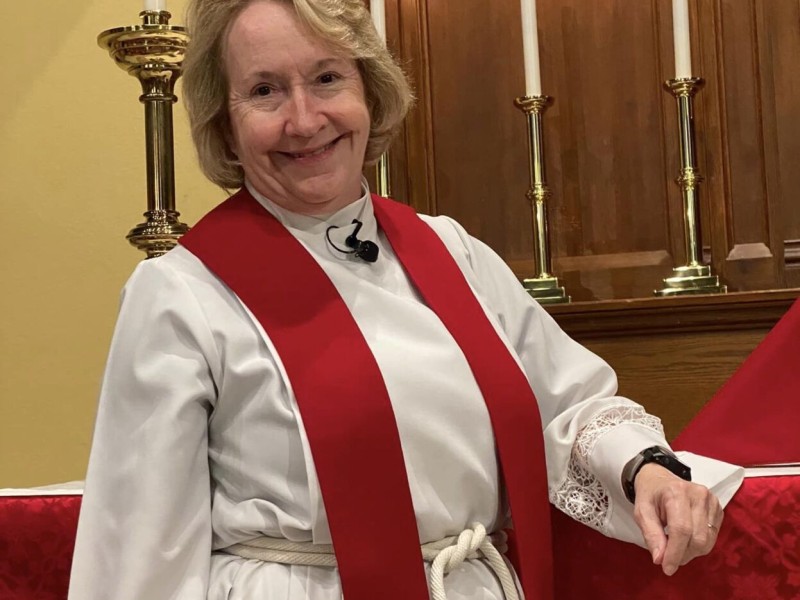
By The Rev. Galen A. Mirate
[email protected]
Earlier this month, the Southern Baptist Convention, meeting in New Orleans, voted by a margin of 9,437 to 1,212 to expel Saddleback Church, the second-largest church in the SBC.
It is not news that mainstream Christian churches all across America are shrinking. We Episcopalians are not exempt from that trend, and so I am especially thankful to be able to say that St. Paul’s is strong in attendance, membership and finances.
Yet this troubling trend of declining funds and audience would make any astute Christian wonder: What could cause a denomination to reject the second most successful member of its organization? Well, the answer is simple: The SBC expelled Saddleback Church because the church has a woman pastor.
The Biblical foundation for my position in this matter rests with neither the Old Testament nor with the New, but with the Gospels. As Christians, our primary task is to carefully study the words and deeds of Jesus, to take them to heart, and to the greatest degree possible, emulate them. Thus, I believe that the Gospels — our record of Jesus’ earthly life and ministry — should be the primary source of our guidance in all matters.
If we read the Gospels attentively, we may note that throughout his Earthly ministry, Jesus was prone to shock the sensibilities of those around him by rejecting the social constraints of his day. He routinely associated with those who were deemed unacceptable by the religious elite: tax collectors, sinners, lepers, Samaritans — and women. Jesus healed women, talked with women, even listened to women.
If a gentile woman had been required to be silent in Jesus’ presence — instead of begging Him to heal her child, as Matthew and Mark describe — how would He have grasped the depth, breadth and power of His ministry? That pivotal moment was made possible by the unrestrained comments of a desperate and impudent woman — to the ultimate benefit of countless others.
But most importantly, upon Jesus’ resurrection, God sent a woman to deliver the Good News.
According to all four Gospels, the first witnesses to the resurrection were women. All four assert that Mary Magdalene was present; sometimes alone, and sometimes in the company of other women. Do we believe that God would not be able to choose who would be the first to greet the resurrected Christ? Surely God would not bless a random passer-by with this incredible gift of witnessing. But the universal opinion is that the person whom God deliberately chose and placed in this enviable position was a woman.
And, according to two of the four Gospel accounts, a woman was not only the first to see the newly resurrected Christ, but that woman received from Him an explicit direction to share the Good News. The very best news ever known to humankind was given to Mary Magdalene to deliver. Scripture says that the words Our Savior used were, “go and tell.” Doesn’t that sound like a commission to preach the Gospel? It sure sounds like it, to me.
For me, a more difficult aspect of the SBC’s decision is this: If the future of Christianity requires women to step back into secondary roles, how do we now address those women who turn to the church and assert that God has laid a calling upon their lives to serve as preachers, pastors and priests? While not every assertion of calling can or should be ratified by the church, shall we now reject roughly 50% of the populace, without any investigation of their calling, at all?
Do we now tell women that God has withdrawn His promise, spoken through the prophet Joel, that “your sons and your daughters shall prophesy?” Will His Spirit now be poured out only upon masculine flesh? Must some of God’s children, who believe they are called, be rejected, because they are not acceptable in the eyes of Paul — or someone who is using Paul’s name, perhaps without Paul’s permission?
Or do we simply believe that God no longer speaks to us, so we are free to choose His representatives as best suits our own purposes and prejudices, without any input from Him, at all?
To me, the SBC’s decision feels most of all like a failure of faith; it is an attempt to box God in, to impose our own limitations on what God should be permitted to do. Recently, the Old Testament lesson appointed to be heard in my church recounted the story of Abraham and Sarah’s visit with three mysterious strangers near the Oaks of Mamre. The promise that an heir would be born to the aging couple was made — not for the first time — and Sarah laughed. The visitors’ response was notable: “Is anything too wonderful for the Lord?”
Or, to take this brilliant reminder in another direction, is God incapable of equipping whomever He may call? Even if He makes the terrible, terrible mistake of calling a woman?
Most of all, the reduction of acceptable roles for women hinders the ability of all Christians to experience God’s message to the fullest. God deliberately designed each of us to be unique and irreplaceable individuals. Our distinctive character means that God communicates His love to each of us in a personalized fashion that we are best able to hear, embrace, and share. When a larger variety of people are empowered to impart those expressions of love, a greater depth, breadth and nuance of message is possible, thus carrying these vital ideas more effectively to a wider audience.
And because we each not only hear from God differently, but hear from other people differently, when a variety of voices carries this transformational message, we increase the likelihood that the message will be conveyed in a way that yet one more lost sheep may be able to hear. Thus, one more of us may turn, and be healed; turn, and be saved.
At the end of the day, isn’t the church supposed to convey the astonishing reality of God’s love throughout the world? Isn’t that the Good News that we are called to spread lavishly, far and wide? To hamstring the church’s ability to do this foundational task is nothing short of self-defeating — suicidal, even.
I’m not a Baptist — never have been — but I’m a Christian, and I’m a woman. And I absolutely trust that my beloved Lord, who blessed me richly by calling me to serve Him as priest, pastor and preacher, places that same sacred call upon many of my Baptist sisters in Christ. I also trust there are other women, of other denominations, that He also plans to call; that He is calling, this very moment. Let us not hinder the spread of His precious words by rejecting those whom He would choose as His messengers.
Author

Related Articles

WILL THAULT: Can Ranch dressing cool our differences?
A German tourist driving through Georgia marveled at our landscape, discovering Waffle House and Buc-ee’s for the first time
CARLTON FLETCHER: Looking for a modern-day Rosa Parks
The year was 1955, and while the civil rights movement was slowly building momentum in the United States, laws such as the one enacted in Montgomery were common.

Squawkbox – July 4, 2026
Regarding the changes to the Squawkbox… Lee County officials encountered a screw-up with… Bo and Preacher Lorenzo and his disciples should reflect on why…
