
Lee Health Center celebrates expanding to a “one stop shop” for Lee County
By Lucille Lannigan
[email protected]
Spotless equipment, shiny floors and smiling faces make up the maze that is the new Lee Health Center.
The Center, a branch of the Albany Area Primary Health Care, located at 118 Robert B. Lee Drive in Leesburg, now boasts 18,000 square feet compared to its original 6,000, Jershondria Wilson, the Center’s business manager, said.
Lee Health Center offers services like primary care, internal medicine, pediatrics, dentistry, podiatry, behavioral health, a vision center and now a pharmacy all under the same roof. With each turn of a corner, is access to a different form of care.
“You may get lost,” Shelley Spires, AAPHC CEO, said to guests Tuesday morning at a ribbon cutting ceremony to celebrate the expansion. “It’s a one stop shop for the community,”
About 30 Lee County commissioners, Leesburg city council members, Leesburg Mayor Billy Breeden as well as AAPHC health professionals and community members gathered in the Center’s large new lobby and waiting room to hear from Spires as well as Samuel Waling, the Center’s medical director and James Hotz, the AAPHC clinical services director.
Waling, who has been in the community for a few years now, said AAPHC’s vision to make healthcare as accessible as possible captivated him.
Lee County’s population is steadily growing with a growth of 22.4% from 28,298 people in 2010 to 34,621 this year, according to the World Population Review.
“Our community has grown and in order to meet those needs, we knew we needed to have a bigger space… to add convenience to the community,” Waling said Tuesday.
The Center not only grew in physical size but also in staff. It recruited quality providers to fill up the space, he said.
“We’re constantly revamping ourselves to provide access to ourselves, which is, I believe, a growing pain of our country and primary care everywhere,” Waling said.
The vision that captivated Waling was partially created by Hotz who was AAPHC’s first primary physician in 1978, the year it was created. It began providing services in 1979.
AAPHC, a community health center, functions uniquely, Hotz said to the group. The money generated is not pocketed but rather invested back into the community. The Center is owned by its patients.
This meant during the COVID-19 pandemic, the Center had extra money to provide patient aid.
“We did over 25,000 vaccinations,” he said. “We stayed open when a lot of people were closed. We’ve always been here to respond to the needs of the community.”
This type of health care center has grown throughout the country with 30 million people across the U.S. receiving care in community health centers, Hotz said. AAPHC is closing in on its 5 millionth patient. Seeing the growth in the Albany area is a point of pride for him.
Overcoming barriers like access, transportation or lack of insurance coverage is something the center has worked toward since its beginning, Hotz said. It does this with a focus on the geographical needs of the area, Spires said.
Rural Americans are more likely to die from heart disease, cancer, unintentional injury, chronic lower respiratory disease, and stroke, according to the CDC. These disparities can stem from long travel distances to health care or higher rates of poverty as well as small things like lower seat belt use or less physical activity spent doing leisure activities.
Hotz stresses the importance of screening for these conditions.
“In rural communities and low resource communities, healthcare is more like a utility,” he said. “You can’t run a business if you don’t have water and electricity… well, you know, healthcare is also critical.”
To emphasize the importance of screening and primary care, Spires said, one of her goals is to start shifting the mindset of individuals to prioritize preventive visits.
“Take myself growing up, for example – I only went to the doctor when I was sick,” she said. “I see that as a huge gap in the mindset because of the way we grew up.”
Some solutions Spires hopes to present in shifting this mindset is utilizing community health workers or people who go out into the community with a focus on building rapport and trust with patients. Currently, AAPHC has two of these workers, but it’s a position Spires sees growing.
Other solutions include increased community outreach through health fairs and school-based health centers. The Center also partners with educational institutions like Albany Technical College and Albany State University to bring on interns, she said.
When it comes to insurance barriers, the Center works with patients, offering sliding fees based on income.
“The lowest that you could possibly pay depending on where you fell on that scale could potentially be $20,” Spires said.
It also offers the pharmacy program, 340B Drug, which allows patients to receive discounted drugs.
And now, with the Lee Health Center expansion, Spires foresees a growing number of patients accessing these services.
“I’ve already heard some of the patients’ comments about how wonderful it looks and how it feels,” Spires said.
Simply having all of the services under one roof she hopes will motivate patients to get care as they won’t have to travel from place to place, she said.
This is especially helpful for senior patients who may struggle getting to different locations. About 14 percent of Lee County’s population was 65 and over in 2022, according to the U.S. Census Bureau.
Spires believes the brand new facility will make a massive difference in bringing on new patients and hopes it showcases AAPHC’s commitment to its growing community.
“We continue to run toward issues, we don’t run away from them,” Spires said. “As a community member, you want those fighters in your corner.”
Author

Related Articles
‘Just Africa’ festival scheduled for third weekend in September in downtown Albany
A taste of the Caribbean and Africa is coming to Albany with a fall festival that will also bring African dance, a parade of children’s fashions, as well as vendors, live bands, and arts and crafts.
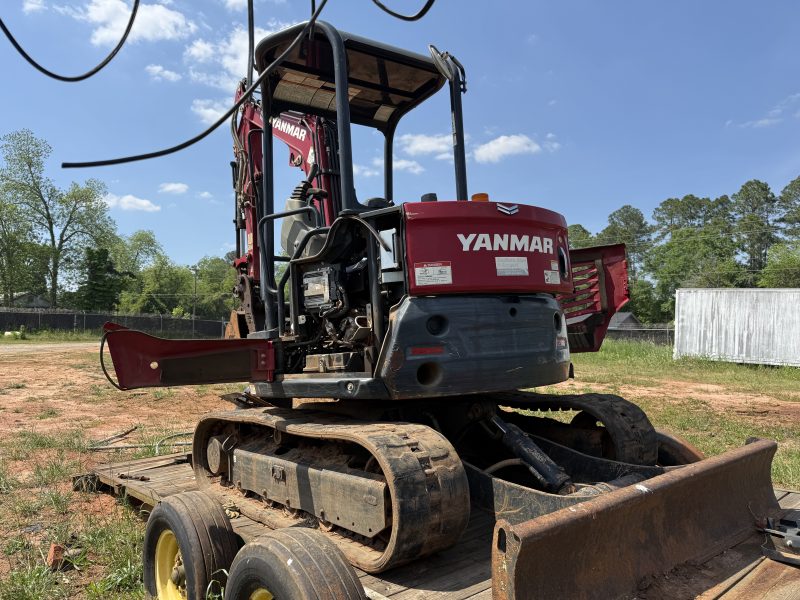
Dawson approves $68K excavator purchase after months of contradictory public statements
The decision concludes one portion of a controversy that has generated months of public scrutiny but leaves several unanswered questions regarding how the city’s original machine was damaged, whether employees were held accountable and what documentation supports the decision to replace rather than repair it.
Dawson proposes borrowing up to $420,000 to stay afloat as finances unravel
Documents obtained by The Dawson News show city officials are proposing to balance the budget through a transfer from the Public Utilities Fund while simultaneously seeking authority to borrow as much as $420,000 from a private financial institution to continue meeting payroll and other operating expenses as Dawson works to complete financial audits that have remained unfinished since 2023.
