
Lee schools approve $97.1M budget; officials defend tax rollback actions, warn of future funding challenges
Dozens of residents attended the public hearing and subsequent board meeting, where Executive Director of Finance Gary Kelley spent nearly 30 minutes outlining the district’s finances, responding to criticism surrounding the 2025 tax digest error and warning of long-term funding challenges facing the school system.
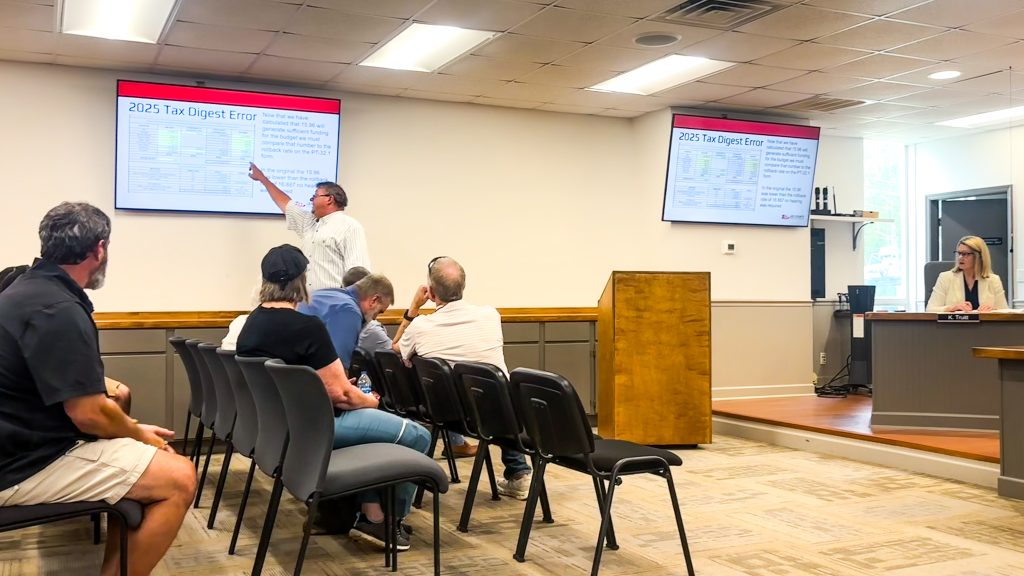
LEESBURG — Lee County school officials defended their handling of the county’s ongoing tax rollback controversy Monday night while approving a Fiscal Year 2027 budget amid one of the largest public turnouts seen at a school board budget hearing in recent months.
Dozens of residents attended the public hearing and subsequent board meeting, at which Executive Director of Finance Gary Kelley spent nearly 30 minutes outlining the district’s finances, responding to criticism surrounding a 2025 tax digest error and warning of long-term funding challenges facing the school system.
Following the hearing, the Lee County Board of Education approved a FY ’27 budget projecting approximately $97.1 million in expenditures against $91.4 million in revenues across governmental funds. Much of Kelley’s presentation focused on the fallout from the countywide rollback rate error that has sparked months of public debate and calls for taxpayer refunds.
“First of all, the Board of Education did not over-collect taxes,” Kelley said. “The dispute is not over the millage rate itself, but over an incorrect rollback rate.”
Kelley argued the school system followed state law based on information provided through the official tax digest process.
According to presentation materials, the district adopted a 15.96-mill rate for 2025. The original PT-32.1 rollback form provided to the school system showed a rollback rate of 16.887 mills. Because the adopted rate was lower than the rollback rate shown on the form, district officials contend that state law did not require the three tax increase hearings that later became the focus of the controversy.
“The Board of Education proceeded based on the information it was given,” Kelley said.
District officials emphasized that the school system billed and collected taxes at the approved 15.96-mill rate and that no additional millage was levied beyond what had been publicly adopted.
“The only number on this form that is of any importance for our budget is the net digest,” Kelley said while reviewing the PT-32.1 tax documents.
Kelley argued that the school system’s budget calculations are based on the county’s certified net tax digest rather than the rollback rate calculation that later became the subject of controversy. According to district officials, the school board determines how much revenue is needed to fund operations and then sets a millage rate designed to generate that amount based on the tax digest.
Under that interpretation, officials contend that if the digest had been calculated correctly from the beginning, the rollback rate would have been different and the district may have adopted a different millage rate. However, they argue the overall amount of tax revenue sought by the school system would have remained largely unchanged unless the board chose to reduce spending or collect less revenue.
That position differs from arguments advanced by some residents and public officials, who maintain that taxpayers paid more than they should have because the rollback rate was calculated incorrectly. Those critics argue that the error affected the tax burden placed on property owners and triggered requirements for a lower effective millage rate.
While defending the district’s handling of the rollback issue, Kelley also outlined several growing financial pressures facing the school system.
State funding is expected to decline by approximately $3.7 million next year, largely due to declining enrollment and reductions in equalization funding.
“As our property tax digest increases, the state considers us wealthier and reduces equalization funding,” Kelley said.
The district also expects to lose 11.6 state-funded teaching positions through Georgia’s allotment formula. Kelley said officials plan to maintain existing class sizes despite the reduction.
Health insurance costs were identified as one of the district’s fastest-growing expenses. Presentation data showed annual health insurance costs climbing from approximately $6 million in Fiscal Year 2018 to more than $12 million in the FY ’27 budget.
“Over half of this increase we’re paying for through local taxes,” Kelley said.
The approved budget projects approximately $47.8 million in state revenue, $37.4 million in local revenue and $6.1 million in federal revenue.
Budget documents show the district plans to utilize existing fund balances to cover projected expenditures, with the General Fund balance declining from approximately $14 million to about $6 million by the end of FY ’27. Total fund balances across all governmental funds are projected to decrease from approximately $38.7 million to $33 million.
District officials also highlighted operational costs that extend far beyond classroom instruction.
According to the presentation, Lee County Schools maintains more than 1.08 million square feet of facilities and operates a transportation system that logs approximately 6,000 miles each day. Kelley noted that a recent fuel purchase totaled 8,948 gallons at a cost of $40,397.
A school bus now costs approximately $150,000, he said, with the district typically purchasing several each year to maintain its fleet.
Administrators also warned that the defeat of the district’s most recent education special-purpose local-option sales tax referendum could create future funding challenges.
District officials said remaining E-SPLOST revenues are already dedicated to ongoing projects and bond repayment, leaving future capital needs without a dedicated funding source. Among the projects identified were roof replacement work at East Middle School, HVAC upgrades at Lee County High School and future turf replacement projects.
Kelley also pointed to federal COVID-19 relief funding as one reason millage rates declined between 2021 and 2023 before increasing again as those funds expired.
A chart presented during the hearing showed the district’s millage rate falling from 18.6 mills in 2019 to 15 mills in 2022 before rising to 15.96 mills in 2026, corresponding with fluctuations in state funding and the expiration of federal relief dollars.
During public questions, Lee County resident Mike Sabot asked officials about projected digest growth and increases shown within the pupil services category of the budget.
Administrators responded that local revenue estimates remain tentative pending certification of the county tax digest and explained that much of the increase in pupil services reflected accounting changes rather than expanded staffing.
School counselors who had previously been coded under instruction are now classified under pupil services, officials said.
Kelley closed the presentation by defending the district’s financial management and pushing back against criticism he said has proliferated online.
“Please do some independent research and truly find out about your school system,” he said. “We are one of the most fiscally efficient school systems in Georgia.”
Under Georgia’s Financial Efficiency Star Rating system, fiscal efficiency is measured by comparing a district’s per-pupil spending with student academic outcomes. The rating, produced by the Georgia Department of Education and the Governor’s Office of Student Achievement, is intended to measure how effectively a school system converts educational spending into student performance rather than simply identifying which districts spend the least money.
The formula relies primarily on per-pupil expenditures and student achievement as measured by the College and Career Ready Performance Index, with both figures averaged over three years. School systems that produce stronger academic outcomes while spending relatively less than their peers generally receive higher ratings.
While fiscal efficiency is not synonymous with educational quality, supporters of the district argue that Lee County’s ability to maintain academic performance while spending less per student than many comparable systems demonstrates that taxpayers are receiving value for their investment. Critics, meanwhile, continue to question whether recent tax policy decisions and the rollback rate controversy have eroded public trust.
As the board approved its FY ’27 budget Monday night, both realities appeared to coexist.
The district enters the coming year with a spending plan that relies on reserve funds to bridge the gap between revenues and expenditures and a reputation for strong financial efficiency ratings. But the Lee School System also faces growing uncertainty over state funding, long-term capital needs and how those challenges will be addressed without the additional revenue source voters declined to renew through E-SPLOST.
Related Articles

Albany recycling center enacts material separation rule
Mixed items will no longer be accepted at the Albany recycling center at its 2521 Meredyth Drive facility. Individuals will now be required to separate items befor they will be accepted.

Wild Game Dinner marks 34 years as South Georgia Scouting reaches for next generation
More than a century after organized Scouting first took root in Southwest Georgia, local leaders say the program is working to preserve its traditional mission while adapting to a new generation of young people.
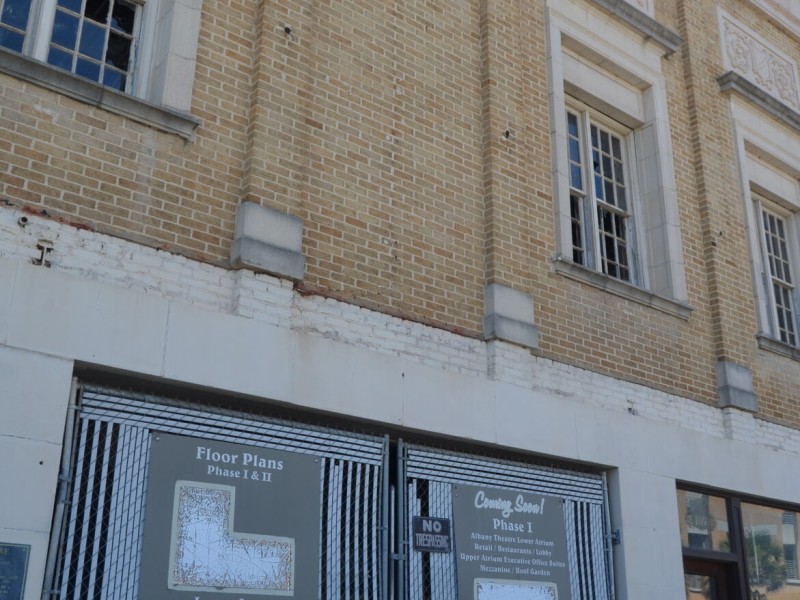
Albany City Commission takes action on proposed downtown hotel, two theater renovation projects
“We’re taking the original building back to, hopefully, it’s glory days. One of the cool things about the project is we are going to restore the balcony. It’s going to have a balcony, so it’s going to be super cool.”
