
Seven years in foster care: Dougherty children wait far longer than the rest of Georgia
The program offers rental assistance and support with education and employment as young people transition to independent living. But a review of foster care data reveals a broader concern: Before leaving care, many Dougherty County children spend years waiting for a permanent home.
Twenty-five housing vouchers are available for eligible young adults leaving foster care. Dougherty County children who left care during the latest reporting year had spent a median of more than seven years in custody.
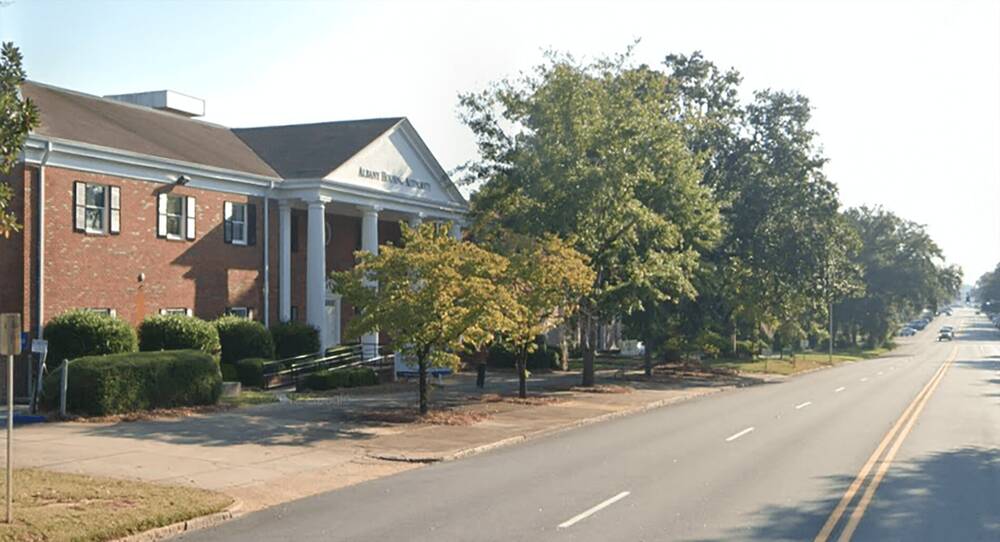
ALBANY — The Albany Housing Authority is accepting applications for 25 housing vouchers reserved for young adults leaving foster care. None is currently in use.
The program offers rental assistance and support with education and employment as young people transition to independent living. But a review of foster care data reveals a broader concern: Before leaving care, many Dougherty County children spend years waiting for a permanent home.
Children who left foster care in the county between April 2025 and March 2026 had spent a median of 87.8 months in custody — more than seven years. Statewide, the median was 17.9 months.
The figures, published by Fostering Court Improvement, show prolonged stays for children who were adopted and those who returned to their parents. Five young people aged out during the reporting period.
LaShanda Brown, the housing authority’s Section 8 manager, said most previous participants had completed the voucher program.
“Before I came in, they had about 30 foster youth receiving vouchers,” Brown said. “They all graduated from the program and moved on. When I got here, we had only one left, and that person graduated from the program as well.”
Brown said the last participant earned a degree and moved out of state.
The authority describes the vouchers as providing up to 36 months of rental assistance, along with help finding work and completing a GED. Applicants must meet age, foster care history and housing eligibility requirements and receive certification from a child welfare agency.
The foster care figures do not establish why the vouchers are unused or how many local young adults qualify.
Last year, five children aged out of foster care in Dougherty County without ever finding an adoptive family.
Federal data covering April 2025 through March 2026 show the median stay for children leaving care in Dougherty County was 87.8 months. The figures were compiled by Fostering Court Improvement, a data project run by the American Bar Association Center on Children and the Law, Fostering Results and Emory’s Barton Child Law and Policy Center, which publishes county-level figures the state does not release.
The problem is deeper than how many children enter foster care here. It is how long they stay.
“We are part of Region 10 for DFCS, and we are the largest county here in Region 10,” Charlene Maldonado, executive director of Dougherty County CASA, said in January. “And we hold the most kids in foster care.”
Years awaiting permanent homes
Of the 207 Dougherty County children in foster care on March 31, 156 had already spent more than two years in state custody — three of every four, compared to about 40% statewide. Half had been in care longer than 46.4 months, or nearly four years. The statewide median was 18.6 months.
For 38 of them, returning to their parents is no longer legally possible.
Those children have had the parental rights of both parents terminated — a step that permanently severs the legal relationship between a child and a parent and clears the way for adoption. It does not provide a child with a new family. Thirty-six of the 38 had already spent more than two years in nonrelative care.
Of the 50 children who left Dougherty County foster care during the reporting year, 30 were adopted. By the time their cases closed, they had spent a median of 94.2 months in care — nearly eight years. Statewide, the median was 35.4 months.
Much of that time passed before the children were legally available for adoption at all. Among 26 adoption cases with available data, the median period between removal from home and the termination of parental rights was 77.7 months. Statewide, it was 23.6 months.
Once parental rights were terminated, Dougherty County children waited a median of 17.1 more months for their adoptions to be finalized. Statewide, that period was 10.9 months.
The longest delay is not coming at the end. Years pass before the system reaches the point where an adoption can even begin.
Adoption, not reunification, is how most children leave
Reunification — returning a child safely to a parent — is the foster care system’s first objective under federal law, not one option among several. But only 13 of Dougherty County’s 50 foster care exits last year ended in reunification, or 26%. Statewide, 46% of children leaving care were reunited with their parents.
Adoption accounted for 60% of Dougherty exits, nearly three times the statewide share of 21%. Five children aged out, one left through guardianship and one went to live with a relative.
Even the children who did return home waited longer to do it. The 13 reunified last year had been in care a median of 39.2 months, compared to 11.9 statewide — a gap that ranks Dougherty third among Georgia’s 159 counties for the longest wait to reunification. Only four of the 13 went home within a year.
Few children living with relatives
Of the county’s 207 children in care at the end of March, 167 — about 81% — were living in nonrelative foster homes. That compares to 63% statewide. Twenty-seven were in institutional settings and nine in homes where an adoption was planned.
Four were living with relatives: 2% of the county’s foster children, compared to17% statewide.
Kinship care lets children stay with grandparents, aunts or uncles while their cases are resolved. It preserves family connections and can open a path to guardianship or adoption without moving a child into an unrelated home.
Fewer eyes on each case
Court Appointed Special Advocates are trained volunteers appointed by a judge to investigate a child’s circumstances and report on what that child needs — often the one independent set of eyes following a single child through years of hearings. Judge Herbie Solomon brought the program to Dougherty County in 2000. It now reaches a shrinking share of the county’s cases.
In July 2023, Maldonado told The Albany Herald the program was working for “about 75% of the foster care children in Dougherty County.” By January, the share had fallen to roughly two-thirds — 184 of the 278 children then in DFCS custody, leaving about 94 with no advocate assigned to their case.
“We need the community members to come together because these kids are our next generation, and if we’re failing them now, they’re not going to make it in the future for us,” Maldonado said.
A problem larger than Dougherty County
The delays are unfolding as the state’s placement network contracts. More than 11,000 Georgia children were in foster care as of May, and agencies that recruit foster homes say they cannot keep up. When no placement can be found, children have spent nights in hotels or DFCS offices.
Dougherty’s numbers are severe, but the strain is statewide.
“We have to deny children every day,” LaShay Wilson, executive director of StepStone Family & Youth Services, said to the media earlier this year. “It is the most heartbreaking part of our job that we have to deny children every day.”
In January, with the division facing a shortfall of as much as $85 million, four former DFCS directors warned Gov. Brian Kemp that providers statewide were “reducing capacity, suspending programs or closing altogether.”
In its most recent Child and Family Services Review, finalized in 2024, the U.S. Department of Health and Human Services found Georgia was not in substantial conformity with any of the seven outcomes reviewed. Timely permanency was among the weakest: only 23% of cases met the federal standard for whether children had permanent, stable living situations.
Testifying before a U.S. Senate subcommittee in October 2023, Paulding County Juvenile Court Judge Carolyn Altman said state officials had suggested judges consider holding special-needs children in juvenile detention while DFCS searched for placements.
“As judges we do not lock up children, especially special-needs children, because we cannot find a place for them,” Altman testified.
What the numbers don’t say
Aggregate data can show how many children are waiting and for how long. They cannot explain why an individual case took years. Cases can involve treatment plans, parental incarceration, substance use services, housing problems, appeals and failed placements, and those circumstances vary from one family to another.
The figures also do not reveal how many of the 38 children whose parents’ rights were terminated already had families identified. A child awaiting a final adoption hearing is in a very different position from one with no family waiting. The public data place both in the same category.
The waiting list is open now for the young people the system releases at 18 with no one waiting for them. For the 156 children still inside the system, all they can do is wait as years go by.
And those years are not simply case-processing time. They are these children’s childhood.
Related Articles
Ward VI Commissioner Diana Brown to hold Saturday town hall meeting
A Saturday town hall meeting in City Commission Ward VI will address voting issues and blight.
Dougherty County Commission moves closer to imposing curfew
The Dougherty County Commission is exploring the enactment of a curfew ordinance that would for youngsters under 17. The commission has discussed the topic during meetings in August and September.

Seventh annual Recovery in the Streets brings Saturday celebration
“We know that recovery is for the entire community,” Burgman said. “It affects us all, so we want to come together and celebrate.”
