
Chehaw Native Voices to feature Native American violinist Arvel Bird
Brad McEwen
ALBANY — For Arvel Bird, the opportunity to perform at this weekend’s Native Voices event at Albany’s Chehaw Park not only allows him to share his life-long love of music, it’s also a way for him to share the spirituality of Native American culture and show others how those concepts can enrich their lives.
Bird, a classically trained violinist and professional fiddle player who was born in Utah, has devoted most of his life to performing and writing music and for the past several years, has married that passion with his growing interest in the Native American (Southern Paiute) heritage he inherited from his mother.
Bird said he’s been an avid music lover and player since an early age, learning to play the violin at age 9 and studying it almost exclusively for the next 11 years of his. He eventually earned a college scholarship to study music at a college in Arizona.
Interestingly at that time, considering his current profession, Bird’s teachers suggested he focus on learning to teach music rather than focus on being a performer, something that deeply affected him as a young man.
“I wanted to be a professional violinist and I wanted to play music for a living, but when I got to college they told me, ‘well we don’t want you to be a performer, we want you to be a school teacher,’” says Bird. “So, that kind of burst my bubble because what I heard them say was, ‘You’re not good enough to be a performer.’”
A disillusioned Bird eventually left the school and traveled to Illinois to continue studying his instrument.
“Finally I just got frustrated and angry and eventually moved to Illinois and studied privately with a Hungarian master violinist,” says Bird. “Once I knew I knew how to play the violin then all I wanted to do was make music. I wasn’t really in school to get a degree I was in school to learn about music, about the violin.”
Bird continued to follow his passion, eventually branching out from the world of classical music and delving into different styles such as bluegrass, country, Appalachian music, even jazz and blues. He also continued composing original music, something he had started doing in college.
“I began to compose while I was still in college and my music was all instrumental. It was kind of a fusion of everything I’d been hearing, and it was very tribal,” says Bird. “But my playing is naturally Celtic. I tried to take that Celtic out of it when I went to Nashville because everybody there wants to hear bluegrass licks.”
Eventually, Bird decided he needed to be true to himself and he began to embrace his natural playing style, eventually using his abilities to score high profile session jobs with artists such as Glen Campbell, Loretta Lynn, Ray Price and Louise Mandrell.
“I finally just accepted myself for who I am and what I do,” Bird says. “I quit comparing myself to other people. Once I did that then I fully embraced who I was as a player. I realized they don’t do what I do and I don’t do what they do. I just have to do what I do as well as I can.”
For as much success as Bird was having as a session musician, however, he still felt something was missing.
“I was playing everybody else’s music, but I had my own music inside of me, just gnawing at me to come out,” he says.
Around that same time Bird also became interested in his mother’s Southern Paiute roots and began learning and studying about that culture and the cultures of other Native American tribes. What he ended up finding in that was not only a new interest, but a new focus for his creative energies.
“I grew up knowing I was Southern Paiute, but nobody ever talked about it. So, as an adult I became curious and discovered that I had a real interest, an affinity for, not only my Southern Paiute ancestors, but also all of North American Indian heritage. As I began to delve more deeply into my history and that of Native America, my music began to turn that direction, too.”
Bird says he began focusing a lot of his attention toward writing about animal totems, something he had become interested in through his research of native cultures. While working on music centered on those themes, Bird also branched out into a new instrument, which he felt was necessary if he was going to continue writing music in that vein.
“I started recording music I composed about animal totems,” Bird says. “I wanted to have the Native American flute in my music, but I didn’t play that instrument yet. So, I bought a flute and began to learn it and was able to use it on my first animal totem CD and since then it has become a natural instrument for me.”
Coincidentally as Bird started digging into his mother’s roots, he started digging into other parts of his heritage, which also helped to inform what he was doing musically.
“I had Scottish heritage on my father’s side and I realized where my Celtic fiddling style came from, so my music is a blend of my Native American heritage and my Celtic roots,” says Bird. “I like to say it’s Braveheart meets Last of the Mohicans at Woodstock.”
So far, Bird has parlayed that style of Celtic Indian music into 23 CDs he’s recorded and released over the last dozen years. And he shows no sign of slowing down.
“I have two more (CDs) I’m working on now that will be out this year,” he says “So, the ideas never stop coming.”
What has also continued is Bird’s passion for sharing his culture and his music with others. It is such a priority for him that he has devoted himself to travelling the country, performing and teaching at various educational events. Bird says he participates in countless things like this weekend’s Native American Festival at Chehaw, various school and museum performances, Native American pow-wows, Celtic Festivals and even church functions.
“I tour full-time,” Bird says. “I live in a rolling tepee. My wife and I travel in a 37-foot motor home with our two dogs. We do a lot of events.”
While at those events he likes to share his thoughts on Native American spirituality, which he believes can be helpful in the lives of many people.
“What I’m hoping that people get when they come to a Native American festival like this and hear me perform is that they gain a better awareness and perspective of the spiritual beliefs of the North American Indians,” says Bird. “Actually it’s the same beliefs of all indigenous people all over the world — things about everything having spirit, all things created with one sacred breath of life, thinking everything’s sacred, things about that we all live within a scared circle of life and we’re all connected.”
Bird will be sharing his thoughts throughout the weekend as part of Chehaw’s annual Native American Cultural Festival, where he will be teaching a workshop Saturday on animal totems.
The artist will also be performing his original music at this year’s Native Voices event Friday night at the park’s Creekside Center.
A first for the park Native Voices will give guests the opportunity to experience Native American culture through performances from some of the elite artists in the United States, including Bird.
“It’s something completely different, that we haven’t done before,” said Chehaw Public Relations Coordinator Morgan Burnette. “We handpicked some of the best of the best, including Arvel Bird. It’s really exciting.”
The evening will feature cocktails, a Southwestern inspired plated dinner, and silent auction in addition to the performances, which will feature singing, flute, violin playing, dancing and more. Tickets to the event, which begins at 6:30 p.m., are $50; $40 for Chehaw members.
Seating to the event is limited so to anymore wishing to make reservations can contact Burnette at (229) 430-3966 or via email at [email protected].
To learn more about the Native Voices Event or about the Native American Cultural Festival, which is open 9 a.m.-5 p.m. Friday and 9 a.m.-6 p.m. Saturday and Sunday, visit www.chehaw.org.
Related Articles
Albany Herald – June 25, 2026
Dougherty Commission considers $104
million budget for… Theatre Albany’s first 55-over production set for… Homeschool students reduce prep time for ‘Anastasia’…

Classifieds – June 25, 2026
Classifieds; Legals; Garage Sales; Auctions, etc.
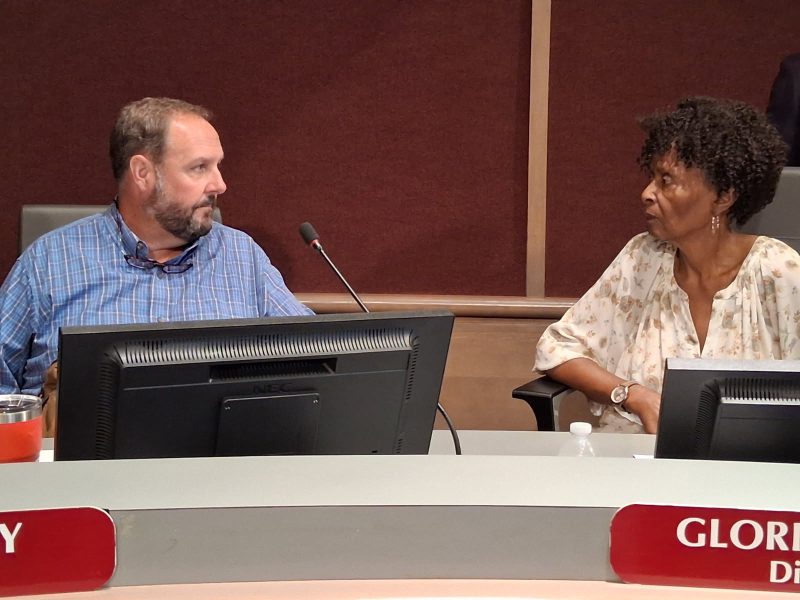
Dougherty Commission considers $104 million budget for 2026-2027 budget year
“The other side of the coin is you could have higher revenues than projected. We’re very conservative in budgeting revenues. That also reduces the need to use fund balance”
