
Colquitt native takes on restoration of historic Arlington home
By Lucille Lannigan
[email protected]
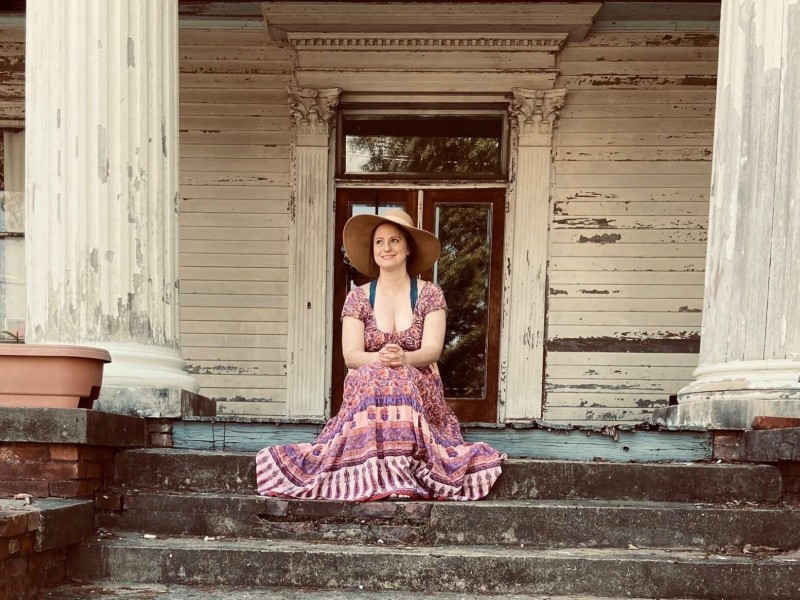
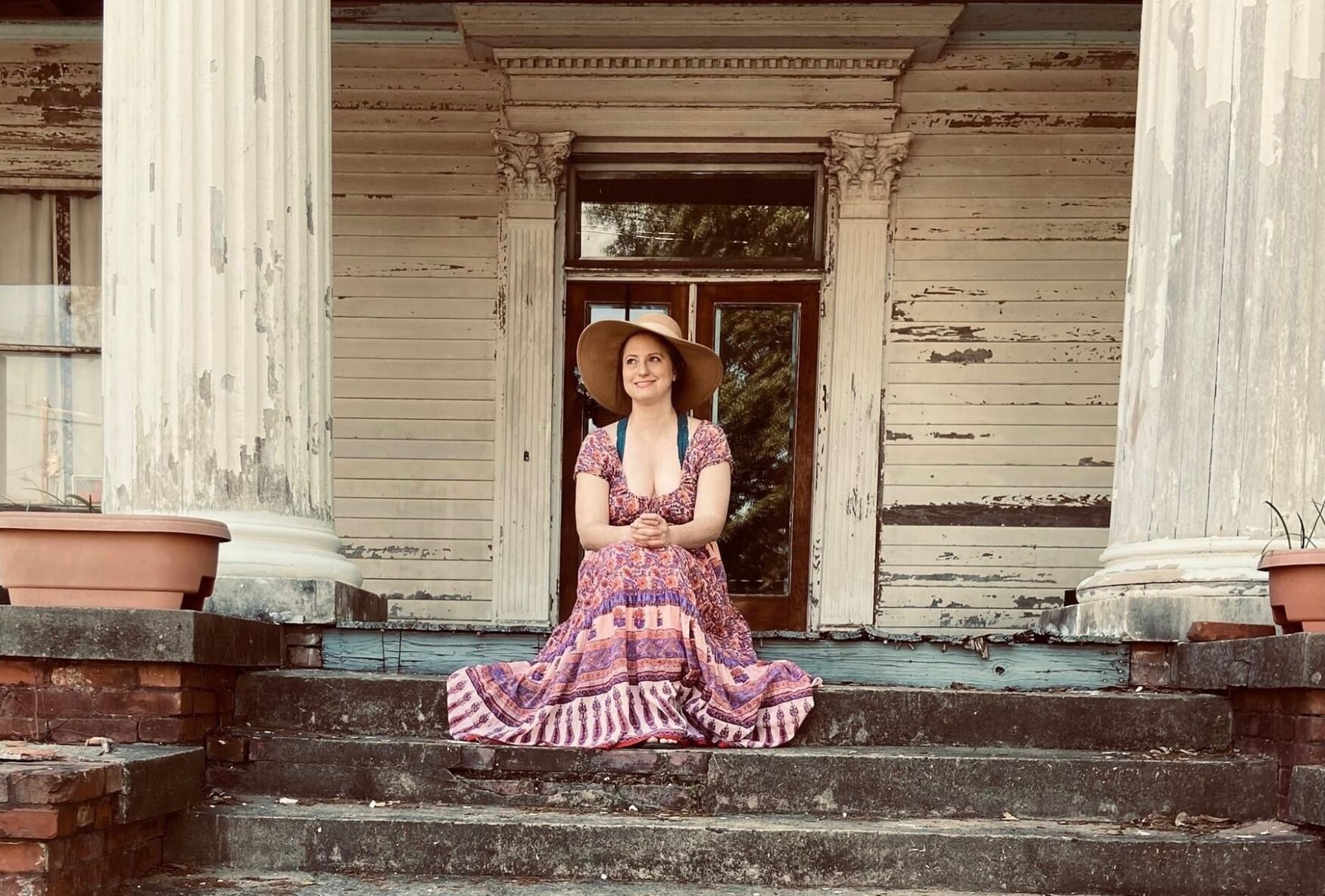
ARLINGTON – Laura Reynolds has dreamt of an old Arlington mansion since she was 5 years old.
The Colquitt native begged her parents to drive her past the Gleaton-Askew House each time she visited her grandfather in Arlington.
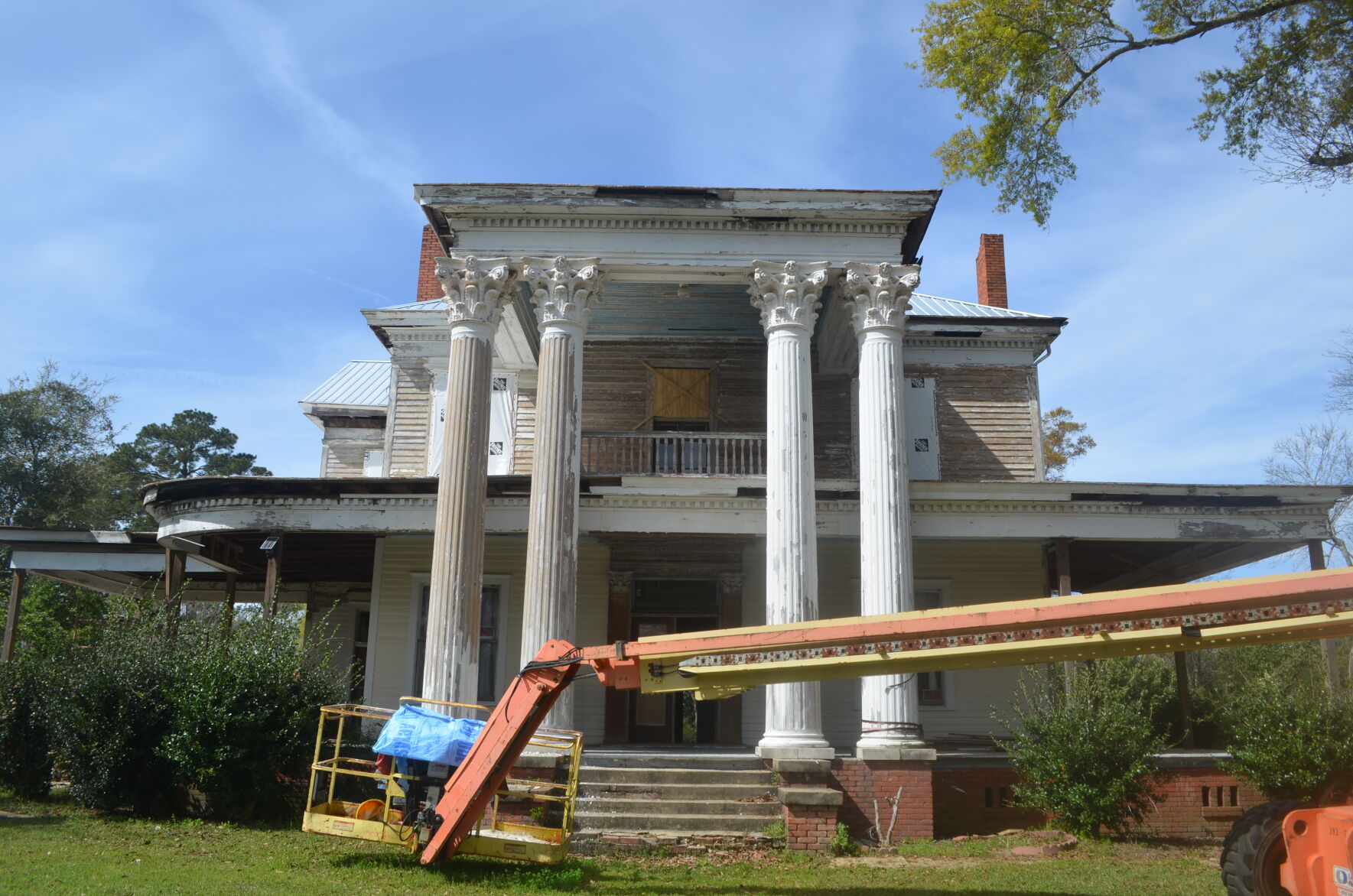
Reynolds marveled at the looming Greek Revival-style columns, the manicured lawn and the canopy bed that peeked out of one of the upstairs bedroom windows. She watched it pass through multiple ownerships and fall into disrepair over the years. She said she wondered what lay beyond the grand front doors for most of her life … until, she bought the house in 2020, taking on an extensive restoration process.
Historic homes in need of repair are scattered across the state. For Reynolds, taking on restoration of the Gleaton-Askew home was a passion project. But, she admits, it hasn’t been easy.
A bill passing through the Georgia legislature aims at making it a bit easier by extending and expanding the historic rehabilitation tax credit program, which provides relief for these projects. While the Gleaton-Askew House isn’t currently eligible for these relief programs, Reynolds said she is working to get it registered as a National Historic Landmark.
Owning the house, she said, is surreal.
“It was the fulfillment of something I’d been thinking about since I was a little girl,” she said.
Reynolds first tried to buy the house in 2008 when it went on sale at auction. She didn’t get it, but instead settled on original furniture pieces: a piano, tables, artworks and the canopy bed she’d dreamed of.
She watched from afar as the house switched owners again. Repairs would start and then fizzle out in a few years. By 2019, the house had chipped paint, bowed wood details, and the yard was overgrown with bushes and brambles up to the porch awning. Hurricane Michael blew several windows out. Failing gutters created water damage.
Reynolds said the house lived on in her mind, and she reached out to the owner to see what was in store. By 2020, in the middle of the COVID-19 pandemic, the two struck a deal, and the house was Reynolds’.
She fell through the beaten porch on the first day she owned the house. She said taking on the extensive project was like stepping out on faith – a pure force of will.
In about three years, Reynolds and her mother restored windows, removed lead paint, saved camellia bushes in the garden and repainted. Local contractors replaced the roof and installed updated plumbing and electricity for the first time in 30 years, Reynolds said.
She said the work is getting done, inch by inch, but she sometimes gets discouraged.
“This is a monstrous project,” Reynolds said. “This can really devour you, but you don’t have to be a millionaire to do this. You just have to have the will and the determination.”
As swept up as Reynolds is in the house’s construction, she said she’s become equally intertwined in its history.
“I think to really love and appreciate a house, you have to … be connected to the people who lived there,” she said.
Reynolds said she’s picked up the history from curious Arlington residents who pass by her street or who have been following along on the Facebook and YouTube pages she’s created to chronicle her journey.
The home was originally built by the Gleaton Family from 1907 to 1911. Charles Payton Gleaton raised his family in the home until he passed away and it sold in the 1930s. This is when the Askew family purchased it, and the house’s longest resident, Georgia Askew, would first step through its doors as a teen girl.
Hollis Askew, Georgia’s nephew, said his Aunt Georgia was an eccentric figure in his family and in the small rural town.
Hollis said Georgia and her house were well-known throughout Arlington. Many Arlington residents have commented on Reynolds’ Facebook page with stories from sitting with Georgia on her porch and listening to tales of her travels.
Georgia Askew traveled the world in the 1940s and ’50s, living in art communes from Mexico to Italy. She played piano, spoke multiple languages and operated a flower business out of the old carriage house in her home’s backyard. She remained unmarried and without children – living in the Gleaton-Askew house on her own.
Hollis Askew said he has fond memories of spending time with his aunt in her home as a child. He said he remembers the home as a beautiful place with elaborate gardens.
But as Georgia grew older, her mental health declined with the state of the house.
“The house reminded her of her parents,” Hollis said. “It was really all she had toward the end.”
Georgia was almost 90 when she passed away in 2007. The Askew family held an auction for the house’s items, and eventually the house in 2008. Hollis said it was too far into disrepair for his family to want to hold onto it.
He said it was a sad situation watching the house fall apart, and he hopes Reynolds is able to restore it to its former glory.
“That’s a large undertaking she’s doing,” he said. “I hope she makes it. Every time I go by there, I think ‘Just keep going, keep going.’”
Reynolds said Georgia has lived in her imagination since she was a young girl. She said she feels the former owner’s presence throughout the house.
“I feel like Ms. Askew and I probably share some similarities,” Reynolds said. “I sort of understand her sense of isolation in some ways. I’m a person who many probably see as eccentric for buying this house.”
Reynolds said while Georgia and the house grew old together, she feels it’s her destiny to make it grow young again. She said she’s excited to one day be a part of the house’s history.
Wright Mitchell, the president for the Georgia Trust for Historic Preservation, said historic buildings are part of Georgia’s built environment.
“They’re part of our history as a state, and if we lose historic structures, we lose the ability to understand who we are as a people,” Mitchell said.
He said the state has a significant inventory of distressed, historic homes. The Trust works to mitigate the problem with their Places in Peril Program and revolving fund where they take these properties and try to find preservation-minded buyers for them. Under a conservation easement and rehabilitation agreement, people restore or rehabilitate these buildings.
Wright said there are 83 of these properties across the state.
He said finding people willing to do this in more rural areas can be difficult if there isn’t a vibrant downtown drawing people in. This is where tax credits become the main incentive for people to save historic homes. Currently, properties in nationally registered historic districts are eligible for tax credits, meaning homeowners can recoup some rehabilitation expenses of up to $100,000 through state income tax credits. They can also qualify for an eight-year property tax freeze.
Wright said the residential program is scheduled to expire in 2024. So the Trust introduced legislation that extends this program and expands it to local historic preservation districts certified by local government entities.
He said properties have to be listed on the National Register to receive tax credits, which is a lengthy process.
“We’re trying to make that easier and make this best practice more accessible by allowing local governments to designate historic districts and then make those homes and buildings that are in those local districts eligible for the credit,” Wright said.
HB1116, which is sponsored by Debbie Buckner, D-Junction City, passed the Georgia House 162-5 and is now in the Senate.
Reynolds said she is in the process of registering the Gleaton-Askew House as a National Historic Building. This would make it eligible for a tax credit as guidelines currently stand.
She said the home is the last of its kind in Arlington. It’s a representation of Arlington’s Gilded Age, driven by the turpentine and the lumber history that built the town in the early 1900s.
Reynolds said she thinks many people in town gave up hope that the house would ever be saved. Many drove by when she first started repairs, she said they must have thought, “Looks like someone else is going to try this.”
“When I said I’d fix this house, I didn’t stutter,” Reynolds said. “I meant it from the core of my being.”
She said as long as she and the house are on Earth, she’s going to keep going.
Author

Related Articles
That ATV you drive around might not be legal. Edison, GA, looks into passing local ordinances
The use of golf carts, UTVs and ATVs and low speed vehicles has grown in popularity in recent years. Some cities have specific ordinances, allowing these different vehicles. Others, like Edison, never developed any local laws to address them, but Edison Councilman Curtis Adams said he’s noticed more and more on the streets. This prompted discussion on potential ordinances during Edison’s council meeting,
Arlington business owner accuses Police Department of failing to make arrests for repeated robberies
An Arlington business owner plans to close two of his businesses in the city next Wednesday in protest of what he said is “unequal protection under the law.”

No. 2-ranked Calhoun County wins thriller over Monroe, 63-60
The No. 2-ranked Calhoun County Cougars (8-0) remained undefeated Friday night with a hard-fought 63-60 victory over Monroe in front of a packed home crowd in Edison.
