
Budget, millage rate among Lee officials’ primary focus
Staff Photo: Carlton Fletcher
By Carlton Fletcher
[email protected]
EDITOR’S NOTE: The following is the third in a series of stories about continued growth in southwest Georgia’s Lee County.
LEESBURG — Billy Mathis has a confession. He makes it a little sheepishly and adds the qualifier that he’s not offering his assessment “to sound like I’m a know-it-all.”
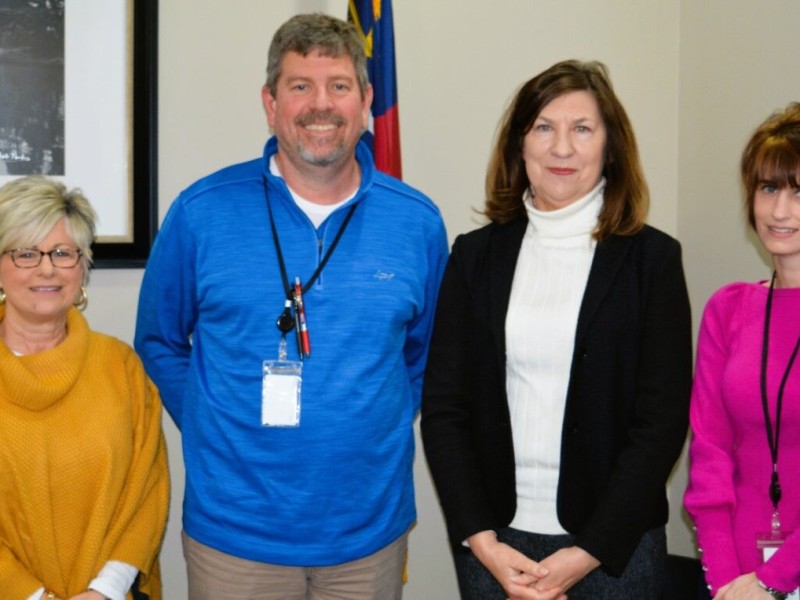
“After you’ve done it a while, and the way the budget process works in Lee County, it’s really not that difficult,” Mathis, an attorney and the chairman of the Lee County Commission, said. “What Heather (Jones, the county’s Finance Director), Christi (Dockery, the county manager) and I do when we start the process is take a look at the previous year’s finances, what I call the ‘real revenue’ and the ‘real expenses.’
“Then we look at the requests of the department heads. We start with their wants and try to whittle that down to the needs.”
The process, obviously, has worked. Figures provided by Jones show that the county, whose Fiscal Year 2023 budget is approximately $30 million, has, since 2016, added $12 million to its fund balance. Going all the way back to the year 2000, Lee County’s fund balance (or “rainy-day fund”) has grown from $4,492,005 to $19,886,022.
“Obviously, we’ve come a long way,” Jones, who has been with the county for 16 years, said. “And it’s helped a lot that we collect about $4.5 million a year in SPLOST funds and another $4 million from the T-SPLOST our citizens approved. Plus, add to that the grants that we’ve received; that’s helped.
“But the truth is, the more we grow, the more we need. As our population goes up, the needs go up and the requests (from department heads) go up. We just have to make sure that, as the needs and the revenues go up, we keep our budget in line to meet those needs.”
A lot of those necessities, though, are not the kind that citizens typically pay a lot of attention to.
“Look at the sewer/water treatment plant; that really changed things in Lee County,” Dockery, who is in her 23rd year with the county, said. “Look at the broadband program we’re bringing into the county. Look at the improvements we’ve made on our roads.
“Those infrastructure improvements don’t always draw a lot of attention, but keeping within our budget and making these very important changes are among the reasons you’re seeing such significant growth in the county now. A lot of these things that are coming together right now are things we started talking about 10 years ago.”
Mathis notes with a trace of pride in his pronouncement that the county has steadily reduced its millage rate in recent years, cutting it a whopping 12% in 2021. It now sits at 12.43 mills.
“The millage rate is the amount our citizens pay in taxes on their real property,” the commission chairman said. “While some of our neighboring counties have been raising their millage rate — one of them recently by 23% — we’ve been able to reduce ours.”
How, Mathis is asked, does the county manage to do that?
“There are lots of reasons,” he said. “But I’ll give you a prime example: Our county manager dos not drive a county vehicle. And she doesn’t have a county cellphone, county credit cards or any of the other perks that a lot of cities and counties give their employees. We kind of look at things like, ‘I’m going to drive in to work anyway, why do I need a county vehicle to get to work?’
“We operate the county like it’s a business. Because it is; it’s the people’s business.”
And, for Lee County right now, business is good.
“Sure, we have challenges; everybody does,” Jones said. “The more we grow, the more we have to do to make sure things work out. The more growth we have, the more revenue we bring in. Trust me, growth is a good thing.”
Author

Related Articles

PHOTOS: Albany State’s Got Talent
Click the arrow to scroll through the photos.
The Arc’s ‘beep ball’ tournament opens eyes to a new way of playing baseball
Beep ball is baseball for the blind.
PHOTOS: Albany’s Special Olympics send off
Click the arrow to scroll through the ephotos.
