
Lyle Lovett: I can’t imagine life without music
Special Illustration
By Carlton Fletcher
[email protected]
ALBANY — Lyle Lovett, in his music and in his conversation, has a way of stripping things down to their essence.
So it was no surprise that Lovett offered perhaps the driving force behind a career that has seen him emerge from Texas A&M University as one of the most gifted and eclectic singer/songwriters/artists of his time with just a single line. Talking about a career that has now stretched over some 35 years — since he released his eponymous first album in 1986 — Lovett said, simply, “There are all these other things, but I can’t imagine life without music.”
Lovett talked with The Albany Herald in advance of his Thursday show at the Albany Municipal Auditorium.
It’s been a decade since Lovett released his last proper album. But, the Grammy-winning singer/songwriter told The Albany Herald in a conversation, that’s all about to change.
“I was doing a show with the Royal Philharmonic Orchestra, and while we were on the road, I couldn’t resist going through Nashville to listen to the mix of my new album,” the singer said. “I’d just turned it in at the end of January, so I was able to listen to the final mix over a couple of days and make a few changes. I’m very pleased with the way it turned out.”
That album, as yet untitled, will be released in May on Verve Records.
While Lovett has not released an album in the last 10 years, he’s by no means turned his back on his music. In fact, when many artists shut down during the early stages of the COVID-19 pandemic, Lovett streamed impromptu mini-concerts he hosted with such musical friends as Robert Earl Keen, Dwight Yoakam, Chris Isaak, Shawn Colvin, Vince Gill, Jason Isbell, Elvis Costello and Michael McDonald.
Lovett talked with The Herald about his early days at Texas A&M with Keen and a career that has taken him to the top of his craft and even segued into a side-hustle of an acting career that has garnered him significant acclaim as well.
ALBANY HERALD: You’re finally back on the road again after COVID shut everything down. How is it going for you?
LYLE LOVETT: We hadn’t played a show since March 7, 2020 — two years ago yesterday — so getting back out on the road was an interesting adjustment. I did a corporate show in September and another private show in November, and I can tell you after almost two years of being off the road, it was such an odd feeling at first breaking protocol. Even now — we’ve been out since February; this is the second week of the tour — there’s a combination of feeling unusual being in front of and around people again, but it’s also felt perfectly normal. As we’ve gone along with the tour, people seem more glad to be getting out, and things seem more normal.
AH: I’ve talked with other artists who said they really didn’t do much during the pandemic. How did you keep your music fresh in that time?
LL: I decided to hold these live-streamed concerts once a month or every three weeks or so. I’d go one-on-one with other singer/songwriters. We’d each play five songs or so and have conversations with fans who were streaming. I did about 20 of these with artists I know well, and some I didn’t know so well, and that kept me focused and active. I also worked on the new album. We’d recorded tracks in 2019 and planned to get together in March of 2020 to finish it up, but of course, everything got delayed. But I spent time working on those tracks.
AH: What was that process like; you probably weren’t able to work on the recordings as you usually do?
LL: Thank goodness for technology. It definitely was a different, unusual process. I’ve never made a record where I was not in the studio, so the process was kind of disjointed. I’d do a mix and send it to the engineer, and we’d end up sending emails back and forth. Sometimes you had a process that normally would have taken a few minutes in the studio that turned into a week working that way.
AH: I had the opportunity to talk with Robert Earl Keen — one of your buddies — a while back, and he talked about you guys writing songs together. What were those days like?
LL: Robert and I met at Texas A&M, a school known more for its engineering, ag and business programs. We were both liberal arts majors: Robert in English, me in journalism. We found during that time a great opportunity to pursue ideas, to write as much as we wanted. We’d have conversations about music that would start in the afternoon and go on late into the night. I started playing shows in ‘76 when I was 18, doing gigs twice a week and sometimes as many as four a week. I was also booking shows for a coffeehouse, and I’d try to book Robert and his bluegrass band. He said, “I don’t want to play out anywhere; (my band) doesn’t even have a name.” We’d sit out on the front porch and talk about music — that’s where “The Front Porch Song” came from — and I told him I was going to book them as the Front Porch Boys. Robert and I were good friends, and we had a lot of conversations about music. I look back fondly at those times; Robert Keen and I shared a very special time.
AH: One of my favorite albums is the “Lyle Lovett and His Large Band” album. My dad and I — he was a country fan, I was more into rock — loved that album, and it’s always been special to me because we shared it. I think what’s so cool about it, and your music over your career, is that it’s all over the place … in a good way, with all kinds of music. You were touted as a “country artist,” but that’s not really accurate.
LL: People who don’t listen to country music think of me as a country artist. People who do listen to country don’t think of me as a country artist. But the music I listened to growing up was all over the map. So what I’ve always done is try to suit the arrangement to the song I made up. My first three albums (“Lyle Lovett,” “Pontiac” and “Large Band”) were recorded with MCA Nashville, and of course the emphasis there is on country music. Starting with the fourth album (“Joshua Judges Ruth”), they moved the management to MCA Los Angeles because they thought it was a better fit. I feel that all of my music has been a natural progression. I’m grateful for the way things have played out. Where I’m from, making stories up is not considered a real job. I’m thankful for the opportunity to do this for a living.
AH: “Nobody Knows Me Like My Baby” is one of my favorite songs ever. Do you have a favorite song you’ve written?
LL: I really don’t have a favorite. I’m grateful to have made up songs that people respond to. The nicest compliment anybody can pay me is when they tell me they remember what they were doing the first time they heard a song. That it means something to their life, that is a great compliment.
AH: The music business has changed dramatically. Is it better now for an artist like you, or do you miss the old days?
LL: I don’t know if it’s better or worse, but in many ways now, you’re on your own. No one — unless you’re one of the huge artists — can plan on making money selling records anymore. You make your money playing live. I like the fact that you can be more independent as a whole, that you’re not affected by trends. I try to uphold and be faithful to my career in the shows I play. It’s about trying to focus on maintaining the standard of quality I’ve always strived for.
AH: You’ve always taken your music in new directions. What’s the new album like?
LL: Since it’s been 10 years since our last release (“Release Me” in 2012), I thought it was important to represent all aspects from my career. The new record has horn arrangements like from the “Large Band” record and acoustic songs like I’ve always done. I don’t see the album as a re-invention of the music from my career; it’s more of a re-introduction to my music.
AH: You’re a musician. But out of the blue you started appearing in movies and on TV shows. When I see you — like Dwight Yoakam — no matter what part you may be playing, I think of your music. How did that whole thing come about?
LL: It was not intentional. Robert Altman came to one of my shows, and he came up to me afterward and asked me to be in his movie “The Player.” Occasionally since then, people have asked me to do a part. I love acting; it’s great fun, but I don’t pursue it the way an actor does. I devote my time and energy to music, but I do enjoy pretending.
AH: I thank you so much for your time and enjoyed the conversation. I have one more question: What can the folks in Albany expect Thursday night?
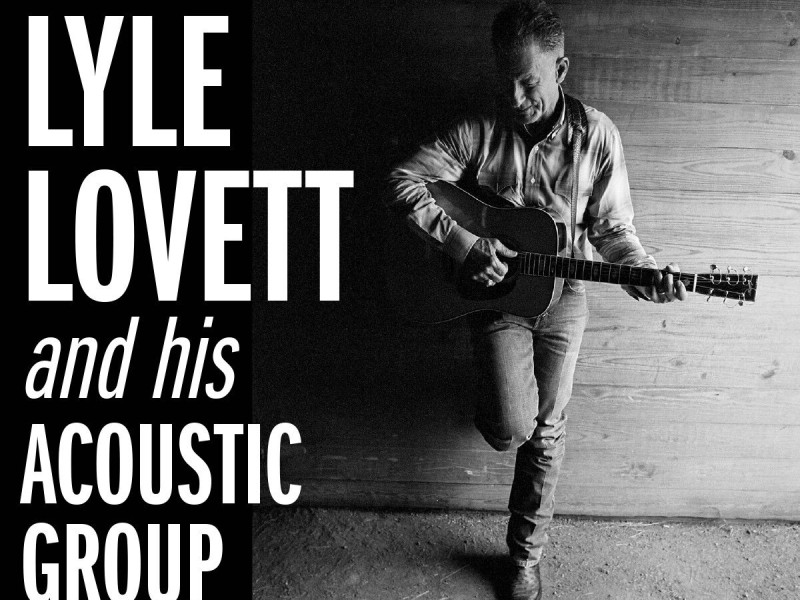
LL: I’ll have my acoustic band with me (multi-instrumentalist Jeff White, violinist Luke Bulla, dobroist Josh Swift and bassist Viktor Krauss), and we’ll be doing songs from throughout my career. We do a different show every night, and if there’s a song someone wants to hear, we’ll try to play it. It’s going to be a couple of hours of music from throughout my career.
Author

Related Articles
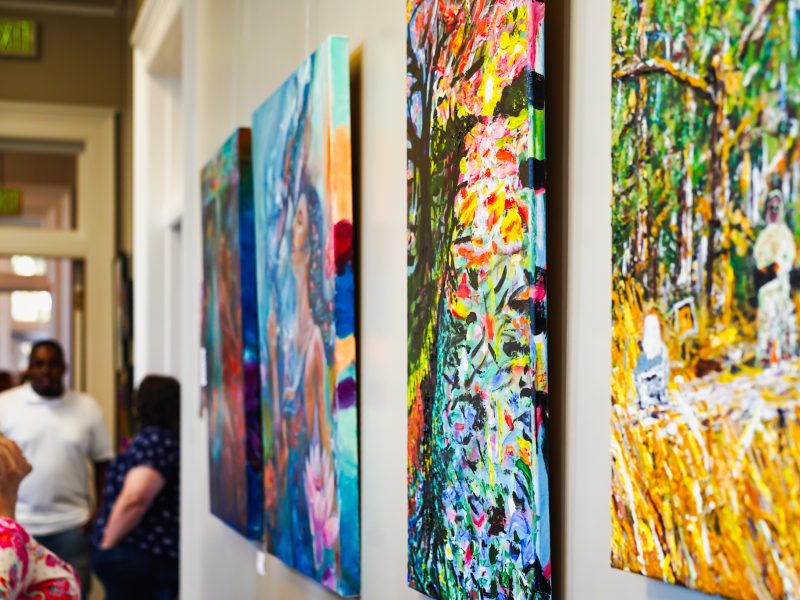
Southwest Georgia artists recognized at packed opening of exhibition
The annual juried exhibition, one of the region’s largest showcases of visual art, features approximately 46 artists and nearly 90 works spanning painting, sculpture, ceramics, photography and mixed media.
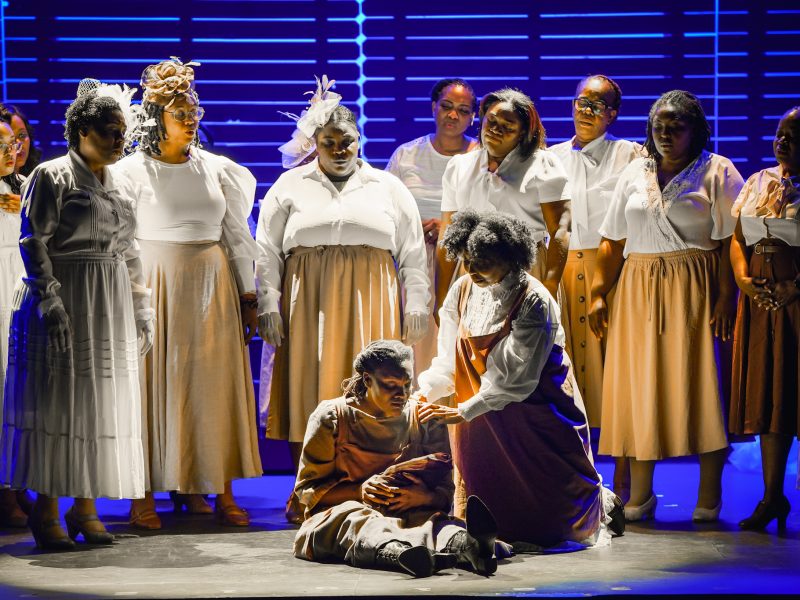
Powerful performances drive Theatre Albany’s ‘The Color Purple’
From the street, strands of purple ribbon wind around the white columns of the historic theater, hinting at the story waiting beyond its doors. Inside the foyer, a carefully curated slideshow flickers across a large screen, cycling through the faces of the cast. Some are seasoned performers. Others are stepping onto a stage for the very first time. Teachers stand alongside former students. Parents perform beside their children. People who worship in different churches, work different jobs and come from different corners of Southwest Georgia gather beneath the same lights to tell the same story.

Annual exhibition showcases southwest Georgia talent, community connections
Now in its 26th year, the exhibition features work by artists from across Southwest Georgia and offers residents an opportunity to engage directly with the area’s creative community.
