
An oasis in a Georgia food desert
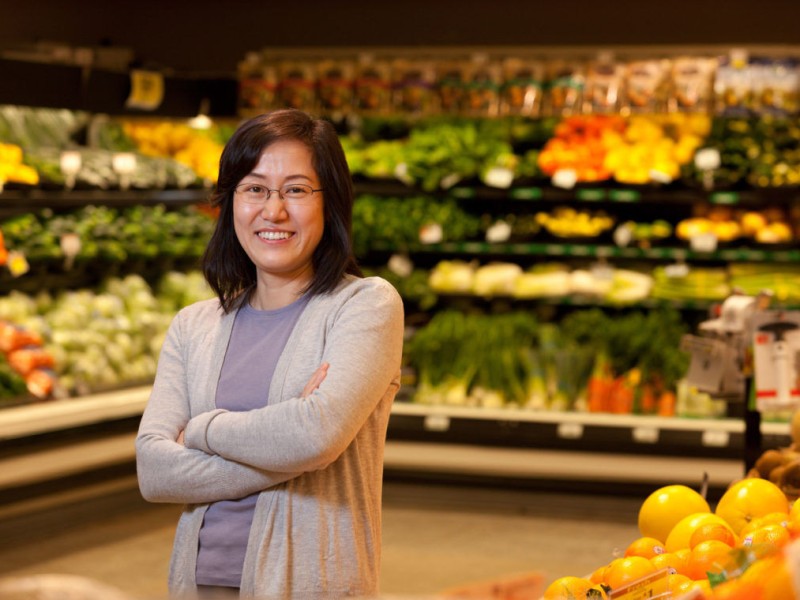
File Photo By Andrew Davis Tucker
By Candace Dantes
UGA/CAES
ATHENS — J.B. Brantley strapped the cotton down by wagon. He hauled his cash money crop by mule.
One hundred bales of it — the difference between food on the table or not during the 1950s. Fall’s daybreak run from 781 J.W. Warren Road in Dublin to the local gin fed his 10-member farming family for months.
“Oh, we ate good off that bale,” the late Lassie B. Thomas, Brantley’s fourth-oldest daughter, said. Thomas was age 83 at the time of this 2021 interview for U.S. Department of Agriculture grant-funded Black Farmers’ Network. “It paid the bills,” she said. Cattle, cotton fields, a peach orchard, and sections of corn stalks and velvet beans kept the Brantleys a self-sufficient lot.
Momma tended the chicken coop and mastered fishing on their man-made pond. The family knew exactly how to survive farm life and a segregated South on 600 acres. Brantley rented. Never sharecropped. He was a genius entrepreneur who created cotton-picking jobs for both black and white residents of Laurens County throughout the Golden Age of Capitalism into the Civil Rights Movement. He moved “fast,” as Thomas described her father’s work habits.
“Daddy was a smart man,” Thomas said. He owned vehicles and property before most black people in his community. White folk in the area didn’t like it either, Thomas stressed. In Brantley’s will, he deeded the property equally to his eight kids. And if the five surviving kids ever want to sell their portions, they can only do so with another family member.
Brantley’s great-grandson and Lassie’s grandson, Edwin Thomas Jr., tucks these stories, lessons and farming practices into his back pocket, reminders of the benefits to sustaining black land. The now 35-year-old urban farmer applies family principles of generational knowledge and wealth through his new agribusiness CJ’s Produce, a medley of backyard and community gardens he designed and started in downtown Savannah with his 6-year-old son, C.J.
CJ’s Produce planted in 2017, first sowing and reaping veggies in backyard raised beds at Edwin’s Garden City home.
Warden over the weeds and watering, preschooler C.J. helps Dad with upkeep.
“See my tomatoes?” the busy little one asked while pointing and skipping around the garden beds. “They’re ready.” C.J. doesn’t like for anyone to pick anything in his garden. He will let you know. He likes to do the job unassisted.
Ten minutes away at 2301 Harden St., a family friend offered a 60-by-90-foot plot to Edwin after learning about his green fingers. Edwin accepted for two reasons: to stick to his family ag roots and introduce C.J. to new types of urban farming. An area punctured by 20th-century ramshackle houses, scattered litter and random graffiti is what the solid-framed farmer signed up for. One of the city’s roughest inner-city streets and food deserts of The Cuyler-Brownville Historic District — a formerly affluent African-American community now overrun by blight.
“It’s not where you expect to see a garden,” said Thomas, who managed the plot throughout 2021. Yet the district was once known for housing the best black educators, physicians and civil rights leaders, those who organized and elevated the next generation of African-American students and influencers. The merging of two land developments, Cuyler-Brownville formed when freed slaves of the Black Belt region’s barrier islands and nearby farms relocated after the Civil War.
CJ’s Produce does its part to rebuild community, conversations about food security, and connections to black residents’ prosperous past, renaming the neighborhood plot and teaching tool George Washington Carver Community Garden since the space models the innovator’s crop-rotation method.
The garden produced collard greens, green bell peppers, squash and okra for community members to pick and eat. Live weekend demos at the garden introduced them to the process of growing healthy food straight from the land. Patience and daily care are all that are required.
“It’s about better eating options,” Thomas said, “and the importance of agriculture as a profession.” Full-time, the tactical farmer works in the aviation industry. But he pours much of his money — and energy — into coordinating activities at the community garden. Ag owner to organizer, Thomas suddenly found himself in the middle of many moving parts. He needed additional help in the operation’s fourth year.
They looked out for each other throughout undergraduate school at Fort Valley State University. Thomas and now-wife Leslie Thomas crossed courses at the land-grant institution. But after the four years were up, Thomas went his way. She another. Years passed. Then, the pandemic happened.
“I was pushing my natural fruit popsicles, C-Pops, on social media,” Thomas said. “She reached out and purchased a bundle.” Catching up followed. Thomas realized Leslie was the help he needed to manage CJ’s Produce, specifically outreach and programming to address neighborhood food insecurities. A product of farmers and gardeners from Burke and Ware counties, Leslie Thomas launched her career after college as a 4-H program coordinator.
Her post at FVSU Cooperative Extension focused on healthy living initiatives. Teaching students the value of agriculture in technology, black traditions and, ironically, in urban settings.
“I always remind my students: The youngest farmer is 65 years old,” the 34-year-old ag educator said. “Who is going to continue to feed us?”
In summer 2021, Leslie Thomas helped her husband secure a partnership with nonprofit Forsyth Farmers Market. Located in the county’s historic Forsyth Park, the market earned a grant from Gulfstream Aerospace Corp. in 2013 to retrofit a truck, which they repurposed as a mobile market.
CJ’s Produce is now found on Farm Truck 912. Weekdays, the delivery service sells Thomas’ and other vendors’ fresh fruits and veggies in grocery gaps like Cuyler-Brownville. In addition to traditional forms of payments, the mobile market accepts and doubles SNAP/EBT benefits.
Food deserts are environments that lack sufficient fresh and healthy foods, commonly in poverty-stricken areas. In America, millions of citizens live in food deserts, at least more than a mile away from a grocery store and without a car. Those who live in places with the lowest nutritious provisions are less likely to maintain quality diets, often developing chronic diseases healthier eating could have prevented.
In 2021, 13.5 million or 10.2% of U.S. households lived food insecure at some point, relatively unchanged from 10.5% in 2020. That USDA data means that millions of Americans were unsure about the source of their next meal, on the fence about whether they could secure enough meals to meet their lifestyle needs.
Black American communities are affected more than other ethnic groups. USDA data from 2021 show that 19.8% of black households faced food insecurity that year compared to 16.2% of Hispanic households. The majority-black neighborhoods of Chatham County are closer to a fast-food joint than a supermarket, which is why CJ’s Produce joins neighborhood associations, nonprofit organizations, mobile markets and government initiatives across the nation to improve nutrition in food swamps.
Author

Related Articles

‘Sounds Like a Mutiny.’ Secret Recording Exposes Claims of Toxic Leadership After a Marine’s Suicide
This week’s War Horse story follows the systemic failures before and after the death of Cpl. Drew Mobley who was the third in two years at Marine Corps Base Quantico to die by suicide.
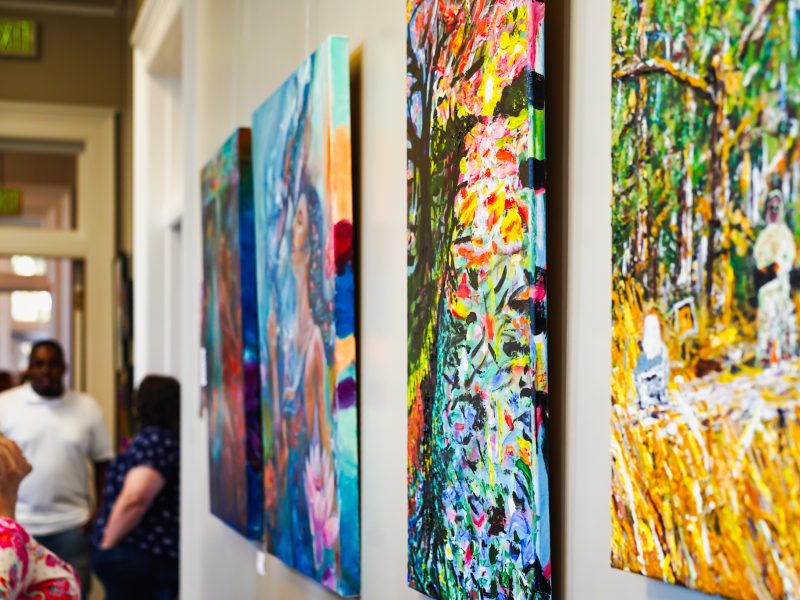
Southwest Georgia artists recognized at packed opening of exhibition
The annual juried exhibition, one of the region’s largest showcases of visual art, features approximately 46 artists and nearly 90 works spanning painting, sculpture, ceramics, photography and mixed media.
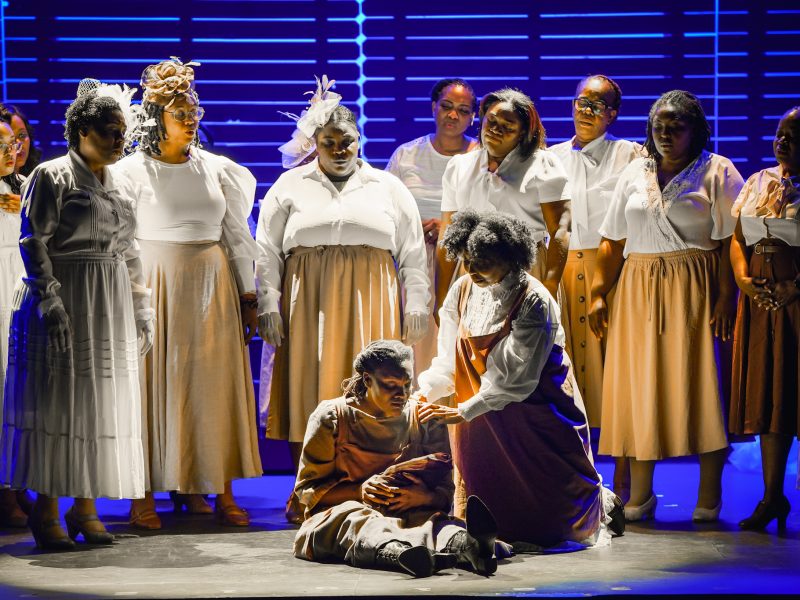
Powerful performances drive Theatre Albany’s ‘The Color Purple’
From the street, strands of purple ribbon wind around the white columns of the historic theater, hinting at the story waiting beyond its doors. Inside the foyer, a carefully curated slideshow flickers across a large screen, cycling through the faces of the cast. Some are seasoned performers. Others are stepping onto a stage for the very first time. Teachers stand alongside former students. Parents perform beside their children. People who worship in different churches, work different jobs and come from different corners of Southwest Georgia gather beneath the same lights to tell the same story.
