
BARRY LEVINE: One-hit wonders who reach the top rare
Patty Page’s brother among those achieving the feat
By Barry Levine
none
Thanksgiving is one of my favorite holidays as family and friends gather to devour a bird or ham, cranberry sauce, stuffing, sweet potatoes, pumpkin pie and all of this topped with a massive burp. Combine this meal with football and what more could anyone want?
The term one-hit wonder — only one chart hit — is a well-known expression among rock fans.
This “feat” is even more difficult to accomplish — a No. 1 hit wonder. This is for those performers whose only chart hit rose to the top and never had another.
Here are five of the early No. 1 one-hit wonders whose careers were for the birds.
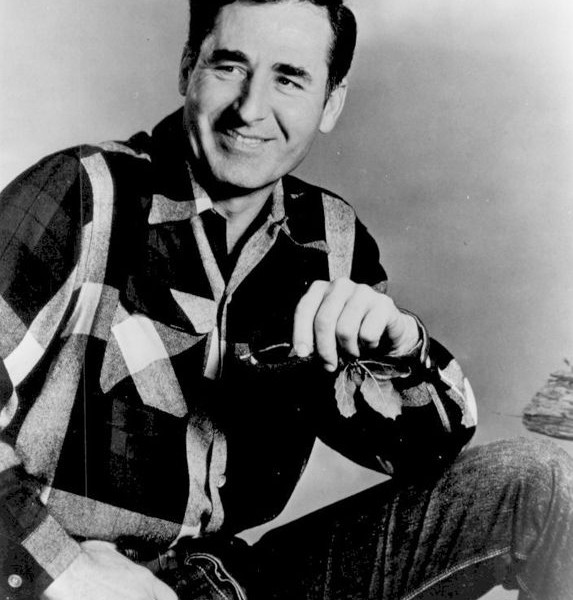
The first No. 1-hit wonder in the modern rock era was Sheb Wooley’s “Purple People Eater” which hit No. 1 on June 9, 1958, and remained there for six weeks before being unseated by Elvis Presley’s “Hard Headed Woman.”
He got the idea for his hit song when a friend mentioned that his young son came home from elementary school with a joke he had heard. “What has one eye, one horn, flies and eats people? A one-eyed, one-horned flying people eater,” the youngster said.
Wooley, who starred in the 1952 Oscar-winning movie “High Noon,” later played a key role as Pete Nolan, scout, in the highly popular TV series “Rawhide,” which aired from 1959 to 1965.
Italian native Domenico Modugno followed Wooley with his worldwide hit “Volare” in 1958. His version of “Volare” reached No. 1 on Aug. 18, 1958, and stayed there for six weeks before being toppled by the Elegants’ “Little Star.”
The record sold more than 22 million copies worldwide and captured two Grammys.
It is the only song to originate from Italy to become No. 1 in the U.S.
Bobby Rydell also had success with the song as his 1960 version reached No. 4.
Not only were The Elegants No. 1 hit winders, they were No. 1 hit wonders for one week, Aug. 25, 1958. “Little Star” was quickly unseated by Tommy Edwards’ “It’s All in the Game.”
The quintet from New York was comprised of Vito Picone, the group’s lead singer, and Carmen Romano who had been with the Crescents in 1956. After the Crescents disbanded one-year later, the duo were joined by friends Artie Venosa, Frankie Fardogno and Jimmy Moschella to form The Elegants.
The group’s name was inspired by a billboard for Schenley Whiskey that read, “Liquor of elegance.”
Picone and Venosa wrote The Elegants’ smash hit, adopting it from Mozart’s “Twinkle, Twinkle, Little Star.”
One of 11 children from a musical family, Mark Dinning climbed to the top on Feb. 8, 1960, with his tragedy song “Teen Angel.” The tune was supplanted at the top two weeks later by Percy Faith’s “Theme from A Summer Place.”
One of his sisters was Patti Page who had a pair of Top 5 hits with “Allegheny Moon” in 1956 and “Old Cape Cod” in 1957. In the pre-modern rock ‘n’ roll era, she had three No. 1 hits – “All My Love” and “Tennessee Waltz” in 1950 and “Doggie in the Window” in 1952.
Three of his other sisters formed the Dinning Sisters and had a Top 10 hit in 1948 with “Buttons and Bows.” The song also won an Oscar.
“Teen Angel” was written by Joan, one of the performing Dinning Sisters.
Of all the No.1 hit wonders, The Hollywood Argyles, who topped the charts for one week with “Alley-Oop” on July 11, 1960, were among the strangest. The song originally was recorded by Gary Paxton who scored with “It was I” and Cherry Pie” in 1959 and 1960, respectively, as half of Skip and Flip.
There only was one problem – The Hollywood Argyles did not exist. When the song’s popularity exploded and the demand skyrocketed for the group to tour, Paxton had to get singers to serve as The Hollywood Argyles.
Georgia’s own Brenda Lee’s “I’m Sorry” replaced “Alley-Oop” as No. 1 on July 18, 1960.
This week in rock history – Albany native Ray Charles appeared in a Boston court on Nov. 22, 1966, and was fined $10,000 and given a five-year suspended sentence after being convicted one-year earlier of drug possession. … The Kingston Trio became the first group to have an album reach the top of the charts on Nov. 24, 1958. Before them, only solo artists had hit No. 1. They had 14 Top 10 albums. … The Everly Brothers began a six-month stint in the Marine Corps Reserves on Nov. 25, 1961. Warner Brothers Records released “Crying in the Rain,” which was recorded before the brothers entered Camp Pendleton. The song reached No, 6 in 1962. …
“Sixteen Tons” by Tennessee Ernie Ford topped the charts on Nov. 26, 1956, to become the fastest selling single in recording industry. … The Association were presented with a Gold record on Nov. 27, 1967, for their hit, “Never My Love”, which had risen to No. 2. …. The Shangri-Las’ teen-tragedy classic, “Leader Of The Pack” topped the Hot 100 chart on Nov. 28, 1964.
Barry Levine is an entertainment writer for The Albany Herald. He can be reached at [email protected].
Related Articles
‘Sounds Like a Mutiny.’ Secret Recording Exposes Claims of Toxic Leadership After a Marine’s Suicide
This week’s War Horse story follows the systemic failures before and after the death of Cpl. Drew Mobley who was the third in two years at Marine Corps Base Quantico to die by suicide.

Southwest Georgia artists recognized at packed opening of exhibition
The annual juried exhibition, one of the region’s largest showcases of visual art, features approximately 46 artists and nearly 90 works spanning painting, sculpture, ceramics, photography and mixed media.
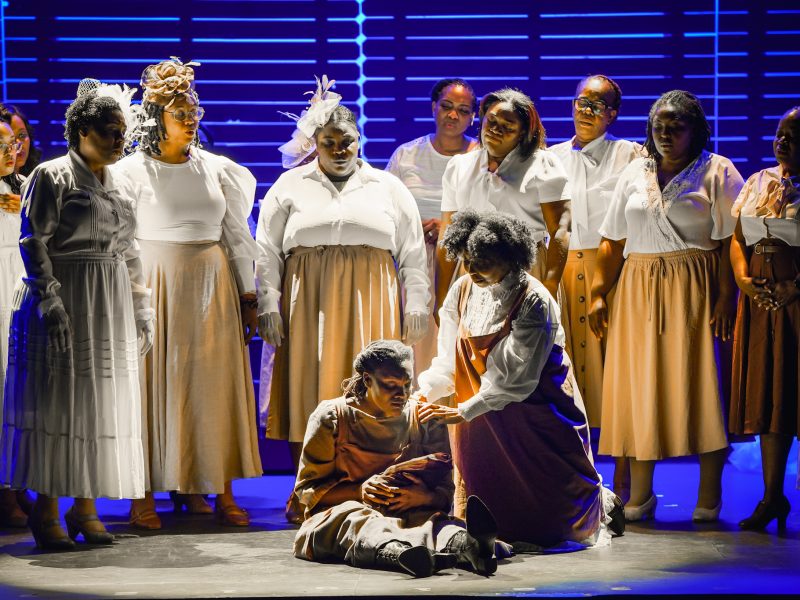
Powerful performances drive Theatre Albany’s ‘The Color Purple’
From the street, strands of purple ribbon wind around the white columns of the historic theater, hinting at the story waiting beyond its doors. Inside the foyer, a carefully curated slideshow flickers across a large screen, cycling through the faces of the cast. Some are seasoned performers. Others are stepping onto a stage for the very first time. Teachers stand alongside former students. Parents perform beside their children. People who worship in different churches, work different jobs and come from different corners of Southwest Georgia gather beneath the same lights to tell the same story.
