
BARRY LEVINE: You can’t control that rock ‘n’ roll
THE OLD ROCKER: Rock music dealt with plenty of censorship efforts

By Barry Levine
Officials from government, radio stations and religious organizations attempted to control the content of rock ‘n’ roll music during the genre’s early stages. They failed miserably.
Songs’ questionable language and themes brought the ire of those officials. This was especially evident from 1954 to 1964.
Here are just a few examples of failed control.
In 1954, Hank Ballard’s “Work With Me, Annie” faced severe opposition from the Federal Communications Commission because of overtly sexual lyrics. The added publicity immediately enhanced the record’s popularity and attempts to restrict it failed as it shot to the top of R&B chart for a seven-week stay. Ballard followed with “answer” songs “Annie Had a Baby” and “Annie’s Aunt Fannie” later in the year. Both were banned by the FCC from radio air play.
Ballard’s fourth major 1954 hit “Sexy Ways” cemented his reputation as one of the most risqué singers of the time.
Today, the FCC wouldn’t even concern itself with such lyrics.
Ballard, however, is most remembered for his 1960 recording of “The Twist,” later covered by Chubby Checker. It became the biggest dance craze of the 20th century.
In 1955, Mobile, Ala., radio station WABB received more than 15,000 letters complaining about the station’s playing of “dirty records.” The station responded with a promise that it would censor all controversial music, especially rhythm and blues.
In 1956, rock ‘n’ roll fans in Cleveland who were under 18 years of age were stunned when they were banned from dancing in public, unless accompanied by an adult, after Ohio Police started enforcing a law that was passed in 1931.
In 1957, Boston radio stations refused to play The Everly Brothers’ “Wake Up Little Susie” because of its supposedly suggestive lyrics, which told the story of two teenagers who fell asleep at a drive-in movie. Despite the Boston stations’ actions, the song rose to No. 1 on the Pop and Country charts. So much for being banned in Boston.
In 1958, Minneapolis-based Catholic youth magazine “Contacts” launched a campaign for “clean lyrics in pop songs.” Among the songs targeted was Elvis Presley’s “Wear My Ring around Your Neck,” because it promoted going steady.
In 1959, the guitar instrumental “Rumble” by Link Wray & The Ray Men was banned by many radio stations, which feared the title would promote teen violence. Despite the boycott, the song sold more than 1 million copies.
Also in 1959, Following the stabbing deaths of two teenagers by a 17 year old and other similar incidents of violence in New York City, WCBS radio in the Big Apple banned Bobby Darin’s smash “Mack the Knife,” which became the year’s biggest hit.
In 1960, “Tell Laura I Love Her” by Ray Peterson was banned by many radio stations who objected to the song’s “death theme.” In spite of spotty air play, the song became a huge hit, reaching No. 7.
In 1961, the Brits got involved with censorship. BBC Radio banned the song “100 Pounds of Clay” by Gene McDaniels because it has a reference to women being created from building materials, which the network considered to be blasphemous. The song, however, became a smash, climbing to No. 3 on the chart. It also was his biggest hit.
In 1962, The Weavers, one of the most popular and successful of the 1950s folk groups, were removed from their scheduled performance on NBC-TV’s “Jack Paar Show” after refusing to sign an oath that said they have never been members of the Communist Party.
Also in 1962, Catholic school students in New York were forbidden to dance to Chubby Checker’s “The Twist” by Bishop Burke, who considered it and other dance-craze songs to be “un-Christian.” Despite the ban, “The Twist” became the only record in rock ‘n’ roll history to be No. 1 on two separate occasions, accomplishing the feat in 1960 and 1962.
In 1964, “Louie, Louie” by The Kingsmen was embroiled in controversy and was banned from sales and airplay in Indiana because of its indecipherable lyrics, which were rumored to contain off-color words. The Kingsmen have always maintained they sang nothing lewd. Indiana’s ban had little effect on the song, as it skyrocketed to No. 2 on the charts.
Paraphrasing Bob Dylan, “The Times They were A-Changing.” By today’s standards, those songs that faced opposition were as bland as vanilla ice cream.
This week in rock history
The Beach Boys’ “Good Vibrations” made its debut on the singles chart on Oct. 22, 1966. Beach Boys’ Brian Wilson and Mike Love wrote the tune. The record reached No. 1 and was nominated for Song of the Year at The Grammys.
Dion DiMucci continued his streak of hits after leaving The Belmonts when “Runaround Sue” rose to No. 1 on Oct. 23, 1961.
Georgia’s Brenda Lee reached the top spot on the Hot 100 for the second time with “I Want to Be Wanted” on Oct. 24, 1960. It was her fourth Top 10 hit of the year.
Peter, Paul & Mary had the top two best-selling albums on Oct. 25, 1963, with “In the Wind” and “Peter, Paul and Mary.” Since then, they placed nine more albums on Top 25 list.
On Oct. 26, 1958, Bill Haley & His Comets played the first rock ‘n’ roll concert in West Berlin where riots erupted among the 7,000 fans.
Ben E. King was at Atlantic Records on Oct. 27, 1960, readying his first solo efforts since leaving The Drifters. During the session, King recorded “Spanish Harlem” which reached No. 10, and “Stand by Me,” No. 4.
Buddy Holly appeared on Dick Clark’s “American Bandstand” on Oct. 28, 1958, where he lip-synched “It’s So Easy” and “Heartbeat.” It would be Holly’s last major TV appearance before he was killed in an airplane crash in February 1959.
Barry “The Old Rocker” Levine is an entertainment writer for The Albany Herald. He can be reached at [email protected].
Related Articles
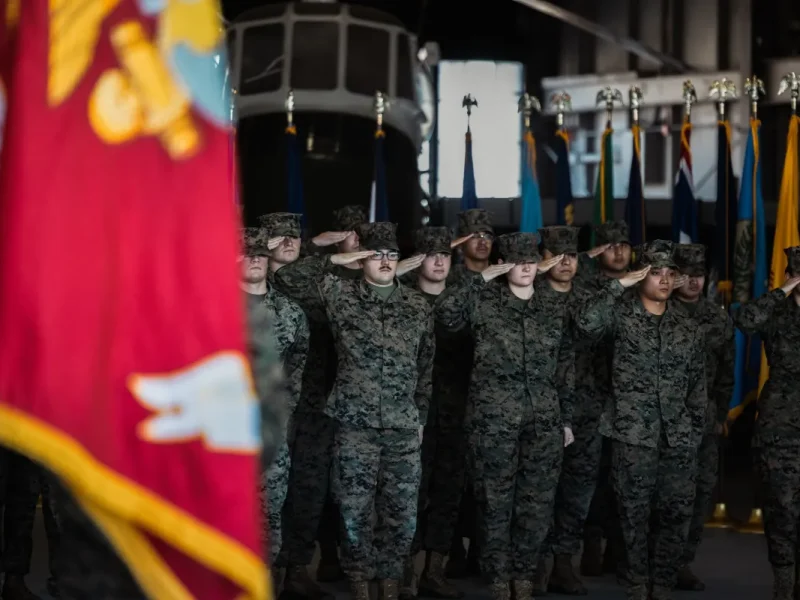
‘Sounds Like a Mutiny.’ Secret Recording Exposes Claims of Toxic Leadership After a Marine’s Suicide
This week’s War Horse story follows the systemic failures before and after the death of Cpl. Drew Mobley who was the third in two years at Marine Corps Base Quantico to die by suicide.

Southwest Georgia artists recognized at packed opening of exhibition
The annual juried exhibition, one of the region’s largest showcases of visual art, features approximately 46 artists and nearly 90 works spanning painting, sculpture, ceramics, photography and mixed media.
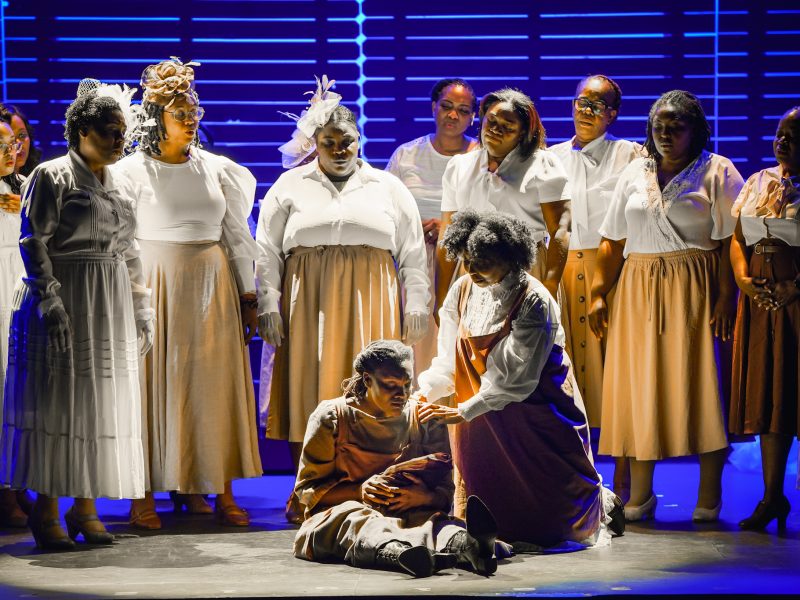
Powerful performances drive Theatre Albany’s ‘The Color Purple’
From the street, strands of purple ribbon wind around the white columns of the historic theater, hinting at the story waiting beyond its doors. Inside the foyer, a carefully curated slideshow flickers across a large screen, cycling through the faces of the cast. Some are seasoned performers. Others are stepping onto a stage for the very first time. Teachers stand alongside former students. Parents perform beside their children. People who worship in different churches, work different jobs and come from different corners of Southwest Georgia gather beneath the same lights to tell the same story.
