
Colquitt to celebrate 25 years of Swamp Gravy
Folk life play set for October opening
By Cindi Cox
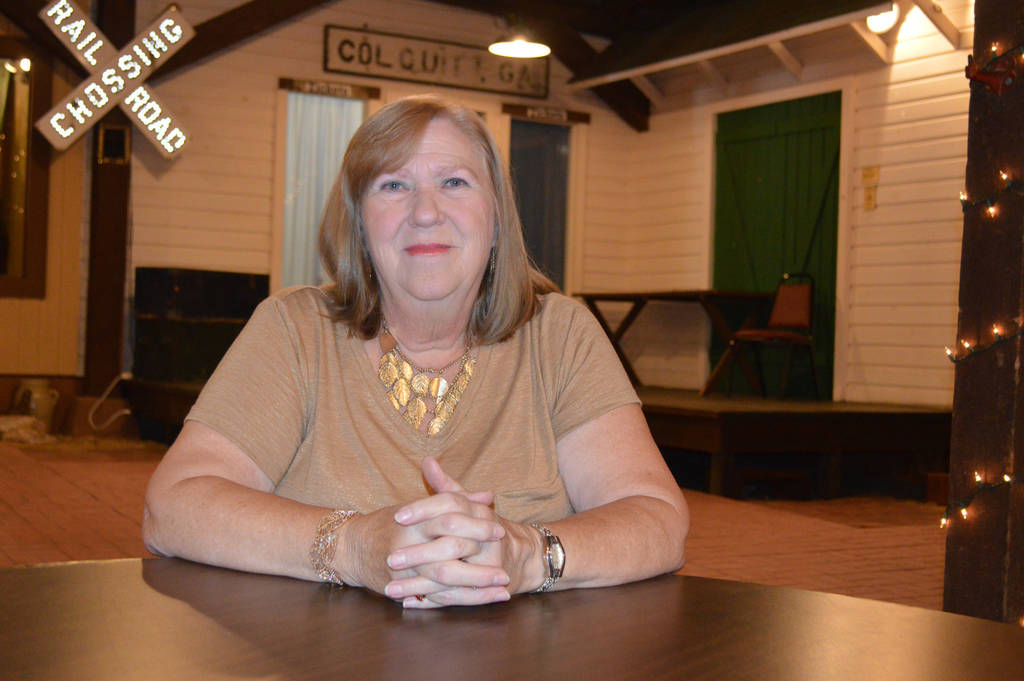
COLQUITT — As this small community prepares to celebrate the 25th anniversary of its original folk life play, original “Swamper” Charlotte Phillips shared her story and talked about what “Swamp Gravy” has meant to her.
To be a Swamper in Colquitt is an honor, because Swamper is the affectionate name given to those who perform or are closely involved with the community’s internationally acclaimed folk life productions.
Given the opportunity, Phillips eagerly shares her memories of “Swamp Gravy’s” humble beginnings.
“We started with a play performed at a local high school because it was the only place with room enough,” she said.”From there, all the way to Kennedy Center and back, our journey has been nothing short of a miracle.”
Phillips was president of the Beta Sigma Phi sorority when she first heard about the production of a play built around the lives of common folks in Colquitt.
“Twenty-five years ago, Richard Gere was our first director and co-founder of Swamp Gravy,” she said. “He went around town and talked to all of the organizations about his idea of doing a theater project of, for and by the people of Colquitt.
“I grew up with storytellers, so I decided to get involved right away.”
She soon became one of Colquitt’s first storygatherers.
“I collected oral histories from people who lived in and around Colquitt,” Phillips said. “Whoever had a story they wanted to share was welcome to tell it. We didn’t even have a name for our little theater, but once we decided on ‘Swamp Gravy,’ it stuck.”
Phillips offers her take on how “Swamp Gravy” got its name.
“We had a lot of fishermen at that time, and when they brought those fish home to cook up they would cut them up and put the pieces into a big pot with all kinds of vegetables and juices,” she says, relishing the story. “They would slow-cook that mixture and stir that pot up until it formed a thick gravy. That’s what we called ‘swamp gravy.’
“We decided our plays would be like that, with bits and pieces of our heritage from stories we collected here and there. Just mix them all together and act them out on stage, and we would call it all ‘Swamp Gravy.’”
That humble beginning resonated at home and everywhere the determined little theater troupe went to perform.
“I think our trip to Kennedy Center was one of the biggest highlights over the past 25 years,” Phillips said. “Children and adults who had never been out of the county — who had never been to the next big city, who had never seen snow — went all the way to Washington, D.C. ,just to tell our stories.”
Over the years, “Swamp Gravy” productions have been performed all across Georgia, in 17 other states and in three countries. Other communities have also replicated Colquitt’s storytelling process and created their own folk life productions.
“’Swamp Gravy’ has always been a combination of hard work, a labor of love, a strong sense of community and an ongoing walk of faith,” Phillips said.
It took organizers two years to gather and compile the stories that went into the first production, which became a one-hour show performed at the 525-seat high school auditorium.
“In one weekend, we were sold out,” Phillips said.
Phillips said the community fell in love with director Gere’s concept of building community through storytelling.
“The local Arts Council had just formed, and they became the umbrella we worked under,” she said. “Back then, there was a lot of discussion about making the play ongoing. That’s when we decided to take the first show on the road around Georgia and to try and do another new show two years later. We did over 30 performances on the road.”
Phillips said the performance team travelled light, taking only costumes and a minimal amount of props. They used hay bales and wooden crates for seating and performed “anywhere they would have us,” she said.
Once the road tour ended, Phillips said the original “Swamp Gravy” team came back to Colquitt and got busy creating a new play.
By 1992, the production team started the search for a permanent home.
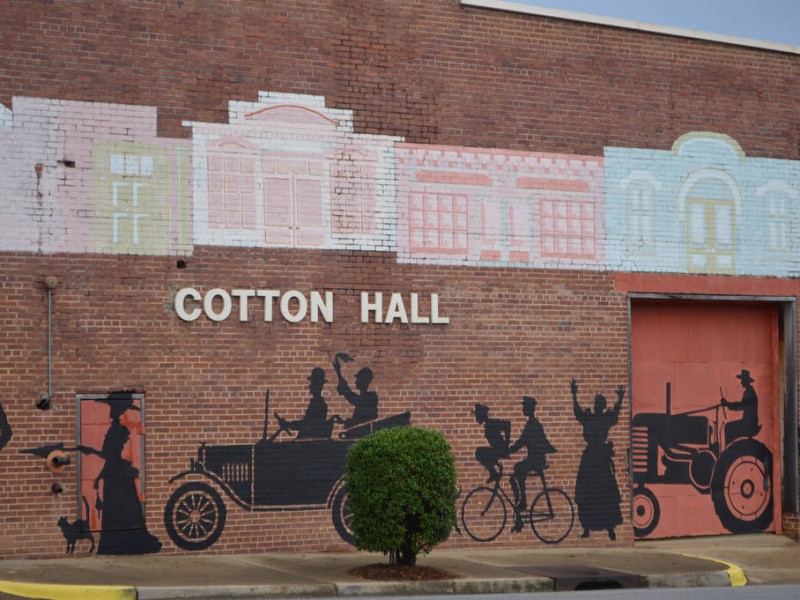
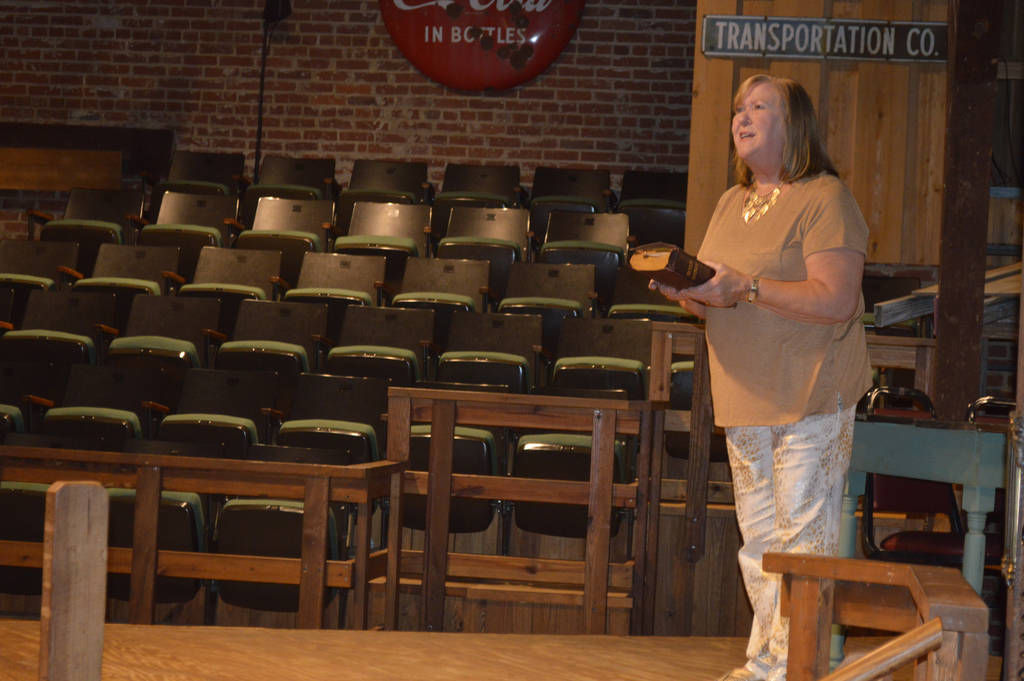
Phillips recalled the early days of Colquitt’s Cotton Hall Theater — a former cotton warehouse where “Swamp Gravy” performances still take place today. Although the Cotton Hall Theater has been renovated into a beautiful southern theater, it has not lost its country look or its historic charm.
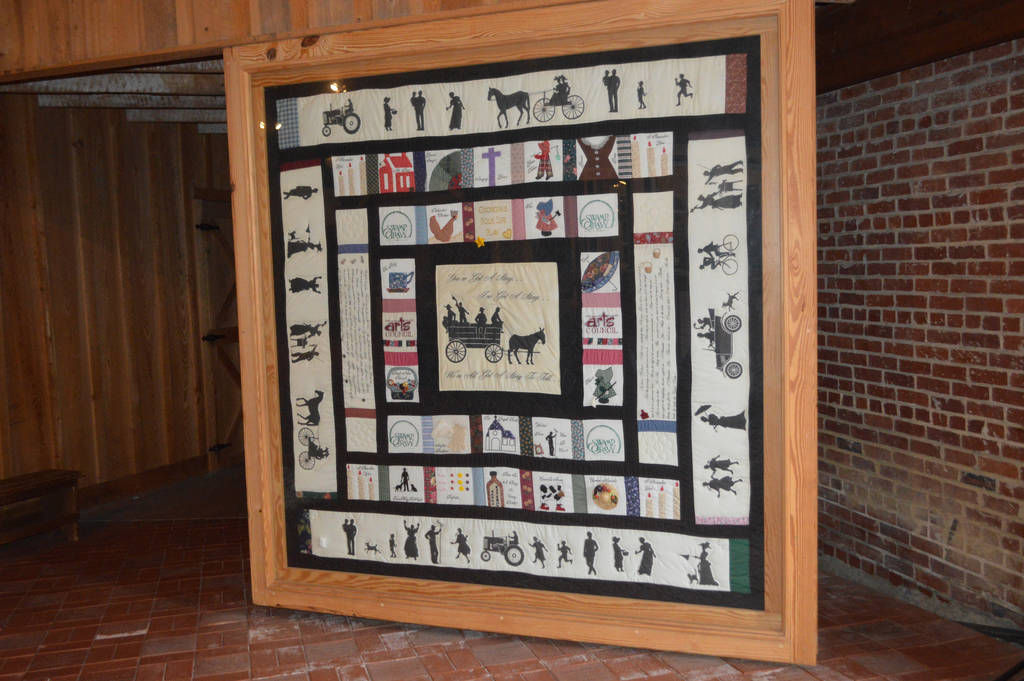
“That first year, we borrowed quilts from all our family, friends and neighbors to hide a lot of the cotton equipment and junk still stored in the warehouse,” Phillips said.
She also recalled how early shows took place on dusty dirt floors.
“We had to put wood chips on the floor just to tone down the dust,” Phillips said. “Before each performance, we had to come in with hoses and sprinkle down the dirt floors to keep the dust from flying.”
Patrons sat on hay bales scattered around the room. Performances took place in the center of the audience, Phillips said.
Eventually, bleachers borrowed from the local high school were used. Lights were also borrowed from a local church.
Today the theater still uses a theater-in-the-round approach with three small platforms serving as stages and with seating around platforms where all the action takes place. Grants and a growing audience have made renovations possible over time.
Although Swamp Gravy has evolved and changed over the years, according to Phillips a few things remain the same. Foremost, she said, is the sense of family and community.
“Not only has the play stayed dedicated to telling real stories gathered from real people, but those who are involved in the play have become family,” she said.
While many of the plays have to do with Southern stories about life and death, family and farming, faith and community, playwrights have never been shy about telling stories about serious issues.
“We once performed a play built around some stories of child abuse,” Phillips said. “I remember after one especially powerful performance more than 40 people came forward and said it had happened to them.”
In a phone interview, playwright Susanne Reynolds spoke of the challenge she faces in telling “Swamp Gravy’s” stories.
“The biggest challenge is I hope I’ve done the story justice in my rendition of it — and making sure the emotional value transcends,” she said. “If the story I retell through my writing can reach at least one person and make them feel something or think about something in a way they never have before, then I consider my part in this a success.”
Kate Willis Cook is the director for “Swamp Gravy’s” 25th anniversary production, and Will Murdock is the co-writer and associate director for the upcoming production. Cook came on board with “Swamp Gravy” as a production manager in 2006 after earning a degree in theater from Auburn University and working in theater in Florida and Virginia.
Murdock got his start as a “Swamp Gravy” cast member at the age of 14 when his mom read an ad for a casting call in the local newspaper. After acting in several productions, Murdock went off to earn a degree in theater from the University of Georgia. Upon graduation, he joined a Disney theatrical group and worked as a production assistant in New York before returning home to his “Swamp Gravy” roots.
Murdock said he wrote his first play at age 17 — a youth production at Colquitt’s Cotton Hall Theater called “Christmastime at the Circus.” Murdock also served as playwright for “Swamp Gravy’s” 20th anniversary show and several other play productions.
Reynolds, co-writer for the upcoming anniversary play, said she also got her start with “Swamp Gravy” at age 14.
“In elementary school, we took field trips to Cotton Hall and participated in storytelling workshops,” she said. “From that point forward, I was always fascinated with Cotton Hall. Even from that early an age, I felt it was ‘calling’ me to join — but it wasn’t until I was 14 that I found the courage to be a cast member.
“From the age of 14 all the way until now, I’ve been involved in some way — whether it was being a cast member, concession stand volunteer, photographer or storygatherer. So that’s a total of about 13 years of ‘Swamp Gravy’ involvement for me.”
As a writer, Reynolds said her biggest challenge is to do the story justice.
“It has definitely been a life-changer, writing for ‘Swamp Gravy,’” she said. “It’ll be one I talk about forever — truly uplifting to be able to put people’s stories on paper and then see them on stage. It’s truly a magical experience being able to sit down with someone who may not think their life is anything special and finding the extraordinary in those things than are ordinary.”
Murdock said “Swamp Gravy” not only unleashed his talent as a writer but also taught him how to listen.
“What ‘Swamp Gravy’ was able to do is bring unity and appreciation from all those involved,” he said. “It doesn’t matter if you are old, young, have political differences, come from different ethnic or religious backgrounds — ‘Swamp Gravy’ is built on common ground. My hope for the future is that we continue making connections.”
Swampers say their folk life play is the heart and soul of Colquitt, as well as a miracle that has resonated with the local community and with visitors who come from all over the world to see stories from common folks brought to life onstage.
“These stories have a profound impact on those who tell them, those who hear them, those who write them and on those who see them performed,” Phillips said.
Few in Colquitt believe “Swamp Gravy” will ever run its course.
“Audiences love these stories,” said Cook. “They want to see us tell our stories until there are no more stories left to tell.”
Rehearsals are underway for the 25th-anniversary edition of Georgia’s official folk life play. “Listen Here!” is about stories overheard from the ladies working at an old-fashioned telephone company and stories from letters delivered by the local mailman.
Tickets are on sale now for “Swamp Gravy: Listen Here!” Cost is $22 for individuals and $20 for groups of 20 or more. Call (229) 758-5450 for group ticket reservations.
Performances begin on Oct. 6 and 7 and run weekends through October and again in March. Show times are 7:30 p.m. on Fridays, and 2 p.m. and 6 p.m. on Saturdays.
Related Articles
My Grandpa Was Killed in World War II. I Met Him Through His Letters Home
Gina Wolf’s grandfather died before she was born. His letters sent to her grandmother from Europe during World War II made it possible to know what kind of man he was.
‘Sounds Like a Mutiny.’ Secret Recording Exposes Claims of Toxic Leadership After a Marine’s Suicide
This week’s War Horse story follows the systemic failures before and after the death of Cpl. Drew Mobley who was the third in two years at Marine Corps Base Quantico to die by suicide.
Southwest Georgia artists recognized at packed opening of exhibition
The annual juried exhibition, one of the region’s largest showcases of visual art, features approximately 46 artists and nearly 90 works spanning painting, sculpture, ceramics, photography and mixed media.
