
Countdown for deer hunters ends: Season opens Saturday
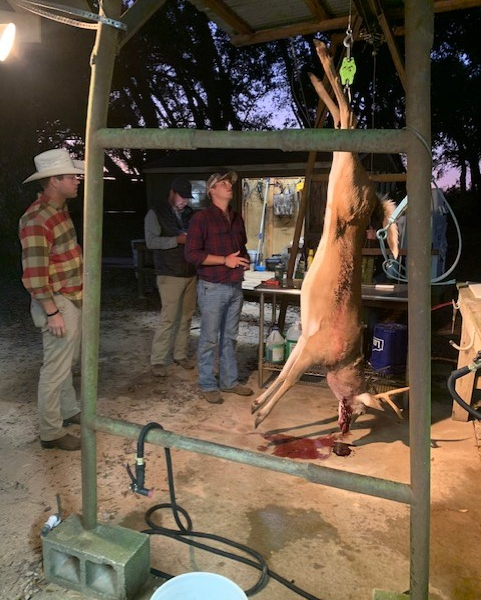
Special Photo
By Tom Seegmueller
tom.seegmueller
@albanyherald.com
ALBANY – A 278-day countdown will come to an end for the majority of hunters in Georgia when the 2021-2022 firearms deer hunting season opens Saturday.
“With some awesome bucks already taken in the archery season, I think we are in for an excellent firearms season,” Charlie Killmaster, state deer biologist for the Wildlife Resources Division of the Georgia Department of Natural Resources, said. “The 2020 deer season had one of our highest ratings for hunter satisfaction on record, and I expect 2021 to be no different.”
The 2020 deer population in Georgia was estimated to be at the million mark. DNR records indicate that about 187,000 hunters harvested more than 190,000 deer during the season. This year hunters may harvest up to 10 antlerless deer, and no more than two antlered deer (with one of the two antlered deer having a minimum of four points 1 inch long or longer on one side of the antlers) or a minimum 15-inch outside antler spread.
The history of Georgia’s deer population is one of the great success stories in Wildlife Management. The abundance of the state’s deer population was first mentioned in the journals of Hernando Desoto in 1539. Prior to the “deer trade” becoming a driving economic force, the harvest was based on personal need.
However, by the early 1800s, during his travels in the region, naturalist and artist John Audubon noted, “For as the deer, caribou and all other game is killed for dollar, which its skin brings in, the Indian must search in vain over the deserted country for that on which he is accustomed to feed till worn out by sorrow, despair and want …”
Actually, the value of whitetail deer in Georgia and the impact of market hunting were first acknowledged by the colonial government in 1790 when it was ruled that, “anyone found hunting deer by light receive 30 lashes on the back, well laid.” Georgia, however, was the only colony not to establish a legal hunting season for deer. Such a season would not be established until 1849.
Much of the effort to re-establish a deer herd in Georgia can be credited to the tireless efforts of Ranger Arthur Woody, who personally began efforts to restock the population in 1927, using his own newly purchased 1926 Dodge to travel to North Carolina and return with five fawns he named, Nimble, Billy, Nancy, Bessie and Bunny Girl.
In 1937, the state’s deer herd was estimated to have declined to less than 2,500 due in a large part to unregulated hunting, timber harvest and changing agricultural practices. The remnants of Georgia’s deer herd were only to be found in isolated pockets scattered across the state. In the southern region of the state, the remnants were found on the protected environment of plantations managed for sport hunting.
In an effort to combat poaching and illegal hunting with hounds, the state began to establish a system of Wildlife Management Areas. These efforts would receive a significant boost through funding provided by the Pittman-Robinson Act, which was implemented in 1938, providing federal aid based on taxes on firearms and ammunition.
By 1972, the Georgia Whitetail population was estimated to be at 253,000. This number would double over the next decade, and by 1992 would be estimated to be more than 1,200,000, reaching a high of 1,352,000 in 1998. Since 2005, the population has stabilized near between 900,000 and a million deer. As the deer herd has grown, so has its economic impact on the state’s economy. Deer hunting now accounts for nearly $1 billion in annual retail sales with an additional estimated $1.6 billion ripple effect and 24,000 jobs, according to DNR data.
Data also show that regulations and educational efforts related to hunter safety are paying off. With more than a half-million hunters pursuing game in Georgia, only a small percentage are involved in accidents afield. In 2020, there were only 25 hunting-related accidents reported in the state, and 11 of those were associated with the use of tree stands.
Four critical items on the firearms safety checklist covered in hunter safety education can be easily remembered by a simple acronym:
1. A — Always treat every firearm as if it were loaded.
2. C — Control the muzzle of the firearm at all times.
3. T — Be certain of the target and what is in front and beyond it.
4. T — Keep your finger outside the trigger guard until you are ready to shoot.
More hunter safety information related to firearm and tree stand safety can be found at https://georgiawildlife.com/hunting/huntereducation or by contacting the Wildlife resources Division Hunter Education office at (706) 557-3355.
All deer hunters must have a valid hunting license, a big game license, and current deer harvest record. Licenses can be purchased online at www.GoOutdoorsGeorgia.com, or by phone at 1-800-366-2661.
All deer harvested by hunters must be reported using Georgia Game Check within 24 hours of harvest. This may be done on the Outdoors GA app (which works regardless of cell service), at GoOutdoorsGeorgia.com, or by calling 1-800-366-2661.
More information related to deer hunting in Georgia can be found in the DNR Hunting Regulation Booklet or online at https://georgiawildlife.com/deer-info. With DNR managing more than 300 Wildlife Management Areas in Georgia, anyone wanting to be a part of the hunt has the opportunity to do so.
Related Articles

‘Sounds Like a Mutiny.’ Secret Recording Exposes Claims of Toxic Leadership After a Marine’s Suicide
This week’s War Horse story follows the systemic failures before and after the death of Cpl. Drew Mobley who was the third in two years at Marine Corps Base Quantico to die by suicide.

Southwest Georgia artists recognized at packed opening of exhibition
The annual juried exhibition, one of the region’s largest showcases of visual art, features approximately 46 artists and nearly 90 works spanning painting, sculpture, ceramics, photography and mixed media.
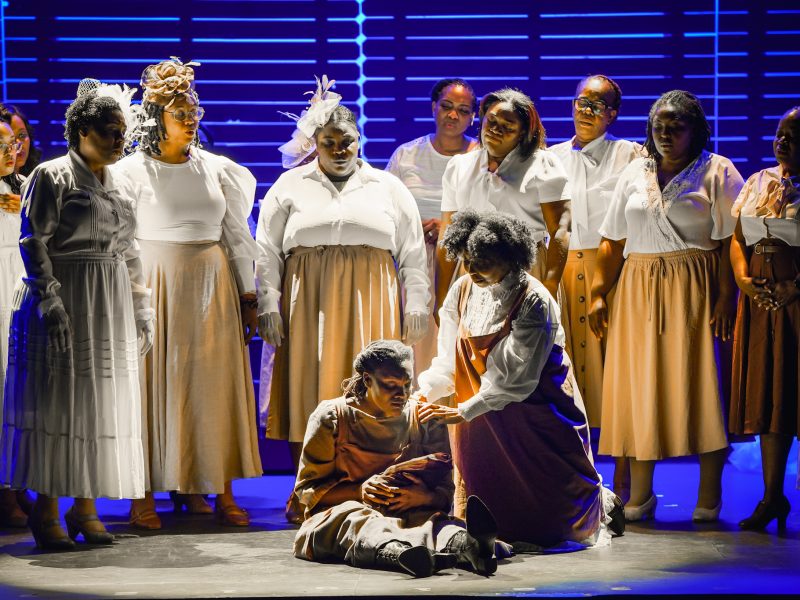
Powerful performances drive Theatre Albany’s ‘The Color Purple’
From the street, strands of purple ribbon wind around the white columns of the historic theater, hinting at the story waiting beyond its doors. Inside the foyer, a carefully curated slideshow flickers across a large screen, cycling through the faces of the cast. Some are seasoned performers. Others are stepping onto a stage for the very first time. Teachers stand alongside former students. Parents perform beside their children. People who worship in different churches, work different jobs and come from different corners of Southwest Georgia gather beneath the same lights to tell the same story.
