
CREEDE HINSHAW: A salute to the ‘Lady in Blue’
By Creede Hinshaw
[email protected]
Maybe I would know about the Lady in Blue had I lived in Texas or New Mexico. Or maybe I would have heard about her if I were raised Roman Catholic, although Catholics venerate so many people I suspect many Catholics reading today’s column have overlooked the Lady in Blue, Sor Maria de Agreda.
It turns out that the Pilgrims weren’t the only Europeans to visit North America in 1620. Four hundred and one years ago, this humble nun from a remote convent in Spain made the first of a series of visits to the indigenous tribes inhabiting what is now Mexico, Texas and New Mexico.
Sister Maria’s story, which I find utterly captivating and compelling, is one I stumbled across in the early pages of Stephen Harrigan’s 850-page, fascinating history of Texas, “Big Wonderful Thing.” Harrigan devotes an entire chapter to this venerated woman who “bilocated.”
I never heard of “bilocating” either, but a little study revealed that Sister Maria is not the only person to claim to have mystically occupied two places at once. Maria de Agreda accurately described the people she visited as well as the geography and topography of the region. One account says she made 500 visits over the course of the three years.
If you are deeply suspicious of this, you are in good company. The Catholic hierarchy, upon hearing her claims, investigated her quite sternly during the Inquisition, forcing this woman, during a severe illness, to answer questions on her knees for three hours per day for 11 successive days, probing every possible angle to her visitations. When they were finished, they were convinced her experience was true.
The most intriguing part of the story involves a party of conquistadors and missionaries who made their way into the remote upper reaches of Texas in 1629, six years after Sor Maria’s last visitation. These startled explorers were hailed by a delegation of Jumano people who pleaded with the Spanish to follow them another 300 miles into the unknown wilderness because a woman in blue had promised them missionaries would come to them.
These Spaniards had no knowledge of the Spanish nun, whose blue garb was the uniform of that convent, but the indigenous people were clearly describing an Anglo person. It was only years later, when these returning Spaniards reported to the authorities, that the connection was made between the Jumano people and Sor Maria.
The story of 16th- and 17th-century Spanish colonizing and mission work is often brutal. Most of us know those stories. That’s why we need stories like this, too. The witness of Sor Maria is hard to dismiss. I don’t even want to dismiss it.
Virginia Garrard at the University of Texas at Austin, notes that Sister Maria has made a comeback in Texas these days, gaining “a more Protestant hue” there, while retaining her true Catholic roots in the adjacent Land of Enchantment, where she is recalled as an “icon of New Mexico heritage.”
In this season of Epiphany, I salute the Lady in Blue, the mysteries of God’s love and the impulse that impels us to share the gospel.
Related Articles

‘Sounds Like a Mutiny.’ Secret Recording Exposes Claims of Toxic Leadership After a Marine’s Suicide
This week’s War Horse story follows the systemic failures before and after the death of Cpl. Drew Mobley who was the third in two years at Marine Corps Base Quantico to die by suicide.
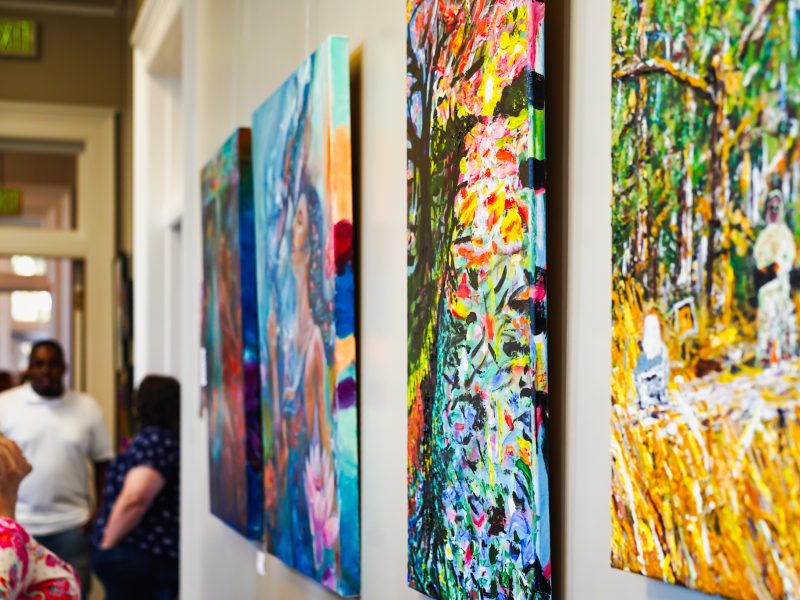
Southwest Georgia artists recognized at packed opening of exhibition
The annual juried exhibition, one of the region’s largest showcases of visual art, features approximately 46 artists and nearly 90 works spanning painting, sculpture, ceramics, photography and mixed media.
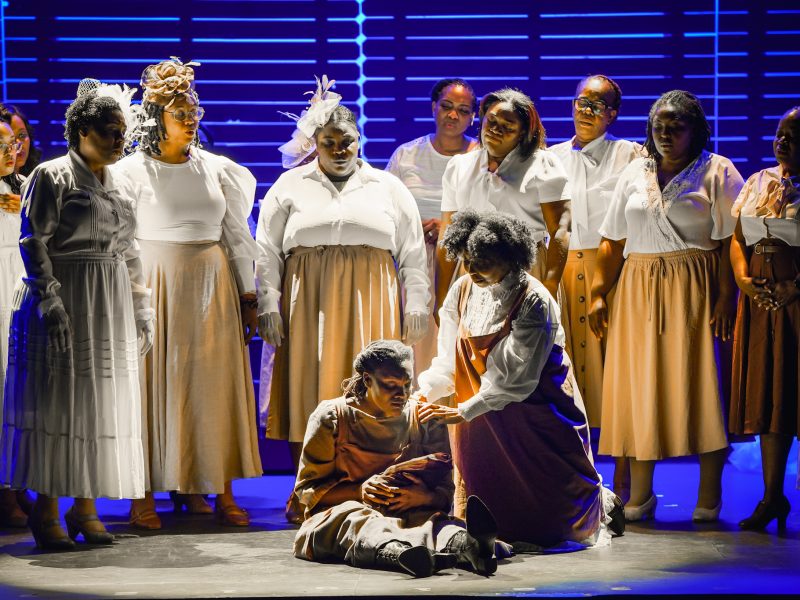
Powerful performances drive Theatre Albany’s ‘The Color Purple’
From the street, strands of purple ribbon wind around the white columns of the historic theater, hinting at the story waiting beyond its doors. Inside the foyer, a carefully curated slideshow flickers across a large screen, cycling through the faces of the cast. Some are seasoned performers. Others are stepping onto a stage for the very first time. Teachers stand alongside former students. Parents perform beside their children. People who worship in different churches, work different jobs and come from different corners of Southwest Georgia gather beneath the same lights to tell the same story.
