
CREEDE HINSHAW: When did churches’ definition of ‘sin’ change?

Creede Hinshaw
By Creede Hinshaw
[email protected]
Is sin always sin? Has church teaching about sin changed over the decades or centuries?
Times change. Issues evolve. Behavior and attitudes once forbidden in the church are often accepted today. What does it mean that religious institutions change their teaching and expectations on what are defined as forbidden behaviors and habits?
I remember the year – quite a few decades ago – that legalizing the Georgia Lottery was dependent upon a statewide vote. In that era, we United Methodists called a truce over our unending baptismal squabbles with our Southern Baptist friends and teamed up to oppose the lottery. We preached, taught, advertised, and soundly lost that vote.
Fast forward to 2024. A bill sits in the Georgia Legislature perhaps to eventually await Gov. Brian Kemp’s signature. That bill will ask Georgia voters to change our constitution so the Legislature can legalize sports betting in Georgia. If the bill becomes law, I’ll question the wisdom of the legislation. But that’s not the point of today’s musing.
My guess is – should that bill come before the voters – it will pass easily and that the United Methodists and Southern Baptists – for the most part — will shrug a collective shoulder, having moved on to other issues. What was once a major issue will no longer garner such attention.
Over a century ago, the United Methodist Church and its predecessor denominations expelled members for the “disorderly walking,” the “disorder” mostly having to do with liquor or general rowdiness. I don’t know of any United Methodists calling for a return to such days, although the more recent, conservative expression of Methodism, longing for the good old days, might do so.
Methodist Bishops in 1894 condemned “dancing, theater-going, card-playing and … worldly indulgences,” denouncing them as sin. Today most United Methodists would be puzzled if their pastor or bishop called for a halt in theater-going, bridge playing or father-daughter dances. Did sin change? Did modern Christians give in to Satan? Should we rewind the clock?
Divorced pastors were sent packing back in the good old days. Although a few denominations still send these sinners off, most churches now recognize that divorce and remarriage in and of itself is not “sin.”
A friend in another state told me about his church whose doctrine and teaching are rigorously conservative. The pastor of that congregation invited a select group of church members, all men, to his home for beer and cigars. The invitees were carefully selected so as not to offend members with tender scruples, but the party was not a secret. My friend, who enjoyed bourbon that evening, said with a straight face that there was no Bible study going on that night. Is this a step forward? A step backward? Has the church made progress or regressed?
Should congregations revive their original list of forbidden sin? Has the church fallen prey to Satan and modernity or recognized that labeling sin is more complicated than in the good old days? What do you think?
Author

Related Articles

From cotton to cloud: In the data center debate, is rural Georgia once again being asked to carry the cost?
Across much of rural Georgia, the abandoned cotton warehouses and shrinking tax bases remain — enduring reminders that industries built to serve distant markets do not necessarily stay rooted in the communities that first sustained them.
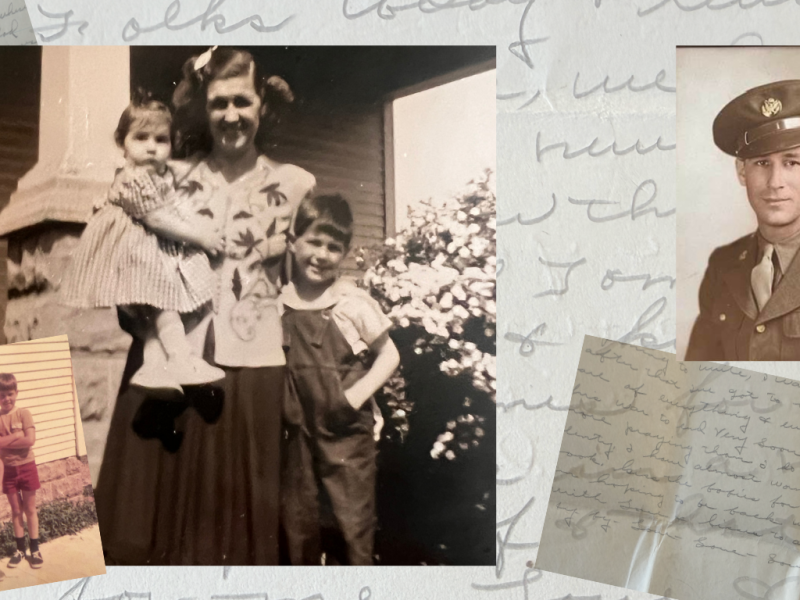
My Grandpa Was Killed in World War II. I Met Him Through His Letters Home
Gina Wolf’s grandfather died before she was born. His letters sent to her grandmother from Europe during World War II made it possible to know what kind of man he was.

‘Sounds Like a Mutiny.’ Secret Recording Exposes Claims of Toxic Leadership After a Marine’s Suicide
This week’s War Horse story follows the systemic failures before and after the death of Cpl. Drew Mobley who was the third in two years at Marine Corps Base Quantico to die by suicide.
