
CREEDE HINSHAW: When free speech, religious sensitivity collide
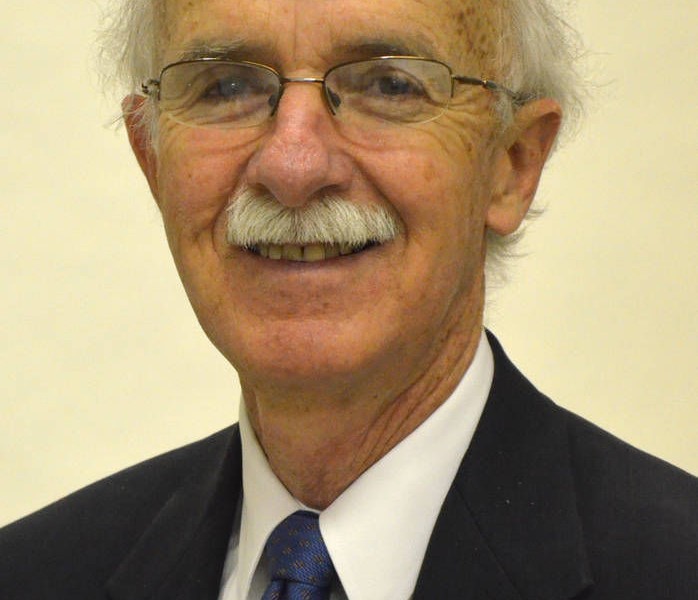
By Creede Hinshaw
[email protected]
Alarm bells sounded when I read an article in the New York Times about Hamline University, a United Methodist-related undergraduate school in St. Paul, Minn. The first institution of higher learning in the Minnesota territory, Hamline was founded in Red Wing, Minn., in 1854. Men and women were both admitted, a very progressive idea then. I suspect this “radical” idea was met with much opposition, but almost 175 years later, Hamline is still turning out scholars.
The attention now focused on their school, however, is mostly unwelcome. The Times article (Jan. 8, by Vimai Patel) is headlined, “A Lecturer Showed a Painting of the Prophet Muhammad. She Lost Her Job.”
An adjunct faculty member teaching a course in art history decided to show a 14th-century painting of the Prophet Muhammad. The instructor, aware that most Muslims forbid depictions of the founder of Islam, from the outset stated in her course syllabus that this painting would be depicted. Not a single student complained or asked for a faculty meeting. On the day scheduled to show this work, which was painted by a Muslim, the instructor again mentioned — in advance — she was preparing to show the painting, giving students a gracious opportunity to leave. Not a single student protested.
But later that day, an Islamic student did protest, stating she had been marginalized. She found it incomprehensible that a professor would show a painting of the Prophet Muhammad when the majority of the Islamic world forbids such a thing. This belief comes from the Islamic determination to remain free from idolatry, a belief they hold in common with Christians and Jews. The vast majority of Muslims, though not in unanimity, believe idolatry extends to depictions of the prophet.
Hamline University administrators initially supported the adjunct professor but eventually fired her, concluding the lecture was “undeniably inconsiderate, disrespectful and Islamophobic,” a decision supported by the Minnesota chapter of the Council on American-Islamic Relations.
The Times article noted this particular painting — and others like it — is regularly shown in art history courses across this nation and is considered an almost essential element for any reputable course in art history, especially in an age when art historians are trying to expand their curriculum to include more non-western art. Furthermore, the original painting proudly hangs in a European museum.
But the faculty member — untenured — is now gone, and this collision between free speech, academic freedom and religious sensitivity was decided in favor of the religion.
Some Christians are equally sensitive to slights, real or perceived, on high school and college campuses. I wonder if they would side with the Islamic student in this complaint? Should religious sensitivity be extended to people of all faiths? How far does accommodation go?
We live in a society where enormous give-and-take is required on the part of all. Perhaps the student, the faculty member and administrators each could revisit their reactions and decisions. As for Hamline, I wonder if the school needs to reclaim some of the groundbreaking courage that prompted the founders to make their school co-educational in 1854
Author
Related Articles

‘Sounds Like a Mutiny.’ Secret Recording Exposes Claims of Toxic Leadership After a Marine’s Suicide
This week’s War Horse story follows the systemic failures before and after the death of Cpl. Drew Mobley who was the third in two years at Marine Corps Base Quantico to die by suicide.
Southwest Georgia artists recognized at packed opening of exhibition
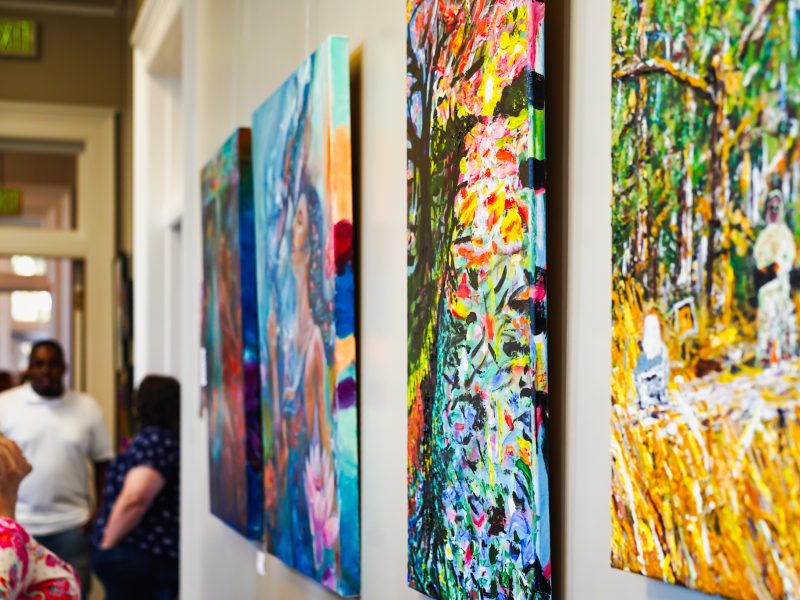
The annual juried exhibition, one of the region’s largest showcases of visual art, features approximately 46 artists and nearly 90 works spanning painting, sculpture, ceramics, photography and mixed media.
Powerful performances drive Theatre Albany’s ‘The Color Purple’
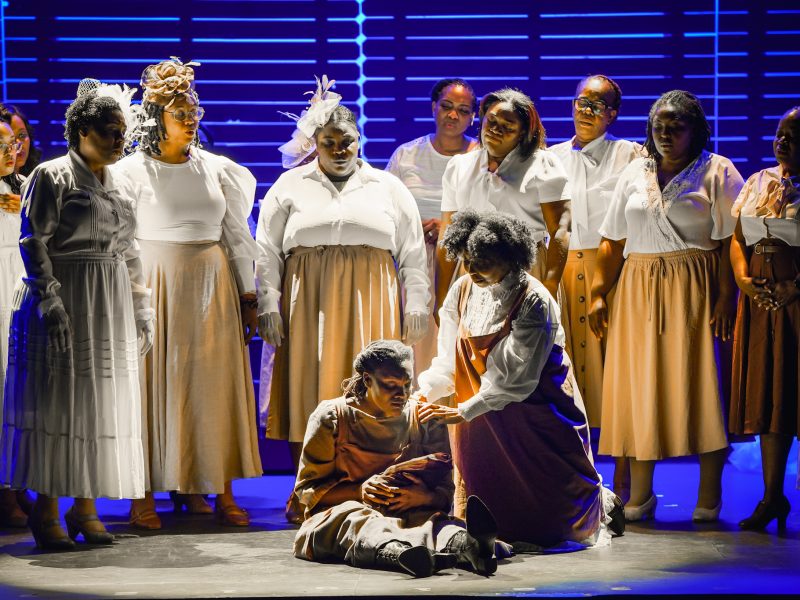
From the street, strands of purple ribbon wind around the white columns of the historic theater, hinting at the story waiting beyond its doors. Inside the foyer, a carefully curated slideshow flickers across a large screen, cycling through the faces of the cast. Some are seasoned performers. Others are stepping onto a stage for the very first time. Teachers stand alongside former students. Parents perform beside their children. People who worship in different churches, work different jobs and come from different corners of Southwest Georgia gather beneath the same lights to tell the same story.
