
CURTIS HONEYCUTT: As you like it

Special Photo
By Curtis Honeycutt
curtishoneycutt.com
I’ve just been told by my editor that “As You Like It” is already the title of a play written by William Shakespeare in 1599. Instead of changing the title, I want to say that it has two of the words I want to compare and contrast in it: “like” and “as.”
For you advanced grammar gurus out there, you already know that using “like” or “as” is a key ingredient in a good simile stew. Similes, of course, are figures of speech that compare things in an interesting way. Here are a few examples: “as blind as a bat,” “as tough as nails,” “I slept like a log,” and “I stuck out like a sore thumb.”
Yeah, yeah. We already know about similes. The words “like” and “as” can be used in all sorts of other types of sentences, so riddle me this, word nerds: When should you use “like” and when should you use “as”? I’m here to help.
In general, “like” is used as a preposition, describing, how, when or where the noun in the sentence is doing its action. “As” serves as a conjunction, joining two clauses together.
Remember, we should use “like” to compare two things: My daughter screams like a banshee when she doesn’t get what she wants. Here, I’m comparing my daughter’s well-formed lungs to that of a shrieking banshee. In fact, we should probably compare the banshee’s thunderous screech to my daughter’s — she’s that loud.
On the other hand, we should use “as” any time you can substitute the phrase “the way”: No one screams as my daughter does. In this example, you could swap out “as” with “the way” and you’d get: No one screams the way my daughter does.
We’re tempted to use “like” as a conjunction, saying things such as: It’s like you’re reading my mind. In fact, “as” is the correct word to use here: I used the hood of my hot car like a skillet to fry an egg. You’re not comparing two things here. Here, we need to use “as”: I used the hood of my hot car as a skillet to fry an egg. You’re using the car’s hood in the same way that you would use a skillet as a hot cooking surface. Same or similar = as. Comparison = like.
It’s tough to break ingrained habits, especially incorrect speech patterns. Using “like” when we should use “as” is one of these tricky areas where we need help. You can do it though, because you’re incredibly smart, and you’ve got a great simile.
Related Articles
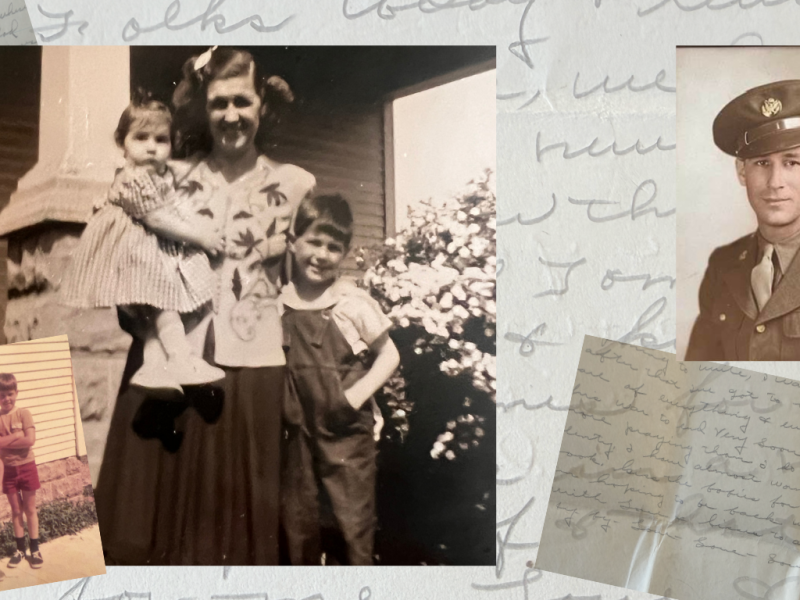
My Grandpa Was Killed in World War II. I Met Him Through His Letters Home
Gina Wolf’s grandfather died before she was born. His letters sent to her grandmother from Europe during World War II made it possible to know what kind of man he was.

‘Sounds Like a Mutiny.’ Secret Recording Exposes Claims of Toxic Leadership After a Marine’s Suicide
This week’s War Horse story follows the systemic failures before and after the death of Cpl. Drew Mobley who was the third in two years at Marine Corps Base Quantico to die by suicide.

Southwest Georgia artists recognized at packed opening of exhibition
The annual juried exhibition, one of the region’s largest showcases of visual art, features approximately 46 artists and nearly 90 works spanning painting, sculpture, ceramics, photography and mixed media.
